
Is It Safe to Convert a Fireplace System to Gas if It Does Not Meet Fire Safety Standards for Burning Wood?
As a homeowner, consider a gas fireplace’s installation convenience and aesthetic appeal. However, the safety implications of such a conversion are critical and should be noticed. So, is it safe to convert any fireplace system to gas if it does not meet the minimum fire safety standards for burning wood? The answer is a definitive NO.
The Critical Importance of Compliance
Regarding fireplace safety, the manufacturer’s installation instructions and the guidelines set forth by the National Fire Protection Association (NFPA) are unequivocal. According to them, solid fuel-burning systems that are “code-compliant,” “operationally non-deficient,” or in a system that has received UL approval and is operational must contain both decorative and unvented (vent-free) gas log sets. This ensures the system is rust-free and installed to the manufacturer’s specifications.
Why Non-Compliant Systems Are Dangerous
- Heat Transfer Risk: Even though gas log sets might burn at a lower intensity than wood, they still transfer significant heat that can ignite nearby combustible materials. Unlike wood-burning fireplaces, gas logs do not require manual reloading, which often results in prolonged use. This extended usage increases the heat transfer through the fireplace, posing a serious risk to nearby house framing and other materials.
- Increased Fire Risk: Studies have shown that gas-burning log sets can increase fire risk compared to wood-burning systems. The constant, prolonged heat transfer without manual intervention means more exposure to high-risk combustible materials.
- Accelerated Deterioration: Gas log fires can rapidly deteriorate fireplace systems that are already compromised. The high water vapor output from gas combustion can worsen deficiencies, leading to faster system degradation.
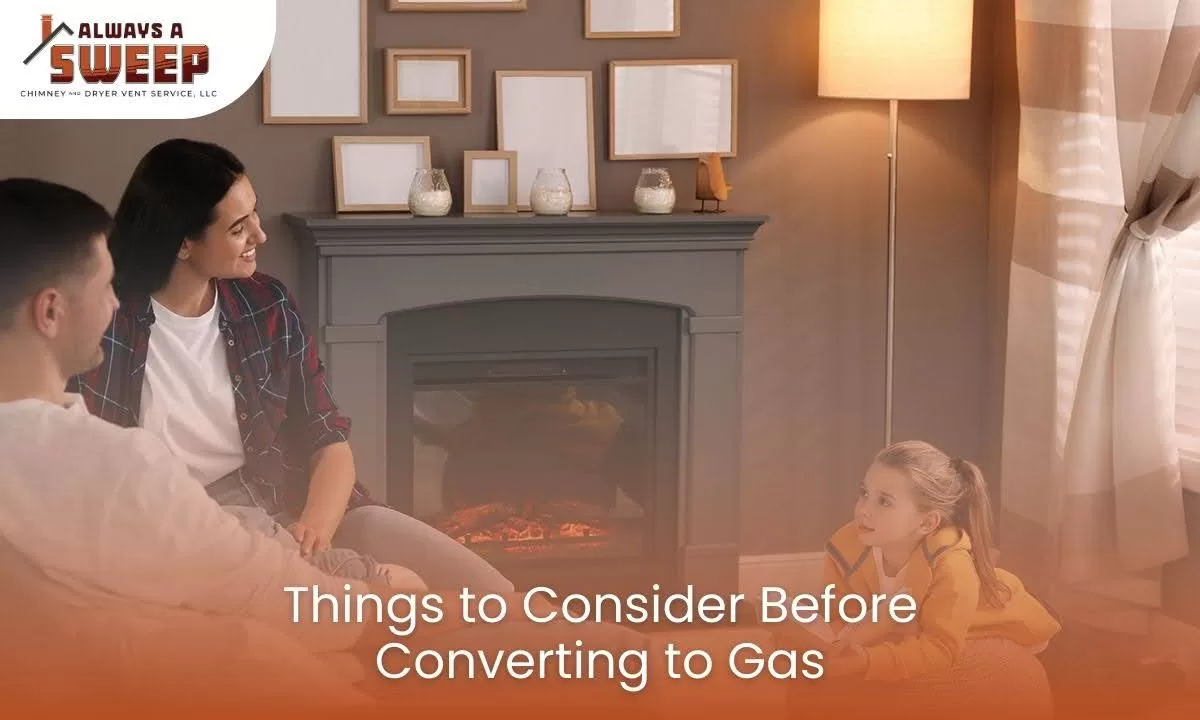
Things to Consider Before Converting to Gas
Before deciding to convert your fireplace to gas, consider the following important points:
- Inspection by an Expert: Ensure a qualified professional inspects your fireplace and chimney structure. This inspection will identify any deficiencies or potential issues that must be addressed to ensure safety.
- Compliance with Standards: Verify that your current fireplace system meets all operational standards and fire safety guidelines. This includes adherence to NFPA and manufacturer’s instructions.
- Heat Output and Usage: Understand that gas logs can produce prolonged heat transfer, which may pose a risk to surrounding materials if the fireplace system is not properly equipped.
- Potential for Increased Fire Risk: Be aware that, in some cases, gas logs can increase the risk of fire compared to traditional wood-burning systems, especially if used for extended periods.
Why Contact Always A Sweep?
At Always A Sweep, we understand the importance of fireplace safety and are dedicated to ensuring your home remains a haven. Our team of experts is fully licensed and experienced in assessing and repairing fireplace systems to meet all necessary standards. Here is why you should contact us:
- Expertise: We deeply understand both wood and gas fireplace install systems and adhere strictly to all relevant safety guidelines.
- Comprehensive Inspection: Our thorough inspections ensure that every aspect of your fireplace system is up to code, giving you peace of mind.
- Quality Repairs: If deficiencies are found, we provide expert repairs to bring your system up to standard, ensuring it is safe for any fuel type.
- Personalized Service: We offer tailored advice and solutions based on your specific needs and the condition of your fireplace system.
Conclusion
Do not take chances with the safety of your home and family. If you are considering a gas fireplace installation or have concerns about your current system’s safety, contact Always A Sweep at (352) 280-3402. Let our expert team ensure your fireplace is safe, compliant, and ready to provide warmth and comfort for years.
FAQs
Is it safe to convert any fireplace to gas?
No, converting a fireplace to gas is unsafe if it does not meet the minimum fire safety standards for burning wood.
Why is compliance with NFPA and the manufacturer’s instructions important?
Compliance ensures that the fireplace system is safe, operational, and free of rust, reducing the risk of fire and other hazards.
What risks are associated with non-compliant fireplace systems?
Non-compliant systems can lead to heat transfer risks, increased fire risk, and accelerated deterioration of the fireplace system.
What should I consider before converting to a gas fireplace?
Consider an expert inspection, compliance with standards, heat output and usage, and the potential for increased fire risk.
Why should I choose Always A Sweep for my gas fireplace install?
Always A Sweep offers expertise, comprehensive inspections, quality repairs, and personalized service to ensure your fireplace system is safe and compliant.
Recent Blogs
Repairing Your Chimney: Off-Season Cost Savings Guide
Why Repairing Your Chimney in the Summer Saves You Thousands Repairing your chimney during the warm summer months of July is the single most cost-effective decision you can make for your home's structural maintenance. Many homeowners mistakenly delay critical masonry...

Chimney Leak in Your Ocala Home? 7 Urgent Storm Signs
How to Safely Identify an Urgent Chimney Leak in Your Ocala Home After July Storms To quickly identify a chimney leak in your Ocala home after a heavy July storm, inspect your property for yellow-brown ceiling stains around the hearth, active water pooling in the...
Clogged Dryer Vent Safety: Slash Your Florida Energy Bills
Stop the Clogged Dryer Vent Energy Trap in Central Florida A clogged dryer vent is a primary cause of skyrocketing summer electric bills for homeowners across Central Florida. When lint restricts the exhaust line, your appliance must run twice as long to dry a single...