Gas Fireplace & Appliance Safety Guide for Florida Homes
Prioritizing gas appliance safety protects your Florida household from critical fire and toxic gas hazards. Homeowners can guarantee a secure living environment by scheduling annual professional inspections, installing dedicated carbon monoxide alarms, and adhering strictly to localized building codes. Safeguarding your family requires recognizing the subtle warning signs of systemic gas leaks and venting failures before they escalate into structural emergencies.
While Florida winters are generally mild, a sudden cold snap sends homeowners rushing to activate their heating units. Unfortunately, operating unmaintained or improperly installed equipment creates severe structural and health risks.
📌 Key Takeaways
-
Schedule Annual Inspections: Always book a certified professional to inspect valves, burners, and venting lines before seasonal use.
-
Install CO Alarms: Place carbon monoxide detectors at least 15 feet away from all combustion appliances on every floor.
-
Verify Flame Color: Monitor burners to ensure they always display a crisp, stable blue flame instead of a lazy yellow one.
-
Clear Combustible Obstructions: Keep all flammable materials, cleaning chemicals, and household storage items at least three feet away from gas units.
-
Hire Licensed Professionals: Never attempt DIY gas line extensions or mechanical adjustments due to severe explosion risks.
Table of Contents
-
Understand Florida’s Gas Appliance Safety Standards
-
Compare Propane vs Natural Gas Options
-
Execute a Code-Compliant Gas Fireplace Installation
-
Maintain Your Gas Appliances to Prevent Carbon Monoxide
1. Understand Florida’s Gas Appliance Safety Standards
Quick Answer: Florida enforces rigorous fuel codes to mitigate the unique structural risks posed by regional humidity, lightning, and coastal weather conditions. Compliance requires adhering strictly to national NFPA 54 standards and executing mandatory pressure tests during any line modification.
Operating fuel systems in the Sunshine State demands strict compliance with localized structural mandates. These safety measures prevent hidden underground leaks and hazardous pressure drops within your residential framework.
Adhering to NFPA 54 Fuel Gas Code
As of 2026, the updated National Fuel Gas Code dictates the exact material specifications for all residential piping networks. Mechanical contractors must use listed arc-resistant corrugated stainless steel tubing (CSST) or traditional schedule 40 black iron pipe.
Proper electrical bonding of CSST lines is mandatory to prevent lightning strikes from puncturing your system. Our service teams frequently discover unbonded lines in older coastal homes, which presents a severe structural fire risk during heavy afternoon thunderstorms.
Managing High Humidity Risks for Gas Lines
Florida’s intense ambient humidity accelerates structural corrosion on exterior pipe segments and regulator valves. Standard iron pipes rust rapidly when exposed to salty coastal air or persistent crawlspace moisture.
Homeowners must verify that all exterior fuel lines feature approved protective coatings or wraps. Check your utility meters regularly for signs of flaking, pitting, or deep rust accumulation near foundation walls.
📊 Data Point: According to the National Fire Protection Association, home heating equipment and unvented fuel appliances remain the second leading cause of structural fires nationwide.

Is your home up to code? 🔥 Safety always comes first when it comes to household gas lines. Check out this easy-to-follow infographic detailing the official gas appliance safety benchmarks and essential steps for residential code compliance. Save this guide to keep your family safe!
2. Compare Propane vs Natural Gas Options
Quick Answer: Deciding between propane vs natural gas depends entirely on regional utility infrastructure availability and your specific thermal efficiency goals. Natural gas offers continuous pipeline delivery, while liquid propane provides higher energy density per cubic foot for off-grid properties.
Selecting your primary fuel source alters your long-term maintenance obligations and structural appliance configurations. Both options offer exceptional utility performance but demand distinct pressure regulation frameworks to maintain operational safety.
Evaluating Fireplace Heating Options
When exploring premium fireplace heating options, understanding your fuel’s physical properties is absolutely critical. Natural gas is lighter than air and dissipates rapidly upward if a minor leak develops inside your living room.
Conversely, liquid propane is heavier than air and sinks into low-lying areas or basements. This pooling characteristic creates severe ignition hazards if leaks occur near pilot assemblies or baseboards.
Comparing Costs and Clean Burning
Propane contains roughly 2,516 BTUs per cubic foot, while natural gas delivers approximately 1,030 BTUs. This means you will burn a lower volume of propane to achieve identical room temperatures.
However, natural gas is usually more affordable if your neighborhood links directly to a municipal utility grid. Let’s evaluate how these fuels compare across essential residential operational metrics:
| Operational Metric | Natural Gas System | Liquid Propane (LP) System |
| Delivery Method | Continuous Municipal Pipeline | Periodic Tank Truck Refills |
| Physical Behavior | Rises and dissipates quickly | Sinks and pools near floor levels |
| Energy Content | ~1,030 BTU per cubic foot | ~2,516 BTU per cubic foot |
| Operating Pressure | Low pressure (approx. 7 inches WC) | High pressure (approx. 11 inches WC) |
⚠️ Common Mistake: Attempting to run a standard natural gas fireplace on propane without a certified manufacturer conversion kit. This error causes massive, uncontrollable soot production and dangerous carbon monoxide spikes.
3. Execute a Code-Compliant Gas Fireplace Installation
Quick Answer: A flawless gas fireplace installation requires precise venting clearance, certified supply line tracking, and professional structural calibration. Improper DIY setups void your homeowners insurance policies and create immediate structural fire hazards.
Adding a modern hearth enhances indoor comfort during rare chilly Florida winter nights. However, completing this upgrade safely requires working alongside a fully licensed mechanical contractor or a certified chimney sweep.
Navigating Gas Line Installation Rules
Every structural gas line installation requires sizing calculations to ensure adequate pressure reaches your new fireplace log set. If the pipe diameter is too small, your appliance will starve for fuel during operation.
This fuel starvation causes improper gas combustion, leading to localized soot deposits and system component failure. Technicians must always perform a formal pressure-drop analysis before tapping into your existing home manifold.
💡 Expert Insight: Our field technicians utilize specialized electronic click-meters to verify line integrity at Always A Sweep.
Venting vs Vent-Free Safety Realities
Choosing a ventless fireplace requires understanding how indoor air quality shifts during operation. Vent-free units discharge all combustion byproducts directly into your living space, utilizing an oxygen depletion sensor (ODS) for protection.
While legal in Florida, we advise caution when operating ventless units in tightly sealed, modern energy-efficient homes. B-vent or direct-vent options remain much safer by pulling outside air and exhausting fumes completely outdoors.
✅ Quick Tip: Always verify that your installer provides a dedicated shutoff valve within six feet of your fireplace hearth for rapid emergency access.
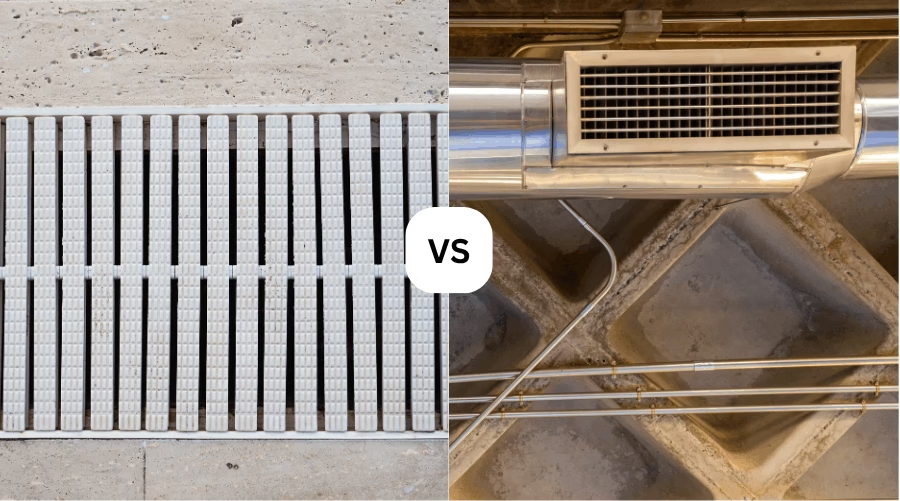
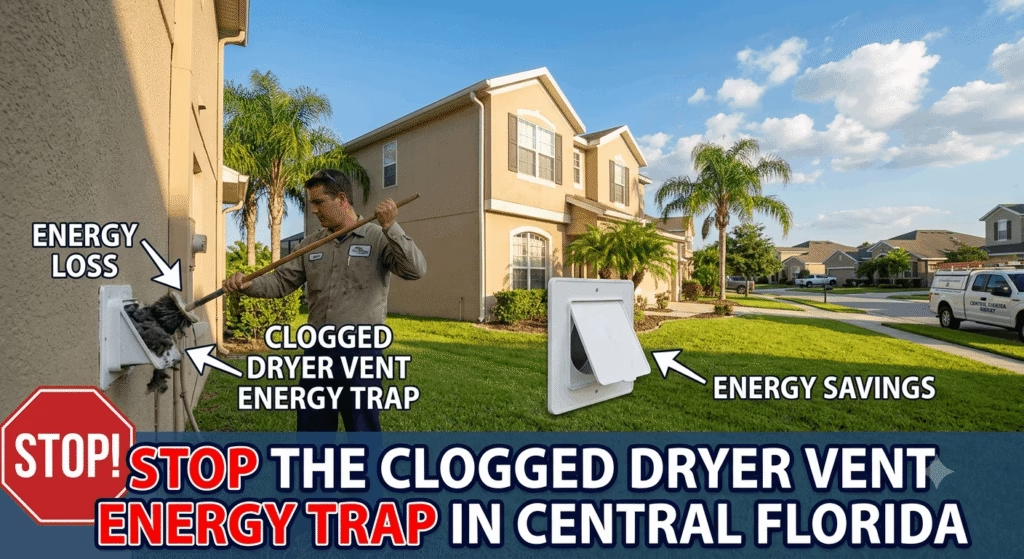
Are you overlooking hidden fire hazards in your home? 🚨 Cleaning your dryer vents and understanding your HVAC system’s layout can dramatically improve efficiency and safety. Check out our 10 essential maintenance tips to keep your airflow clear and utility bills low!
4. Maintain Your Gas Appliances to Prevent Carbon Monoxide
Quick Answer: Preventing carbon monoxide poisoning requires maintaining unrestricted airflow pathways and scheduling proactive annual appliance checkups. Early detection via electronic monitoring remains your primary defense against this colorless, odorless threat.
Routine system maintenance ensures your family enjoys clean, efficient heat without risking silent exposure to toxic emissions. Neglecting your appliances allows hidden dust buildup and insect nests to compromise critical ventilation systems.
Scheduling Annual Professional Inspections
A qualified professional technician must inspect your system elements before the winter season arrives. Dust, pet hair, and drywall debris easily accumulate inside burner ports during dusty summer renovation projects.
Research shows that annual preventative cleanings eliminate up to 94% of sudden operational failures. Our certified inspectors clear these blocks to guarantee clean fuel mixing and efficient thermal outputs.
Essential Blue-Flame Rules for Gas Appliance Safety
Homeowners must routinely monitor the visual quality of their appliance flames during standard operation. Your system burner ports should always project a stable, sharp blue flame with a distinct inner cone.
A lazy, flickering yellow or orange flame indicates incomplete combustion due to restricted oxygen delivery. This specific condition generates elevated carbon monoxide levels that will quickly trigger your household safety alarms.
⚠️ Common Mistake: Placing a plug-in carbon monoxide detector too close to a bathroom or kitchen space. Excessive humidity or minor cooking vapor causes repeated false alarms, tempting homeowners to disconnect the vital device.
💡 Expert Insight: According to safety documentation from the Lake Apopka Natural Gas District, you should never use a kitchen range or cooking oven as a makeshift room heater. Doing so creates a direct, immediate threat of lethal carbon monoxide accumulation.
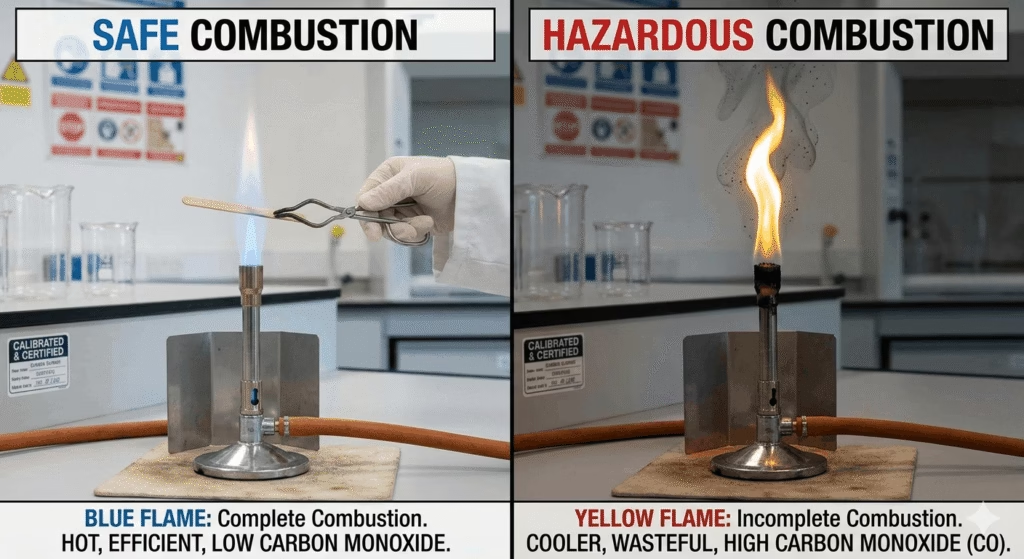
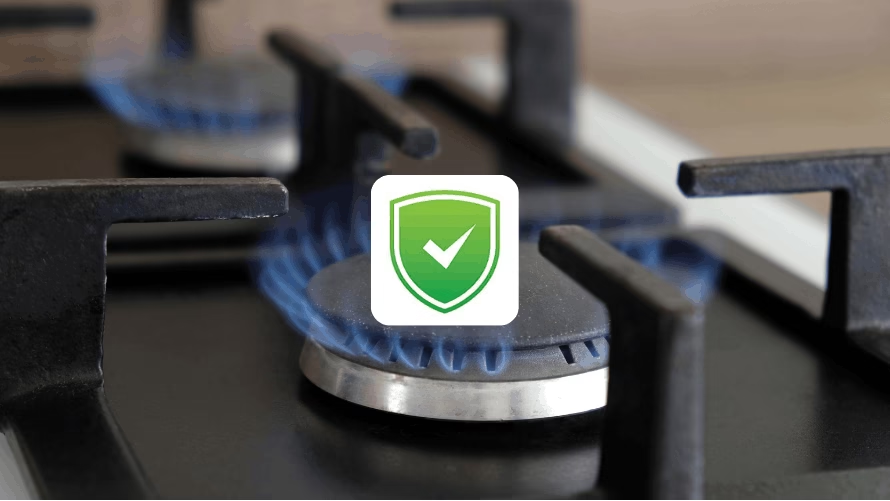
Do you know what your gas appliance flame color really means? 🔥 A crisp blue flame indicates complete, safe, and efficient combustion. If you see a flickering yellow flame, your system is suffering from incomplete combustion, which produces hazardous carbon monoxide (CO) and wastes energy. Learn how to spot the warning signs and keep your home safe!
Frequently Asked Questions
What are the main rules for gas appliance safety in high-humidity areas?
In humid climates like Florida, gas appliance safety depends on protecting metal infrastructure from rust and ensuring adequate ventilation airflow. Homeowners must inspect exterior regulator vents for corrosion and verify that all combustion air ducts remain free from local insect blockages.
How often do I need a professional gas fireplace installation inspection?
You should schedule an inspection at least once every twelve months to check for line degradation, valve leaks, and venting obstructions. Regular servicing by a certified sweep maintains appliance efficiency and validates your manufacturer’s warranty coverage.
Can I change a home from propane vs natural gas without buying new appliances?
Yes, but you must hire a professional to install a dedicated manufacturer conversion kit. This process involves swapping out the physical burner orifices and altering the internal pressure regulator settings to match the new fuel profile safely.
Where should I install a carbon monoxide detector relative to gas appliances?
You must install detectors on every level of your home, keeping them at least 15 feet away from any gas-burning appliance or fireplace. Placing them too close to a heating unit can cause false readings from minor, non-hazardous ignition startups.
What are the signs that my gas line installation is leaking?
The most common signs include a distinct sulfur or rotten-egg odor, a subtle hissing sound near pipe joints, or dead patches of grass above outdoor buried lines. If you notice these indicators, evacuate the building immediately and call your utility provider.
Conclusion
Maintaining rigorous gas appliance safety standards requires a combination of professional oversight, code compliance, and vigilant personal monitoring. By understanding fuel properties and maintaining clear venting pathways, Florida homeowners can comfortably enjoy their fireplaces for decades. Do not leave your family’s protection to chance during volatile weather seasons.
To secure your property, implement these critical next steps today:
-
Test every carbon monoxide alarm in your home using the integrated physical test button.
-
Inspect your outdoor utility meter and exposed gas lines for any surface rust or flaking.
-
Keep all boxes, blankets, and chemical solvents at least three feet away from your water heater and furnace.
-
Schedule your comprehensive system tune-up with a certified local expert.
Contact Always A Sweep today to book your expert inspection to ensure total peace of mind and code compliance for your household.