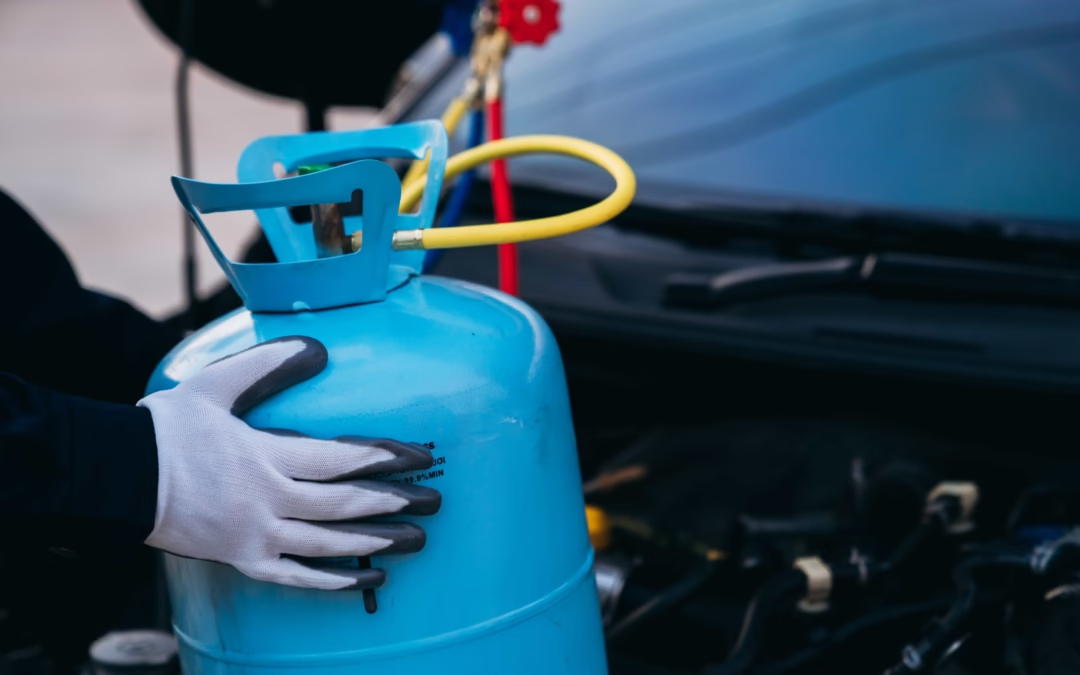
Propane Tank Safety 101 and The Ultimate Guide to Preparing Your Gas Lines for Summer
Propane tank safety involves ensuring all connections are leak-free, valves are unobstructed, and regulators are operating at the correct PSI. Before summer grilling begins, you must inspect hoses for “dry rot” and perform a professional pressure test. Because propane is heavier than air and highly flammable, even a minor micro-leak caused by winter “thermal contraction” can lead to catastrophic pooling and ignition.
Propane tank safety is the cornerstone of a stress-free summer. As the season of backyard gatherings approaches, homeowners often overlook the complex network of lines and valves that make a BBQ possible. However, the transition from winter dormancy to summer heat places significant stress on gas infrastructure.
While the “Do It Yourself” (DIY) culture is great for aesthetics, gas line maintenance is a high-stakes task that requires professional certification. A single loose fitting or a degraded O-ring can lead to property loss or worse. This guide provides an exhaustive look at propane tank safety, the science of gas line integrity, and why trusting experts is your smartest investment this season.
Key Takeaways
-
Airflow & Density: Propane is heavier than air; leaks “pool” on the ground rather than dissipating.
-
Thermal Stress: Winter freezing and summer expansion cause micro-fissures in rubber gas lines.
-
The 10-Foot Rule: Always store spare tanks 10 feet away from any home entrance or window.
-
Professional Logic: Digital “sniffers” and PSI pressure tests are the only 100% reliable leak detection methods.
Table of Contents
-
The Role of Safety in Home Protection
-
The Science: Why Outdoor Gas Lines Fail
-
The Dangers of DIY Gas Repairs
-
Professional Inspection Protocols
-
Propane Storage Dos and Don’ts
-
Frequently Asked Questions
Quick Answer: Propane safety protects against the 9,000+ grill-related fires reported annually. Proper maintenance ensures your appliances operate at the correct BTU output, preventing both fire hazards and expensive mechanical wear.
When we discuss propane tank safety, we are addressing a highly volatile fuel source. Propane is stored as a liquid under pressure; when it is released to the grill, it expands into a gas. According to the National Fire Protection Association (NFPA), gas grills are involved in an average of 9,000 home fires per year.
Maintaining safety isn’t just about preventing a fire. It is about ensuring the longevity of your outdoor appliances. A professional inspection ensures that every connection point, from the tank orifice to the burner manifold, is sealed and functioning at the correct BTU (British Thermal Unit) output.
Quick Tip: Before your first cookout, check the “manufacture date” on your tank’s collar. Most tanks require recertification 10–12 years after the date of manufacture.
To truly master propane tank safety, one must understand why these systems fail. Outdoor gas lines are subject to “Thermal Expansion and Contraction.”
Thermal Stress and Micro-Fissures
During the winter, metal fittings and rubber hoses contract. As summer arrives, they expand. This constant “breathing” of the materials can cause micro-fissures in hoses. Over time, these cracks widen, leading to the “slow leaks” that the average homeowner cannot smell.
Expert Insight: “In my years of servicing Florida homes, I’ve seen that humidity combined with winter temperature swings creates a ‘perfect storm’ for brass corrosion. Never assume a fitting is tight just because it hasn’t been moved.”
The “Pooling” Effect
Furthermore, propane is heavier than air. In the event of a leak, the gas doesn’t simply float away. It “pools” on the ground or in low-lying areas like grill cabinets. This creates an invisible “pool” of fuel just waiting for a spark.
Do you know the difference between safe gas usage and a major fire hazard? Knowledge is your first line of defense. From routine gas line inspections to professional fire prevention strategies, staying proactive keeps your family and property safe. Pin this guide to ensure your home’s utility systems are running securely!
Quick Answer: DIY gas repair is dangerous due to improper torque specifications and the use of incorrect sealants. Most homeowners use white Teflon tape, which is chemically incompatible with propane, leading to slow-acting leaks.
Propane tank safety should never be a DIY project. Here is why:
-
Torque Specifications: Professionals use calibrated tools to ensure fittings are tight enough to prevent leaks but not so tight that they crack the brass housing.
-
The Wrong Sealants: Many DIYers use standard plumbing “Teflon tape”. However, gas lines require specific “Yellow Gas Tape” or specialized pipe dope resistant to propane’s chemical properties.
-
Liability and Insurance: If a DIY repair leads to a fire, insurance adjusters may deny the claim based on work performed by an unlicensed individual.
Common Mistake: Using a lighter or match to “test” for a gas leak. Even if you think the leak is small, an open flame near a pooling gas source is an immediate explosion hazard. Use an electronic sniffer or soap solution only.
When a professional from Always A Sweep arrives, they look for specific points of failure that the untrained eye misses.
The Regulator and Diaphragm
The regulator is the “heart” of the system. Over time, the internal rubber diaphragm can perish. This leads to “over-pressure” (dangerously high flames) or “under-pressure” (flame outs).
Pest Intrusions
Regulators have a tiny vent hole that must remain clear. Spiders often build nests inside these holes, causing the regulator to fail. During our 2026 audits, we have found that “mud dauber” wasps are a leading cause of blocked vents in the Southeast.
| Component | Inspection Goal | Danger Sign |
| Regulator | Constant PSI Flow | Orange flames / humming noise |
| Hoses | Elasticity Check | Cracking or “dry rot” texture |
| Foot Ring | Structural Integrity | Deep pitting or flaking rust |
| Valves | Leak-free seal | Smell of “rotten eggs” |
To maintain propane tank safety during a heatwave, follow these strict storage rules:
-
The 120°F Limit: Propane tanks are designed to withstand heat, but if a tank reaches over 120°F, the safety relief valve may open.
-
Never Leave Tanks in Cars: A car parked in the sun can reach 150°F in minutes. This is a common cause of vehicular fires.
-
The 10-Foot Rule: Keep spare tanks at least 10 feet away from any door or window.
According to the NFPA, July is the peak month for grill fires. 16% of all home grill fires start with a leak or break in the gas line.
Frequently Asked Questions
Q: How often should I have my gas lines professionally inspected?
Answer: At a minimum, once a year before the start of the summer grilling season. If you use your grill year-round, a bi-annual check is recommended to account for the double-cycle of thermal expansion.
Q: Why does my grill flame look orange instead of blue?
Answer: An orange flame indicates “incomplete combustion.” This means your gas-to-air ratio is off, which can lead to dangerous carbon monoxide buildup. This requires a professional adjustment of the air shutters.
Q: Can I use a propane tank that has a little bit of rust?
Answer: Surface rust is common, but deep pitting or rust on the valves or foot ring is a major propane tank safety violation. When in doubt, replace the cylinder.
Q: Is the “soapy water test” enough for safety?
Answer: While helpful for large leaks, it cannot detect internal valve failures or underground leaks. Professionals use ultrasonic leak detectors that “hear” frequencies the human ear cannot register.
Secure Your Summer with Always A Sweep
Mastering propane tank safety is a journey of vigilance and professional partnership. Your outdoor oasis should be a place of joy, not a source of anxiety. By choosing professional maintenance over risky DIY attempts, you are ensuring that your summer memories are filled with the sound of laughter and the sizzle of the grill, not the sirens of emergency vehicles.
Next Steps to Secure Your Home:
-
Visually inspect your hoses for “dry rot” or cracking.
-
Ensure your tanks are stored outdoors in a well-ventilated area.
-
Book Your Professional Gas Line Safety Audit with Always A Sweep today.