by Always A Sweep Team | Nov 21, 2025 | Always Home Repair Services, chimney repair
Introduction: Your Chimney’s Greatest Threat in Florida
A professional water intrusion assessment is one of the most vital yet misunderstood services for any homeowner with a chimney, especially here in Central Florida. While fire is the hazard most people associate with chimneys, water is a far more common, silent, and relentless threat. The intense sun, heavy rains, and high humidity of our climate create a perfect storm for water to penetrate your chimney’s defenses, leading to slow but catastrophic structural decay.
As CSIA Certified Chimney Sweeps with decades of experience serving Ocala, Gainesville, and the surrounding communities, we at Always A Sweep have seen firsthand how a small, unnoticed leak can lead to thousands of dollars in damage. Our expertise is rooted in the science of venting systems and the stringent safety codes of the National Fire Protection Association (NFPA), which govern not only fire safety but the structural integrity of your entire chimney system. This guide is designed to give you an expert’s perspective on what a comprehensive water intrusion assessment entails and why it is an essential part of protecting the safety, efficiency, and value of your home.
Understanding the Enemy: How Water Silently Destroys Your Chimney
A masonry chimney may look solid and impenetrable, but it is actually a porous structure that is highly susceptible to water damage. When water penetrates the brick and mortar, it initiates a destructive cycle that compromises the entire system from the inside out.
- Masonry Degradation (Spalling): Bricks and mortar act like sponges, absorbing rainwater. As this moisture saturates the masonry, it can cause the face of the bricks to pop off or flake away—a process known as spalling. This weakens the structure and creates larger openings for even more water to enter.
- Mortar Joint Deterioration: The mortar holding your chimney’s bricks together is the system’s first line of defense. Constant exposure to rain and moisture dissolves the mortar over time, creating gaps and cracks that allow water to seep deep into the chimney’s core.
- Rust and Corrosion: Many critical chimney components are made of metal, including the damper, chase cover, and flashing. Water intrusion leads to rust and corrosion, causing these parts to fail. A rusted damper can seize up, while a corroded chase cover or flashing can create a direct pathway for water to enter your attic and home.
- Hidden Mold and Mildew: When water seeps into the chimney and surrounding walls, it creates a dark, damp environment—the perfect breeding ground for mold and mildew. This not only causes unpleasant odors but can also pose a significant health risk to your family by degrading your home’s indoor air quality.
A true water intrusion assessment goes far beyond a quick glance from the ground. It is a systematic, top-to-bottom evaluation based on the principles of a Level II chimney inspection, as defined by the NFPA 211 standard. This is the standard required when a property is being sold or after an event that may have caused damage—and it is the standard we believe every homeowner deserves.
Step 1: The Rooftop Inspection – Identifying the Entry Points
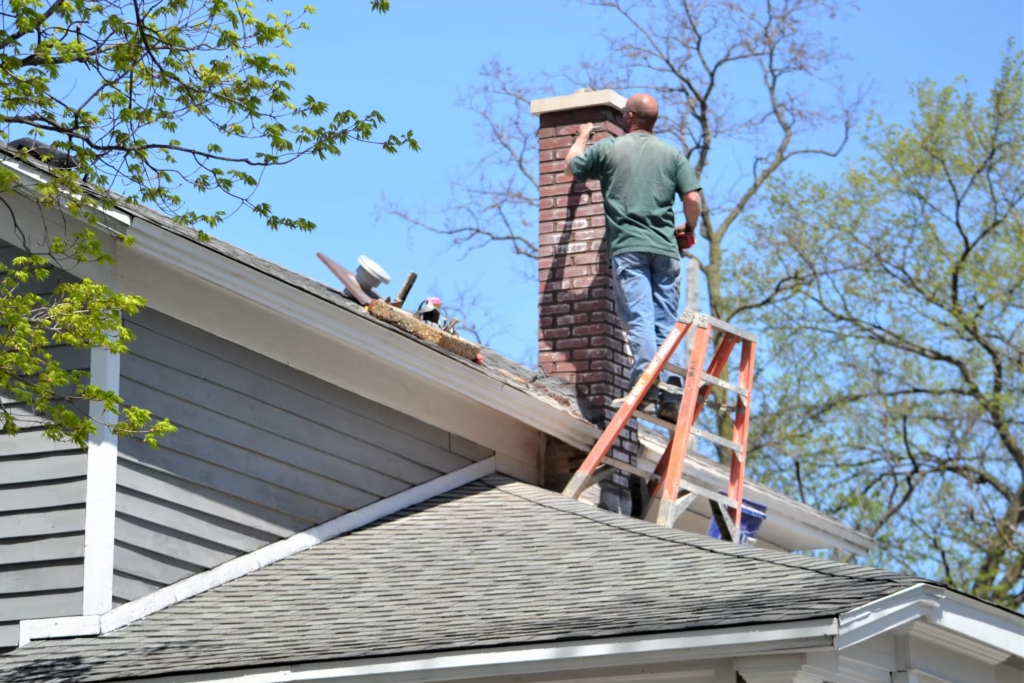
Our assessment begins at the source. A certified technician will safely access your roof to perform a detailed, hands-on inspection of the chimney’s most vulnerable components:
- The Chimney Crown: This concrete slab at the top of your chimney is meant to shed water away from the flue. We look for cracks, chips, or deterioration that could allow water to seep into the masonry below.
- The Chimney Cap: A missing or damaged chimney cap is an open invitation for rain, debris, and animals to enter your flue directly. We ensure it is securely in place and properly sized.
- The Flashing: This sheet metal seal between the chimney and the roof is a common failure point. We inspect for rusted sections, gaps, or improper installation that could be channeling water directly into your attic or ceiling.
- The Masonry and Mortar: We examine every brick and mortar joint for signs of spalling, cracking, or erosion, identifying areas that may require Masonry Repair or tuckpointing.
Step 2: The Internal Flue Examination – A Look Inside
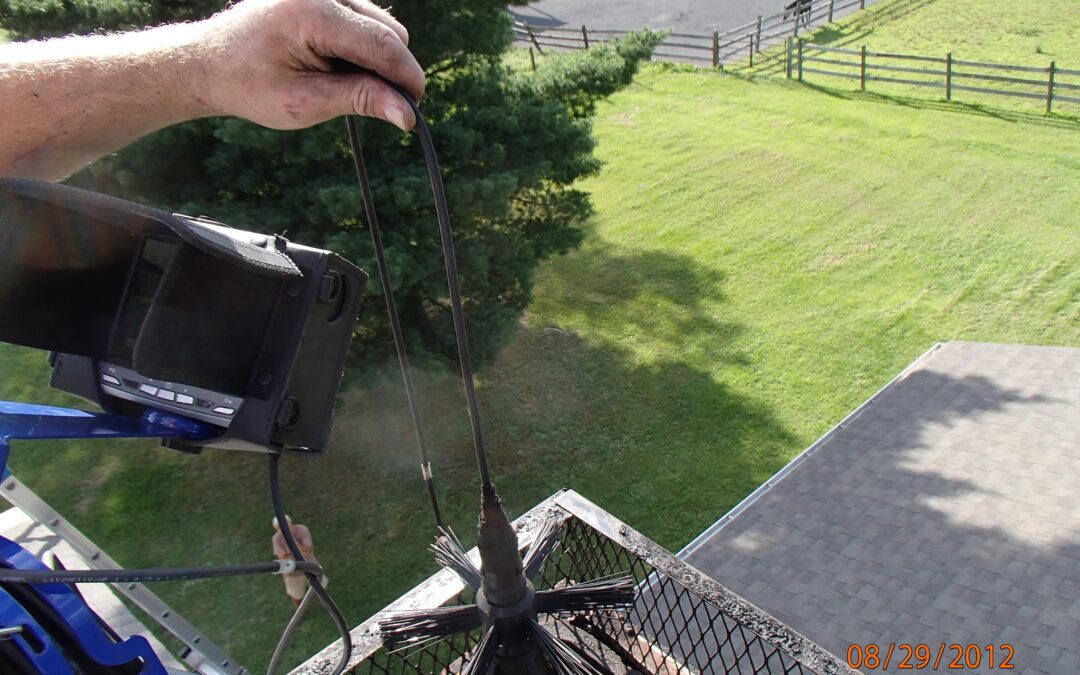
What happens inside the chimney is just as important. Water that penetrates the flue can damage the liner, which is the critical component that contains the heat and byproducts of a fire. As part of a comprehensive water intrusion assessment, we use high-definition video scanning equipment to inspect the entire length of the flue liner from the inside. This allows us to identify:
- Cracked Flue Tiles: Water damage can cause clay flue tiles to crack or break apart, creating a pathway for fire and carbon monoxide to escape into your home.
- Deteriorating Mortar Joints: The small mortar joints between flue tiles can erode due to moisture, compromising the liner’s integrity.
- Blockages and Debris: A damaged cap can allow leaves, nests, and other debris to fall into the flue, creating a fire hazard and trapping moisture.
Step 3: The Interior Inspection – Tracing the Damage
Finally, we inspect the interior of your home for signs that water has already made its way inside. This includes checking the attic, ceilings, and walls around the fireplace for:
- Water stains or discoloration.
- Peeling paint or wallpaper.
- A damp or musty smell.
- Rusted components in the firebox, such as the damper or grate.
Beyond the Bricks: The Ripple Effect of a Leaky Chimney
The damage from a chimney leak rarely stays confined to the chimney itself. A proper water intrusion assessment is crucial because it helps prevent a chain reaction of damage that can affect your entire home.
- Attic and Roof Damage: Water that bypasses the flashing can lead to wood rot in your roof decking, rafters, and ceiling joists, compromising the structural integrity of your home.
- Damaged Ceilings and Walls: The most visible signs of a chimney leak are often the brown or yellow stains that appear on the ceilings and walls adjacent to the fireplace. By the time you see these stains, the damage behind the drywall is often extensive.
- Compromised Fireplace and Chimney Function: A water-damaged chimney is an unsafe chimney. Rust can prevent the damper from closing properly, leading to energy loss, while a damaged flue liner can turn a simple fire into a house fire.
Identifying the problem is only half the battle. As a full-service chimney company, our expertise doesn’t end with the assessment. We are equipped to provide lasting, code-compliant solutions for any issue we uncover. This commitment to seeing the job through from start to finish is a core part of our company’s values of Safety, Efficiency, and Enjoyment.
Our repair services include:
A Homeowner’s Guide to Spotting Early Warning Signs
You can be the first line of defense. If you notice any of the following signs, it is time to schedule a professional water intrusion assessment.
| Location |
Warning Sign |
Potential Problem |
| On the Roof |
Cracked concrete top; missing or rusted cap. |
Failing Chimney Crown or Cap |
| Exterior Chimney |
White staining (efflorescence); crumbling brick or mortar. |
Saturated Masonry |
| In the Attic |
Damp insulation; water stains on the wood around the chimney. |
Leaking Flashing |
| Inside the Home |
Stained ceiling or walls; musty smell; water dripping in the firebox. |
Advanced Internal Leak |
Frequently Asked Questions (FAQs) About Chimney Water Intrusion
How often should I have a water intrusion assessment?The Chimney Safety Institute of America (CSIA) and the NFPA recommend an annual chimney inspection. In Florida, given our severe weather, an annual water intrusion assessment is a wise investment to catch problems before they escalate.
I see a small water stain on the ceiling near my fireplace. Is it a big deal? Yes. A water stain is visible evidence that water has already penetrated multiple layers of your home’s defenses (roofing, decking, drywall). The damage you can’t see is almost always more extensive than the stain you can. It requires immediate professional attention.
Can I just use a sealant from a hardware store to fix a crack in my chimney crown? DIY sealants are temporary patches at best. They do not address the underlying cause of the crack and often trap moisture inside the masonry, which can accelerate deterioration. A professional repair involves using specialized, breathable materials that are designed for the high-temperature, high-exposure environment of a chimney.
What is the difference between a roofer and a certified chimney sweep for fixing a leak? While a roofer is an expert on your roof, a CSIA Certified Chimney Sweep is an expert on the entire chimney system. A leak may appear to be a flashing issue (a roofer’s domain), but it could originate from a cracked crown or porous masonry, which requires a chimney specialist’s expertise to diagnose and repair correctly. We understand how all the components work together as an integrated system.
Conclusion: Protect Your Home with Proactive Expertise
Your chimney is a complex system that requires specialized knowledge to maintain. In Florida’s challenging climate, a proactive water intrusion assessment is not a luxury—it is an essential part of responsible homeownership. By identifying and addressing water penetration early, you can prevent devastating structural damage, avoid costly repairs, and ensure your fireplace remains a safe and enjoyable feature of your home for years to come.
Don’t wait for a small leak to become a major disaster. If you live in the Ocala, Gainesville, or Fort Pierce areas, trust the certified experts who understand the unique challenges of our region. Contact Always A Sweep today to schedule your comprehensive water intrusion assessment and protect your most valuable investment.

by Always A Sweep Team | Nov 14, 2025 | Always Home Repair Services, inspections & sweeping
An Expert’s Perspective: Why a Chimney Sweep Cares About Your Dryer Vent
As a CSIA Certified Chimney Sweep with Always A Sweep, my career is built on a deep understanding of venting science, fire dynamics, and the national safety codes that protect homes from combustion byproducts. While many associate my work with fireplaces and wood stoves, that same expertise is directly applicable to another critical, and often more dangerous, venting system in your home: the clothes dryer. Professional dryer vent cleaning & inspections are not just an add-on service for us; they are a core part of our mission to ensure total home safety.
In the world of chimney maintenance, we classify the flammable buildup of creosote into three distinct degrees of severity. I apply a similar framework to dryer vents. The principles are identical: a restricted vent, flammable buildup (lint instead of creosote), and a heat source. In Central Florida, our high humidity acts as a “threat multiplier,” causing lint to become dense and sticky, accelerating the progression through these hazard levels much faster than in other climates.
This guide breaks down the three degrees of dryer vent hazards from my expert perspective, explaining what I look for during an inspection and why a specialist’s eye is crucial for identifying risks that a general handyman might miss.
The First Degree of Hazard: The Efficiency Clog
The first degree of hazard is the most common and the most deceptive. It’s comparable to first-degree creosote in a chimney—a light, dusty soot that is easily removed but signals the beginning of a problem.
What I Look For:
During an initial diagnostic, I often find a light but pervasive coating of lint throughout the entire duct run. The homeowner’s primary complaints are not yet about safety but about performance. They report that clothes, especially heavy items like towels, take more than one cycle to dry, and the dryer itself feels unusually hot after a cycle.
The Technical Analysis:
This stage represents a critical loss of efficiency. A dryer is designed to expel a specific volume of hot, moist air per minute. Even a light coating of lint creates friction and turbulence inside the duct, restricting that airflow. The dryer’s internal thermostat senses that the desired temperature isn’t being reached efficiently, so it keeps the heating element running longer.
The Risks at This Stage:
- Economic Waste: This inefficiency translates directly into higher energy bills. A dryer working against a first-degree clog can cost a homeowner an extra $18-$24 per month on their utility bills.
- Appliance Strain: The extended operation puts significant wear and tear on the dryer’s motor, belts, and heating elements, leading to costly repairs and shortening the appliance’s lifespan by years.
- Clothing Damage: The combination of prolonged high heat and trapped moisture slowly breaks down the fibers in clothing and linens, causing them to wear out prematurely.
A professional cleaning at this stage is a simple fix that restores efficiency and prevents the hazard from escalating.
The Second Degree of Hazard: The Fire Risk Clog
This is where the situation becomes significantly more dangerous, much like second-degree creosote, which appears as hardened, shiny black flakes and is much more difficult to remove. A second-degree dryer vent clog is characterized by dense, compacted lint that poses a serious and immediate fire risk.
What I Look For:
The lint I remove at this stage is no longer light and fluffy. Due to Florida’s humidity, it’s heavy, damp, and matted together. I often find this compacted lint at bends in the ductwork or in vertical risers where gravity works against the airflow. Sometimes, the blockage is compounded by external factors like a bird’s nest in the exterior vent termination. The homeowner may now report a distinct burning smell when the dryer is running—a critical warning sign.
The Technical Analysis:
Lint is highly combustible. The U.S. Fire Administration (USFA) identifies “failure to clean” as the leading cause of the nearly 3,000 residential dryer fires reported each year. At this stage, the compacted lint has severely restricted the vent. Heat from the dryer cannot escape, causing temperatures inside the duct to rise to dangerous levels. This intense heat can easily ignite the lint, starting a fire that can travel through the walls and ceilings of a home within minutes.
The Risks at This Stage:
- Imminent Fire Hazard: The combination of a fuel source (compacted lint), an ignition source (the dryer’s heating element), and restricted airflow creates the perfect conditions for a fire.
- Mold and Mildew Growth: The trapped moisture within the dense lint creates an ideal breeding ground for mold and mildew. The dryer’s airflow can then push these harmful spores into the home, degrading indoor air quality and triggering allergies or respiratory issues.
A standard DIY brush kit is often insufficient and can even worsen the problem by compacting the lint further. A professional dryer vent cleaning & inspections service uses specialized tools to break up and remove these dense clogs safely.
The Third Degree of Hazard: The System Failure Clog
The third degree of hazard is the most severe and complex, analogous to glazed, third-degree creosote, which looks like tar and can sometimes require the chimney liner to be replaced. This stage involves more than just a simple clog; it indicates a fundamental failure of the entire venting system due to improper installation, damaged components, or severe code violations.
What I Look For:
During a Level II inspection, which is our standard for chimney services and a principle we apply to dryer vents, I conduct a comprehensive evaluation of the entire system. At this stage, I often find critical safety flaws:
- Improper Materials: The use of flammable, white plastic or flimsy foil transition ducts instead of the rigid metal required by the NFPA and Florida Building Code.
- Crushed or Disconnected Ducts: Ducts that have been crushed behind the dryer or have separated inside a wall or attic, leaking hot, moist, lint-filled air into the building structure.
- Code-Violating Terminations: Screens installed on the exterior vent hood, which are explicitly forbidden as they trap lint and create a fire hazard.
- Blocked Gas Dryer Vents: In homes with gas dryers, a third-degree blockage can be life-threatening. It prevents the exhaust of combustion byproducts, including deadly, odorless carbon monoxide (CO), which can then seep back into the home.
The Risks at This Stage:
- Catastrophic Fire Risk: An improperly installed system is a fire waiting to happen.
- Carbon Monoxide Poisoning: A blocked gas dryer vent is a silent killer. For more information, please consult authoritative sources like the Centers for Disease Control and Prevention (CDC)
- Structural Damage: Moisture and heat leaking from a disconnected duct can lead to wood rot, mold growth, and significant damage to your home’s structure.
At this stage, a simple cleaning is not enough. The system requires professional repair or even a complete rerouting to be made safe, services that our certified technicians are qualified to perform.
The Chimney Professional’s Standard for Dryer Vent Service
At Always A Sweep, we apply the same principles of Safety, Efficiency, and Enjoyment to our dryer vent services as we do to our chimney work.
- Expertise: Our technicians are CSIA Certified in both Chimney Sweeping and as Dryer Exhaust Technicians (CDET®). This dual certification provides an unparalleled depth of knowledge about venting safety.
- Authoritativeness: We adhere strictly to the fire safety codes established by the National Fire Protection Association (NFPA) and the Florida Building Code.
Trustworthiness: We provide verifiable results. Our process includes “before and after” airflow measurements and detailed photo documentation, so you have complete confidence that the job was done right. This is the standard for all our Inspections & Sweeping services.
A Homeowner’s Hazard Assessment Guide
Use this guide, adapted from a professional’s checklist, to assess your system’s risk level.
| Symptom |
Potential Hazard Level |
Recommended Action |
| Clothes take >1 cycle to dry; the dryer is hot. |
First Degree |
Schedule a professional cleaning to restore efficiency. |
| A burning smell is present; the laundry room is humid. |
Second Degree |
Stop using the dryer immediately and call for an urgent inspection. |
| You have a plastic vent hose; the exterior flap is blocked. |
Third Degree |
Do not use the dryer. Schedule a comprehensive inspection and repair service. |
Frequently Asked Questions (FAQs) from a Certified Technician
How often should I schedule a dryer vent cleaning in Florida? The NFPA recommends an annual inspection. However, due to our humid climate, I recommend a professional dryer vent cleaning & inspections service every 6-9 months for households with pets, large families, or high laundry volume to prevent the rapid progression to a second-degree hazard.
What is the difference between a handyman and a CSIA Certified Dryer Exhaust Technician? A CSIA Certified technician has passed rigorous exams on NFPA fire codes and proper venting science. A handyman may not be aware of critical code requirements, like the prohibition of screens on terminations or the specific type of metal duct required for safety. As chimney professionals, we are trained to see the entire venting system as an integrated safety component of your home.
My home is new. Do I still need an inspection? Absolutely. Unfortunately, construction oversights are common. I have seen brand-new homes with vents that are improperly routed, too long, or made with incorrect materials, creating a third-degree hazard from day one.
Conclusion: Applying Expert Knowledge to Protect Your Home
Your dryer vent is not just a tube that removes steam; it is a high-temperature exhaust system for a fuel-burning appliance. Treating it with the same seriousness as a chimney is the first step toward ensuring your home’s safety. The three degrees of hazard provide a clear framework for understanding how a simple nuisance can escalate into a life-threatening danger.
Don’t wait for a second or third-degree hazard to make itself known. If you live in the Ocala, Gainesville, or Fort Pierce areas, trust the certified experts who understand the science of venting. Contact Always A Sweep today to schedule your professional dryer vent cleaning & inspections and gain the peace of mind that comes from true expertise.

by Always A Sweep Team | Nov 7, 2025 | Always Home Repair Services, chimney repair, inspections & sweeping
The Technician’s Log – More Than Just Lint
The day begins like many others in Central Florida: the sun is already promising a warm, humid afternoon. As a technician with Always A Sweep, my schedule is filled with appointments across Ocala, Gainesville, and the surrounding communities. While our name is synonymous with expert chimney care, a significant portion of my work focuses on another critical, and often dangerously overlooked, home venting system: the clothes dryer exhaust. Our expertise is comprehensive, rooted in the science of airflow and the stringent safety codes that govern any system designed to move hazardous byproducts out of a home.
Today’s logbook will detail four separate calls for dryer vent inspections & sweeping. Each one, on the surface, seems like a simple maintenance task. But as the day unfolds, these routine calls will reveal a pattern of hidden dangers—threats that extend far beyond a load of damp towels. They touch upon a home’s financial stability, its vulnerability to fire, the silent risk of poisoning, and the quality of the very air a family breathes.
Here in Florida, these dangers are amplified. The persistent, heavy humidity acts as a “threat multiplier,” accelerating the rate at which a simple lint buildup can become a critical hazard. What might be a minor issue in a drier climate can quickly escalate into a severe blockage here. This is why professional dryer vent service isn’t just a good idea; it’s a non-negotiable necessity for responsible homeowners. Follow along on these four service calls to see why.
Case File #1: The 9:00 AM Call in The Villages – The Overworked Dryer
My first stop is a beautiful designer home in The Villages, a community known for its meticulously maintained properties. The homeowner’s complaint is one of the most common I hear: “My dryer just doesn’t dry anymore. It takes two, sometimes three cycles to get a load of towels dry.”. This is the classic first symptom of a problem.
The Diagnosis
Before starting any cleaning, the first step is always a professional diagnosis. I connect an anemometer to the exterior vent termination to get a baseline airflow reading. The meter confirms the homeowner’s suspicion: the dryer is barely moving any air. This simple, data-driven test transforms a vague complaint into a measurable deficiency.
The Culprit – “The Florida Factor” in Action
As I begin the sweeping process using specialized rotary brushes and a high-powered vacuum, the reason for the blockage becomes clear. The lint I remove isn’t the light, fluffy material one might expect. It’s dense, heavy, and almost sticky to the touch. This is a direct consequence of the “Florida Factor.” The state’s high ambient humidity is absorbed by the porous lint, causing it to clump together and adhere to the interior walls of the vent duct, forming dense blockages far more quickly than in drier regions.
The home’s block and stucco construction, common in this area, also plays a role. To reach an exterior wall, the vent duct was installed with several 90-degree bends. According to the Florida Building Code and National Fire Protection Association (NFPA) standards, every 90-degree bend significantly reduces the maximum allowable length of a vent system because it creates resistance to airflow. This architectural reality, combined with the humid lint, created a system predisposed to clogging.
Connecting to Risks
I explain to the homeowner that the problem is threefold:
- Economic Drain: The extended drying cycles were forcing the dryer to work harder and longer, consuming a significant amount of extra electricity. A clean, efficient vent can save a household a substantial amount in annual energy costs.
- Appliance Damage: This constant strain was causing excessive wear and tear on the dryer’s most critical components—the motor, belts, and heating elements. Left unaddressed, this would have inevitably led to a premature and expensive appliance failure.
- Damage to Clothing: The trapped heat and moisture inside the drum were slowly breaking down the fibers in their clothes and linens, causing them to wear out faster.
After a thorough cleaning, a final airflow test shows a dramatic improvement. The dryer is breathing again, and the homeowner can look forward to lower utility bills and an appliance that will last for years to come.
Case File #2: The 11:30 AM Inspection – A Fire Hazard in Plain Sight
The next appointment is a routine annual inspection & sweeping for a new client. This is where a trained eye for code compliance becomes critical. After pulling the dryer away from the wall, I immediately spotted two severe fire hazards.
The First Hazard: An Improper Duct
The transition duct connecting the dryer to the wall is a white, vinyl, accordion-style hose. These ducts are explicitly prohibited by fire safety standards for a reason. Their ribbed interior is a perfect trap for lint, and the flammable plastic material itself can serve as fuel in a fire. The NFPA and Florida Building Code are clear: dryer vent systems must be constructed of smooth-interior rigid or semi-rigid metal ducting to ensure lint can pass through freely and to contain a potential fire.
This single component dramatically increases the risk of a fire. According to the U.S. Fire Administration (USFA), “failure to clean” is the leading factor contributing to the thousands of residential clothes dryer fires reported each year, which cause dozens of deaths, hundreds of injuries, and tens of millions of dollars in property loss annually. An improper duct like this one makes cleaning nearly impossible and accelerates the dangerous buildup of fuel.
The Second Hazard: A Blocked Termination
My inspection continues to the exterior of the home, where the vent terminates. Here, I find a second code violation. A wire screen has been installed over the opening, and it is completely matted with lint. Behind the screen, a bird has built a nest, creating a total blockage. Building codes explicitly prohibit screens on dryer vent terminations precisely because they catch lint and create a fire hazard. The termination must be equipped with a functional backdraft damper that opens when the dryer is on and closes when it’s off to prevent pests from entering.
This situation represents a cascading failure. The improper duct inside was trapping lint, and the blocked termination outside was preventing any of it from escaping. This created a sealed system packed with highly flammable material, while the dryer’s heating element continued to generate intense heat with nowhere for it to go. It was a textbook fire scenario waiting for a spark.
The Solution
I document both hazards with photographs and explain the necessary, code-compliant repairs to the homeowner. As part of our comprehensive services, we not only perform a thorough sweeping but also replace hazardous materials with the correct, safe components. This call shifts from simple maintenance to critical fire prevention.
Case File #3: The 2:00 PM Emergency – The Silent Threat of a Gas Dryer
The tone of the third call is different. It’s an urgent request from a family who has been experiencing persistent, unexplained headaches and lethargy. They have a gas dryer, and while they initially suspected a furnace issue, a home safety expert pointed them toward the laundry room.
The Science of the Threat
Upon arrival, my airflow meter confirms a near-total blockage of the dryer vent. For a home with a gas dryer, this is a life-threatening emergency. Gas dryers produce carbon monoxide (CO) as a natural byproduct of combustion. Under normal operating conditions, this deadly, odorless, and colorless gas is safely channeled through the vent and exhausted outside the home.
The Blockage’s Role
When the vent is completely clogged, however, the exhaust system fails. The CO has nowhere to go. It is forced to flow backward, spilling out of the dryer and into the laundry room, where it can then circulate throughout the entire home. Because CO is impossible to detect without a dedicated monitor, a family can be slowly poisoned without ever realizing the source of their illness. The symptoms—headaches, dizziness, nausea, and fatigue—are often mistaken for the flu.
The Resolution
I immediately advise the family to open all windows to ventilate the house and explain the grave nature of the situation. This service call is no longer about preventing property damage or saving money; it is about preserving human health and safety. The thorough inspection & sweeping I perform is a direct intervention to eliminate a source of poison from their home. This case underscores why the stakes are so high with gas appliances and why professional, certified service is absolutely essential. For more information on the dangers of carbon monoxide, authoritative sources like the Centers for Disease Control and Prevention (CDC) provide critical guidance.
Case File #4: The 4:00 PM Discovery – The Unseen Health Risk
My final call of the day is to address a different kind of complaint. The homeowner is frustrated by a persistent musty, moldy smell in the laundry room. Even freshly washed clothes come out of the dryer with a faint, unpleasant odor.
The Diagnosis
The cause becomes apparent once I access the vent system. The lower portion of the duct run, where airflow is weakest, is filled with a dark, saturated mass of decaying lint. Over months or years, the trapped moisture from countless drying cycles, combined with Florida’s ever-present ambient humidity, has turned the organic lint material into a perfect incubator for mold and mildew.
The Health Connection
This is more than just an unpleasant smell. The dryer’s airflow, even when restricted, is powerful enough to pick up microscopic mold spores from this contaminated area and push them back into the laundry room. From there, they can easily enter the home’s HVAC system and be distributed to every room, severely degrading the indoor air quality. For family members with allergies, asthma, or other respiratory conditions, this can trigger or worsen their symptoms.
The Environmental Protection Agency (EPA) emphasizes that moisture control is the key to mold control. A clogged dryer vent represents a direct failure of moisture control within the home’s building envelope. The cleaning service, in this case, does more than remove lint; it eliminates a hidden source of biological contaminants. To learn more about preventing mold in your home, visit the EPA’s website.
The Always A Sweep Standard: A Professional Resolution to Every Call
These four case files illustrate that a clogged dryer vent is a complex problem with multifaceted consequences. Resolving it safely and effectively requires more than a simple brush. It requires a professional standard of service, which is built on the principles of expertise, authority, and trust.
Experience & Expertise (The “How”)
Our approach begins with using professional-grade equipment, including high-powered vacuums and flexible, powerful rotary brushes that can safely navigate the long runs and sharp bends common in modern homes. This stands in stark contrast to the “DIY fallacy,” where using a leaf blower or a basic kit from a hardware store can actually compact the lint into a denser plug or even puncture the ductwork, creating a hidden leak inside a wall.
Most importantly, our technicians are CSIA Certified Dryer Exhaust Technicians (CDET®). This isn’t a generic handyman certification. It is a rigorous, specialized credential from the Chimney Safety Institute of America that requires extensive training and testing on NFPA fire safety codes, Florida building codes, and the complex physics of home venting systems. We are specialists. For more about our qualifications, please see our About Us page.
Authoritativeness & Trustworthiness (The “Proof”)
We believe in transparent, verifiable results. Our process is designed to give you complete confidence in the work performed:
- Initial Diagnostic: We start with a “before” airflow measurement to quantify the extent of the blockage.
- Verified Results: After the service, we perform an “after” airflow test to provide you with measurable, data-driven proof of the improvement.
- Photo Documentation: We provide detailed reports of our findings, often including photo documentation of the hazards we find and the clean system we leave behind. This ensures you see exactly what the problem was and can be certain it has been resolved.
This comprehensive approach is the core of all our inspections & sweeping services.
Your Proactive Maintenance Guide: A Homeowner’s Risk Assessment Checklist
You can be the first line of defense in protecting your home. Use this checklist to identify the common warning signs of a clogged dryer vent. If you notice one or more of these symptoms, it’s time to call a certified professional.
| Warning Sign |
Associated Risk(s) |
Relevant Case File |
| Clothes take >1 cycle to dry |
Fire Hazard, Higher Energy Bills, Appliance Damage |
Case File #1 |
| Burning or musty smell |
Imminent Fire Risk, Mold/Mildew Growth |
Case File #2 & #4 |
| Dryer is hot to the touch |
Overheating, Fire Hazard, Appliance Damage |
Case File #1 & #2 |
| Laundry room is warm/humid |
Poor Venting, Moisture Damage, Mold Growth |
Case File #4 |
| Exterior vent flap doesn’t open |
Complete Blockage, Fire Hazard, CO Risk (Gas) |
Case File #2 & #3 |
| Excessive lint behind dryer |
Severe Internal Blockage, Fire Hazard |
Case File #2 |
| It’s been over a year |
Preventative Maintenance is Key to Averting All Risks |
All Cases |
Frequently Asked Questions (FAQs) About Dryer Vent Inspections & Sweeping
How often should I have my dryer vent cleaned in Florida?
The NFPA and CSIA recommend professional cleaning at least once a year. However, due to Florida’s high humidity accelerating lint buildup, we advise more frequent service for many households. Homes with large families, pets, or high laundry usage should consider an inspection & sweeping every 6 months to ensure optimal safety and efficiency.
Can I just clean my dryer vent myself?
While cleaning your dryer’s lint trap after every load is essential, cleaning the entire vent line is a job for professionals. DIY kits often lack the power to clear significant blockages in long or complex vent runs. Worse, they can damage the ductwork or compact the lint, turning a partial clog into a complete one. A professional service ensures the entire system, from the dryer to the exterior termination, is clear, safe, and code-compliant.
What’s the difference between a handyman and a CSIA Certified Dryer Exhaust Technician?
A CSIA Certified Dryer Exhaust Technician (CDET®) is a trained specialist. The certification process involves rigorous education and testing on national fire codes (NFPA 211), local building codes, and the technical principles of proper venting. A CDET is qualified to not only clean your vent but also to identify and correct unsafe installations and code violations, providing a level of expertise that a general handyman does not possess.
My dryer is electric, so I don’t need to worry about Carbon Monoxide, right?
That is correct; the risk of carbon monoxide poisoning is specific to gas-powered dryers. However, every other major risk—including fire hazard, increased energy bills, premature appliance failure, damage to your clothing, and the potential for mold growth—is identical and equally dangerous for both electric and gas dryers.
What should I expect during a professional service from Always A Sweep?
You can expect a comprehensive and transparent process. Our service includes an initial airflow test to diagnose the problem, a full-system cleaning using specialized tools, a final airflow test to verify the results, and a detailed report of our findings, often supplemented with photo documentation. Our goal is to leave you with a safe, efficient system and complete peace of mind.
Conclusion: Your Home’s Safety is Our Mission
As the day’s logbook shows, a clogged dryer vent is far more than an inconvenience. It is a multifaceted threat that quietly compromises your home’s safety, your family’s health, and your finances. The four cases detailed here—from the overworked appliance in The Villages to the silent CO threat and the hidden mold colony—are not rare occurrences. They are everyday realities our technicians encounter across Central Florida.
In our unique climate, where humidity works against us, proactive and professional dryer vent inspections & sweeping are not an optional luxury. They are a critical component of responsible homeownership. Waiting for a warning sign to appear often means a hazard is already present.
Don’t wait for a warning sign to become a disaster. If you live in the Ocala, Gainesville, or Fort Pierce areas, contact the certified professionals at Always A Sweep today to schedule your comprehensive dryer vent inspection and protect your home and family.