by Always A Sweep Team | May 1, 2026 | Always Home Repair Services, chimney repair
Waterproofing Your Chimney and Is Your Home Ready for Florida’s Afternoon Rainstorms?
Waterproofing your chimney is the process of applying a professional-grade, vapor-permeable water repellent to masonry to prevent moisture absorption, structural spalling, and interior leaks. In Florida’s high-humidity climate, this maintenance is essential to prevent “internal rot” caused by trapped moisture and hydrostatic pressure from torrential afternoon storms.
Key Takeaways
-
Brick is Porous: Standard masonry acts like a sponge, absorbing inches of rain during Florida storms.
-
Avoid DIY Sealants: Hardware store “film-forming” sealants trap moisture inside the brick, causing faster decay.
-
The “Breathability” Factor: Only professional silane-siloxane repellents allow water vapor to escape while blocking liquid rain.
-
Early Warning Signs: White salt stains (efflorescence) and crumbling brick (spalling) indicate immediate waterproofing needs.
Table of Contents
-
The Florida Factor: Climate vs. Masonry
-
The Science of Saturated Masonry
-
Why DIY Waterproofing Fails
-
Warning Signs of Water Damage
-
The Professional Waterproofing Process
-
Comprehensive Storm Protection
-
Frequently Asked Questions
The Florida Factor and Why Your Chimney is at Risk
Florida’s climate is unique, and unfortunately, it is perfectly designed to destroy masonry. Unlike the dry heat of the Southwest or the steady freezes of the North, Florida offers a “pressure cooker” environment that accelerates the decay of unprotected chimneys.
The Intensity of Afternoon Rainstorms
Quick Answer: Florida storms can dump 2+ inches of rain in an hour, creating extreme hydrostatic pressure that forces water into the microscopic pores of untreated brick.
In cities like Jacksonville or St. Augustine, we don’t just get light rain. Our afternoon storms often dump inches of water in under an hour. This volume creates a massive amount of hydrostatic pressure against your chimney. If the surface isn’t sealed with a professional repellent, that water is forced deep into the core of the brickwork.
Humidity and the Salt Air
For those of us along the coast, the air is thick with salt. Salt is corrosive. When salt-laden moisture penetrates your chimney, it crystallizes inside the brick. This process, known as subflorescence, creates internal pressure that can literally blow the face off a brick.
Many homeowners wait until they see a leak inside the firebox to act. By that time, the exterior masonry may already be structurally compromised by salt-crystallization.
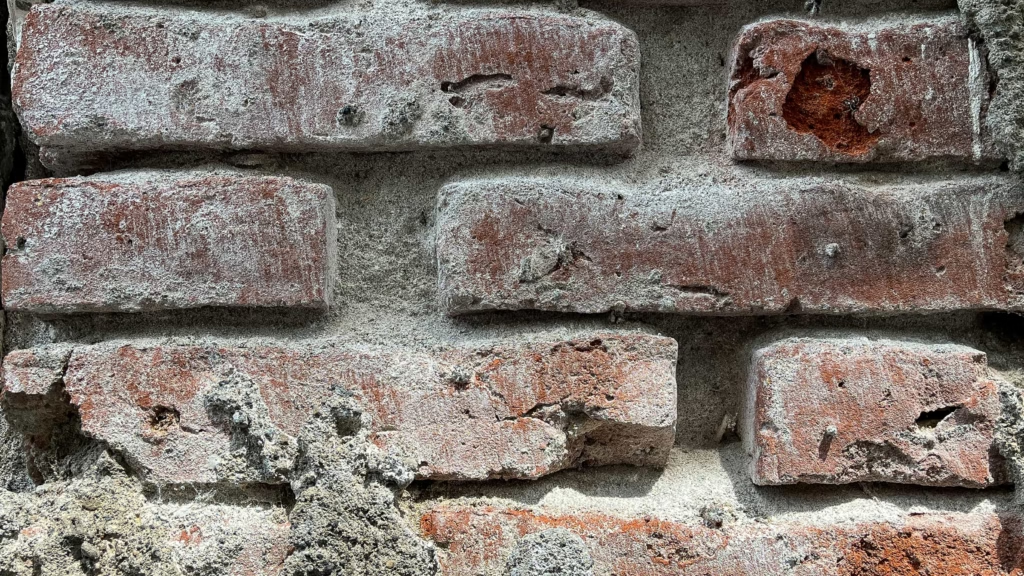
Don’t let crumbling mortar ruin your home’s structural integrity or curb appeal. Our masonry restoration experts specialize in tuckpointing, brick replacement, and waterproofing to bring your exterior back to life. Protect your investment with professional care!
The Science of Saturated Masonry and Why Brick Acts Like a Sponge
Many people assume that because bricks are hard and heavy, they are waterproof. This is a dangerous misconception. To a water molecule, a brick looks like a series of interconnected tunnels.
Understanding Capillary Action
Through a process called capillary action, moisture is “sucked” upward and inward through the pores of the brick and mortar. Once the masonry is saturated, the water has nowhere to go but into your home’s framing.
The Heat-Moisture Cycle
In Florida, the sun comes out immediately after a storm. This rapid heating causes the water trapped inside the brick to turn into vapor. If your chimney hasn’t been treated with a breathable professional sealant, that vapor expands rapidly, causing micro-fractures in the mortar. Over time, these small cracks become major structural failures.
“According to industry standards from the Masonry Institute, untreated brick can increase in weight by over 20% when fully saturated, putting immense stress on the chimney’s foundation.”
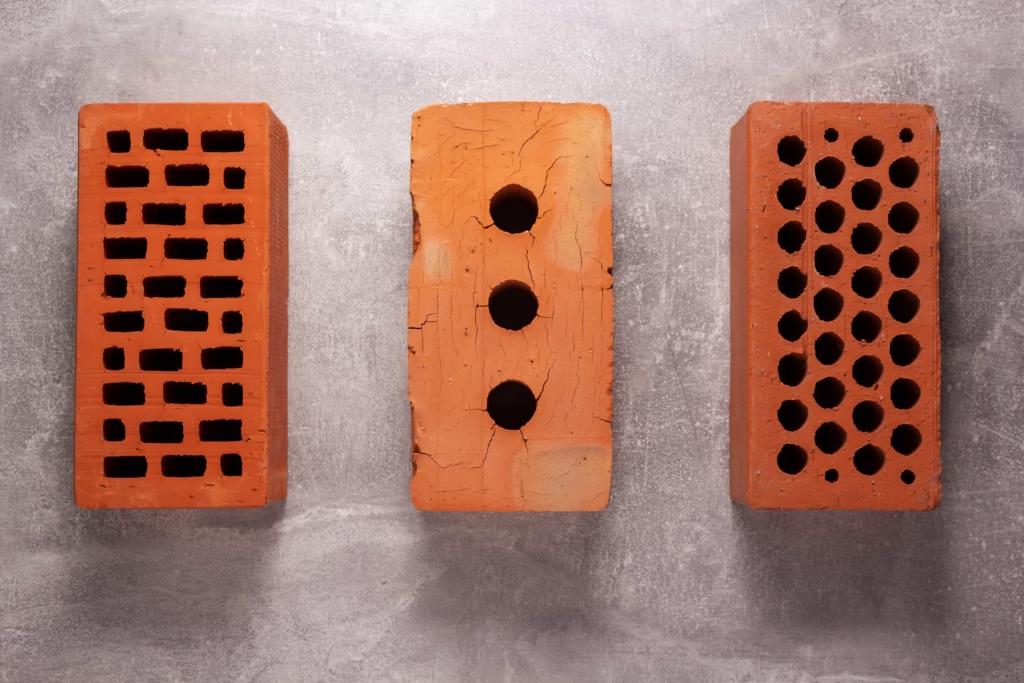
Choosing the right materials is the foundation of any lasting build. These high-durability perforated clay bricks offer excellent thermal insulation and structural integrity for your next residential or commercial project. Perfect for classic brick siding or modern masonry designs.
The Dangers of DIY and Why “Off-the-Shelf” Solutions Fail
We live in a world of DIY enthusiasts, but waterproofing your chimney is one task where a “do-it-yourself” approach can actually cause more damage than the rain itself. At Always A Sweep, we frequently repair chimneys ruined by improper retail sealants.
The “Plastic Wrap” Mistake
Most sealants found at local hardware stores are silicone-based or acrylic “film-forming” water-blockers. They work by creating a solid coating over the brick, essentially wrapping your chimney in plastic.
Why is this bad for Florida homes?
-
Trapped Vapor: Your chimney produces heat and moisture from the inside (even in Florida, using a fireplace or gas logs creates water vapor).
-
Internal Rot: A DIY sealant prevents this internal moisture from escaping. The water stays trapped, causing the chimney to rot from the inside out.
-
Scaling and Spalling: Within two years, the “sealant” will begin to peel, taking the top layer of your brick with it.
If a sealant promises a “glossy” or “wet” look, avoid it. Professional waterproofing should be invisible to allow the brick to breathe.
Identifying the Warning Signs of Water Intrusion
How do you know if you are already losing the battle against Florida’s rain? Before you even consider waterproofing your chimney, look for these red flags:
1. Efflorescence (White Staining)
Look for white, powdery streaks on the exterior of the chimney. This is salt residue left behind by evaporating water. It is a clear sign that water is moving through your bricks.
2. Spalling and Crumbling
If you find chips or chunks of brick on your roof or in your yard, your masonry is failing structurally. This is a primary indicator that the internal moisture-heat cycle is breaking the brick apart.
3. The “Musty” Fireplace
If your living room smells like a wet basement after a storm, you likely have mold growing behind the chimney liner. This indicates a high level of saturation within the wall cavity.
A 2025 study on Florida residential structures found that 60% of chimney leaks were caused by failed masonry crowns and lack of water repellent.
The Professional Edge for Our Specialized Waterproofing Process
At Always A Sweep, we don’t just “spray and go.” Our process is a comprehensive restoration designed to withstand 100+ mph winds and torrential rain.
Step 1: Professional Cleaning
We use eco-friendly, masonry-safe cleaners to remove carbon, algae, and mold. This opens up the “pores” of the brick so the repellent can sink in deep.
Step 2: Masonry “Triage”
Before waterproofing your chimney, we inspect the mortar joints. If they are receding or sandy, we perform repointing—the process of replacing old mortar with new, high-strength material.
Step 3: Application of Vapor-Permeable Repellents
We exclusively use 100% breathable silane-siloxane water repellents. These products are not “coatings”; they are “penetrants”. They bond chemically to the brick, lining the pores without clogging them. This allows the chimney to “breathe” out gases while shedding 99.9% of liquid water.
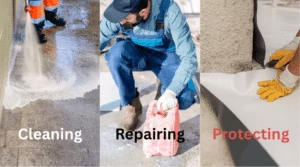
Revitalize and safeguard your property with our complete three-step approach: Clean, Repair, and Protect. From high-pressure washing to expert surface sealing, we ensure your home or business stays in peak condition. Save this for your next exterior renovation project!
Comprehensive Protection the Beyond the Brick
Waterproofing your chimney is the main event, but a truly storm-ready chimney requires a holistic approach.
-
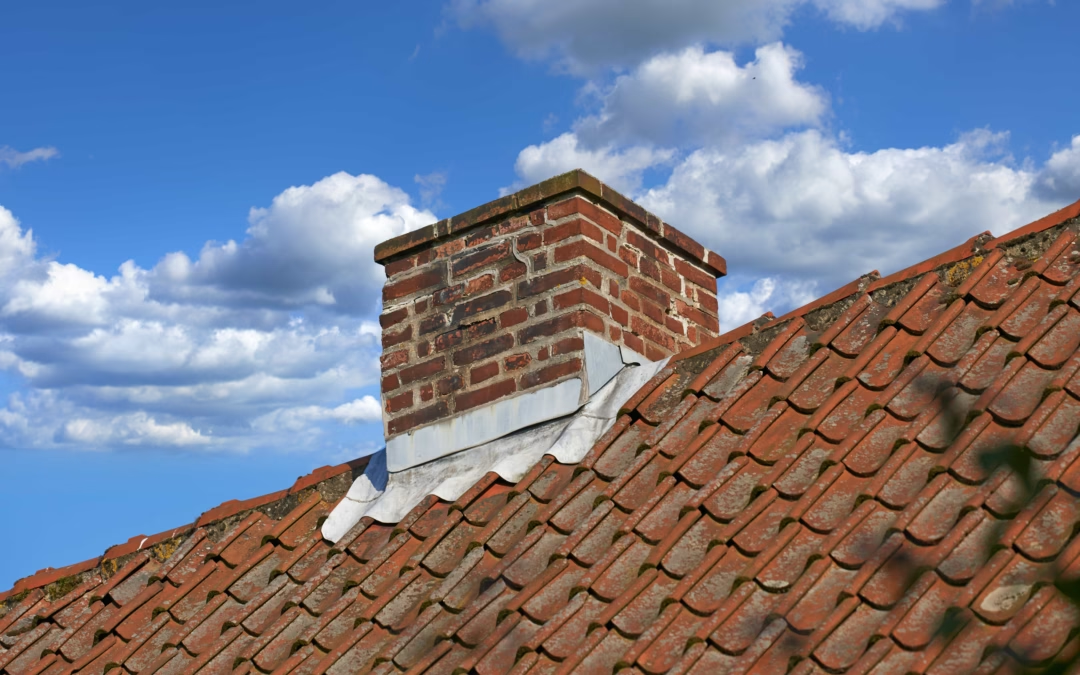
The Chimney Crown: The concrete “roof” of your chimney. If cracked, it acts as a funnel. We apply a specialized “CrownCoat” flexible membrane.
-
Flashings and Caps: The metal area where the chimney meets the roof is a common failure point in Florida. We ensure your flashing is watertight.
Frequently Asked Questions
How often should I perform waterproofing on my chimney?
In the Florida climate, we recommend waterproofing your chimney every 5 to 7 years. The high UV index and salt air can break down even professional repellents over time.
Does chimney waterproofing change the color of my brick?
No. Professional silane-siloxane repellents are invisible. Unlike DIY acrylics, they do not create a “glossy” finish or change the natural aesthetic of your masonry.
Can I waterproof a chimney that is already leaking?
Waterproofing is a preventative measure. If you have an active leak, we must first identify the entry point (often the crown or flashing) and repair it before applying repellent.
Is waterproofing worth the cost?
Yes. The average cost of waterproofing is a fraction of the cost of a full chimney rebuild. It is one of the highest-ROI maintenance tasks for Florida homeowners.
The ideal time is during the “dry season” (typically late fall or winter). However, it can be done year-round as long as the masonry has 24–48 hours to dry before application.
Protecting Your Florida Investment
Your home is likely your largest financial investment. Allowing a maintenance task like waterproofing your chimney to turn into a $15,000 chimney rebuild is a risk no homeowner should take.
Florida’s afternoon rainstorms are a certainty. Whether your chimney survives them or succumbs to them depends on the steps you take today.
Ready to protect your home?
-
Schedule an Inspection: Have a professional evaluate your masonry health.
-
Clear Debris: Ensure your gutters and roof are clear of leaves that trap moisture.
-
Choose Quality: Only use vapor-permeable repellents.
Book Your Professional Chimney Inspection Today with Always A Sweep
by Always A Sweep Team | Apr 13, 2026 | Always Home Repair Services, chimney repair, dryer vent repair, roof termination replacement
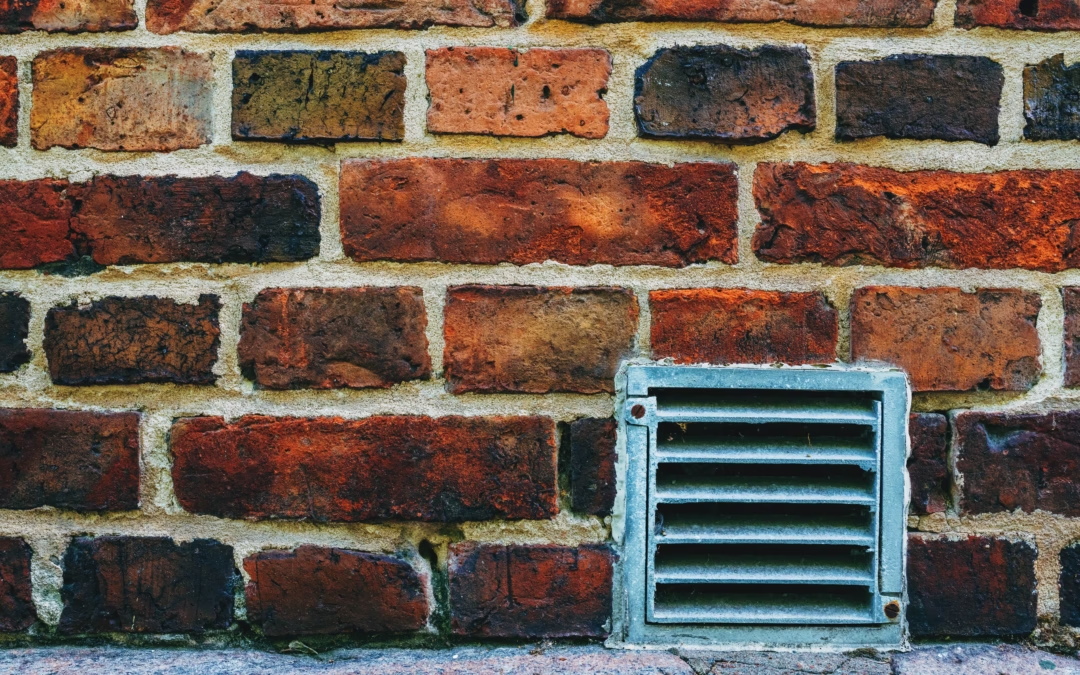
A pest proof dryer vent cover for exterior wall acts as a critical mechanical barrier between the comfort of your home and the unpredictable wildlife of North Central Florida. When your dryer is running, the vent allows hot, moist air to escape; however, the moment the cycle ends, a standard vent often leaves a gaping hole in your building envelope.
By utilizing a pest proof dryer vent cover for exterior wall, you ensure that the exit point remains hermetically sealed against intruders. How does this impact your safety? It prevents highly flammable nesting materials—like straw, dried grass, and twigs—from being deposited inside your ductwork. This simple addition significantly reduces the risk of lint-related fires, which remain a leading cause of residential property damage.
At Always A Sweep, we don’t just see a vent; we see a vital component of your home’s defense system. How many homeowners realize that a small bird can completely block a dryer line in less than 48 hours? Installing the right cover is the most effective way to preempt this disaster.
Table of Contents
-
How Does a Pest Proof Dryer Vent Cover for Exterior Wall Protect Your Home?
-
Why Are Local Critters Attracted to Your Dryer Exhaust?
-
What Features Make a Vent Cover Truly Pest-Proof?
-
How Do You Know if Your Current Vent Cover Has Failed?
-
Where Should You Install a High-Performance Exterior Vent?
-
How Can Professional Installation Improve Energy Efficiency?
-
What Maintenance is Required for a Pest-Proof System?
-
Expert Resources and Next Steps
Why Are Local Critters Attracted to Your Dryer Exhaust?
Why do birds, squirrels, and even bats target your dryer vent? The answer lies in the heat. During the cooler months in North Central Florida, the warm air blowing from your laundry room signals a perfect, pre-heated nesting spot.
Without a pest proof dryer vent cover for exterior wall, these animals view your ducting as a safe, sheltered tunnel away from predators. How do they get inside? Many basic plastic covers have thin louvers that a squirrel can easily chew through or a bird can pry open with its beak. Once inside, they begin building nests that trap lint, creating a “plug” that prevents your dryer from breathing.
How does this affect your appliances? When the exhaust is restricted, your dryer’s internal temperature spikes. This doesn’t just wear out the heating element; it creates a volatile environment where a single spark from the motor can ignite the trapped lint and nesting material.
What Features Make a Vent Cover Truly Pest-Proof?
When shopping for a pest proof dryer vent cover for exterior wall, what should you look for? Not all covers are created equal. To achieve the best success in keeping critters out, a cover must have specific engineering features:
-
Dual-Door Technology: How does this work? It uses an inner and outer door to provide two layers of defense.
-
Magnetic Latches: How do these improve safety? Magnetic seals ensure the door stays shut against high winds and curious paws but opens easily under the air pressure of the dryer.
-
Heavy-Duty Materials: Why choose metal over plastic? Powder-coated steel or thick UV-resistant polymers prevent the sun from making the unit brittle and easily breakable.
-
Vertical Discharge: How does this help? Some designs allow air to exit downward, making it nearly impossible for birds to gain the leverage needed to fly “up” into the pipe.
How Do You Know if Your Current Vent Cover Has Failed?
How can you tell if your pest proof dryer vent cover for exterior wall is no longer doing its job? There are several “silent” indicators that every homeowner should watch for:
-
How do the louvers look? If they are missing, stuck open, or warped, your vent is compromised.
-
How long do your clothes take to dry? If a load that used to take 40 minutes now takes 80, there is a blockage—likely a nest—preventing airflow.
-
What do you see on the ground? Finding bits of lint or bird droppings directly under the vent is a clear sign of an active intrusion.
-
Is there a smell? A foul odor coming from the dryer area often indicates that an animal has become trapped and perished within the line.
If you answer “yes” to any of these, it is time to consider a Replacement / Repair / Reconnection of Dryer Vent and a high-quality pest proof dryer vent cover for exterior wall.
Where Should You Install a High-Performance Exterior Vent?
Where is the most effective location for a pest proof dryer vent cover for exterior wall? While the exit point is determined by your laundry room’s location, the “how” of the installation is just as important as the “where.”
At Always A Sweep, we ensure that the vent is installed at a height that prevents ground-dwelling rodents from jumping in, while also ensuring it is accessible for annual cleaning. How do we handle different siding types? We specialize in Dryer Wall Exhaust Termination for stucco, brick, and vinyl siding, ensuring a watertight seal that prevents secondary issues like wood rot or mold.
How Can Professional Installation Improve Energy Efficiency?
How does a pest proof dryer vent cover for exterior wall actually save you money? It all comes down to “backdrafting” and thermal loss. In the summer, an unsealed vent allows the hot, humid Florida air to leak back into your air-conditioned home.
By installing a professional-grade pest proof dryer vent cover for exterior wall, you create a one-way street. How does this help your wallet? Your HVAC system won’t have to work as hard to combat the heat leaking in through the laundry room. Furthermore, because your dryer can exhaust air more efficiently through a clean, pest-free vent, it uses significantly less electricity per load.
What Maintenance is Required for a Pest-Proof System?
Even with a pest proof dryer vent cover for exterior wall, how often should you perform maintenance? We recommend a simple three-step check twice a year:
-
Step 1: While the dryer is running, walk outside. Is the vent door opening fully?
-
Step 2: Once the dryer stops, check if the door snapped shut.
-
Step 3: Look for any lint “fuzz” caught on the edges of the pest proof dryer vent cover for exterior wall and wipe it away.
How can you ensure the deep interior of the duct is safe? Schedule a professional Dryer Vent Cleaning & Inspection once a year. This removes the fine lint that bypasses the dryer’s internal filter and accumulates in the ductwork over time.
Expert Resources and Next Steps
How Will You Secure Your Home?
Choosing to install a pest proof dryer vent cover for exterior wall is a proactive step toward a safer, more efficient home. How much is peace of mind worth when you know that no squirrels, birds, or snakes can enter your living space through your appliances?
At Always A Sweep, we are dedicated to helping North Central Florida residents maintain their homes with the highest level of expertise. Whether you need a Roof Termination Replacement or a new pest proof dryer vent cover for exterior wall, our team is ready to help.
Ready to stop the critters? Contact Always A Sweep today to schedule your professional installation and dryer vent inspection. How can we help you breathe easier today?

by Always A Sweep Team | Mar 31, 2026 | Always Home Repair Services, chimney repair
Signs your chimney flue tile is cracked are often subtle, but ignoring them can lead to catastrophic house fires or carbon monoxide poisoning. Your chimney liner is the silent guardian of your home, acting as a heat-resistant barrier between the intense flames of your fireplace and the combustible wood framing of your house. When this barrier fails, the safety of your entire household is at risk.
At Always A Sweep, we specialize in identifying these hidden dangers throughout North Central Florida. Whether you have a woodburning fireplace or a modern gas insert, understanding the condition of your clay tile liner is a non-negotiable part of home maintenance.
Table of Contents
-
What is a Chimney Flue Tile?
-
Top 5 Signs Your Chimney Flue Tile is Cracked
-
The Dangers of a Damaged Liner
-
Why Professional Inspection is Mandatory
-
Solutions: Chimney Relining and Repair
-
Service Areas: Keeping North Central Florida Safe
-
Conclusion
What is a Chimney Flue Tile?
Before diving into the signs your chimney flue tile is cracked, it is important to understand what you are looking at. Most traditional masonry chimneys are lined with terra cotta clay tiles. These tiles are stacked and sealed with mortar to create a smooth, continuous path for smoke and toxic gases to exit your home.
Clay is used because it is inexpensive and resistant to the corrosive byproducts of combustion. However, clay is also brittle. Over decades of use, the constant expansion and contraction caused by heat (thermal shock) can cause these tiles to split, flake, or shift.
Top 5 Signs Your Chimney Flue Tile is Cracked
Because you cannot simply look up your chimney and see the entire flue, you have to look for secondary clues. Here are the most common signs your chimney flue tile is cracked that every homeowner should watch for:
1. Flakes of Clay in the Firebox (Spalling)
If you notice thin, red or terra cotta-colored shards of material sitting on your smoke shelf or in the floor of your fireplace, your liner is “spalling.” This happens when moisture enters the clay and freezes, or when heat stress causes the surface of the tile to peel away.
While you shouldn’t climb your roof without safety gear, a technician during a Chimney Repair can often see vertical cracks in the top-most flue tile. If the top tile is cracked, it is highly likely the tiles further down are also damaged.
3. Efflorescence (White Staining)
White, powdery staining on the exterior masonry of your chimney is called efflorescence. This indicates that moisture is moving through the chimney structure. If the flue tile is cracked, water can seep through the gaps, carrying salts to the exterior of the brick.
A cracked flue creates turbulence in the airflow. When smoke hits a crack or a shifted tile, it slows down and cools, leading to rapid creosote accumulation. If your chimney seems unusually dirty shortly after a Fireplace Sweep, a cracked liner may be the culprit.
5. Odors and Draft Issues
Cracks allow smoke to linger or even seep into the walls of your home. If you smell a campfire scent in upstairs rooms or behind walls, the flue is no longer airtight.
The Dangers of a Damaged Liner
Recognizing the signs your chimney flue tile is cracked is the first step in preventing a disaster. A damaged liner fails in three primary ways:
-
Heat Transfer: A crack allows heat to reach the “combustible” parts of your home (like wooden studs and rafters). It only takes a few hours of high heat to ignite seasoned wood behind a chimney wall.
-
Carbon Monoxide Leaks: The flue’s job is to direct carbon monoxide out of the house. Cracks allow this odorless, colorless, and deadly gas to enter your living spaces. You can learn more about the symptoms of CO poisoning at the Centers for Disease Control and Prevention (CDC).
-
Corrosion of Masonry: When flue gases (which are acidic) escape through cracks, they eat away at the mortar holding your chimney together from the inside out, leading to structural failure.
Why Professional Inspection is Mandatory
You cannot diagnose a cracked flue with a flashlight alone. Professional signs your chimney flue tile is cracked are best identified through a Level 2 video inspection.
At Always A Sweep, we use specialized chimney cameras that travel the full length of the flue. This allows us to see “hairline” cracks that are invisible to the naked eye but large enough to leak dangerous gases.
The National Fire Protection Association (NFPA) recommends an annual inspection for all chimney systems to ensure they remain fit for use. If you haven’t had your chimney checked in over a year, you are essentially gambling with your home’s safety.
Solutions: Chimney Relining and Repair
If we confirm the signs your chimney flue tile is cracked, the most common and effective solution is Chimney Relining.
Stainless Steel Liners
We often recommend replacing the damaged clay tiles with a high-grade stainless steel liner. These liners are flexible, incredibly durable, and come with lifetime warranties. They are safer than clay because they don’t crack under thermal shock.
Masonry Repair
In some cases, if the damage is localized to the top of the chimney, a Masonry Repair or a new chimney cap can prevent further water intrusion that leads to cracking.
Service Areas: Keeping North Central Florida Safe
Always A Sweep is proud to provide expert chimney and gas services throughout North Central Florida. We don’t just stop at chimneys; we are your full-service provider for home safety.
-
Inspections & Sweeping: Our core service to ensure your fireplace is ready for the winter.
-
Gas System Services: We handle Propane & Natural Gas System Installations and emergency leak detection.
-
Dryer Vent Cleaning: A leading cause of household fires that we help you avoid through routine maintenance.
-
Water Intrusion: If your chimney is leaking, we provide specialized assessments to stop the rot before it starts.
Whether you are in Ocala, Gainesville, or the surrounding rural areas, our team is equipped to handle everything from Woodburning Stoves to complex Gas Fireplaces.
Maintaining Your Chimney After Repair
Once you have addressed the signs your chimney flue tile is cracked, maintenance is key to ensuring the problem never returns.
-
Burn Seasoned Wood Only: Wet wood creates more creosote and more heat stress on the tiles.
-
Install a Chimney Cap: This keeps rain out, which is the #1 enemy of clay tiles.
-
Schedule Annual Sweeps: Removing creosote prevents chimney fires, which are the leading cause of cracked tiles.
Conclusion
The signs your chimney flue tile is cracked are a warning you cannot afford to ignore. From falling clay flakes to unusual odors, these symptoms point toward a breach in your home’s primary fire defense.
At Always A Sweep, we combine years of expertise with advanced technology to provide the most thorough chimney relining and repair services in North Central Florida. Don’t wait for a chimney fire to tell you there’s a problem.
by Always A Sweep Team | Mar 23, 2026 | Always Home Repair Services, chimney repair, dryer vent repair, inspections & sweeping
When was the last time you felt truly confident climbing into your attic? For many homeowners, the attic is a “no-go zone” dominated by a rickety, wooden ladder that creaks under the slightest weight. If you are using your attic for seasonal storage or accessing HVAC equipment, safety should never be a secondary thought.
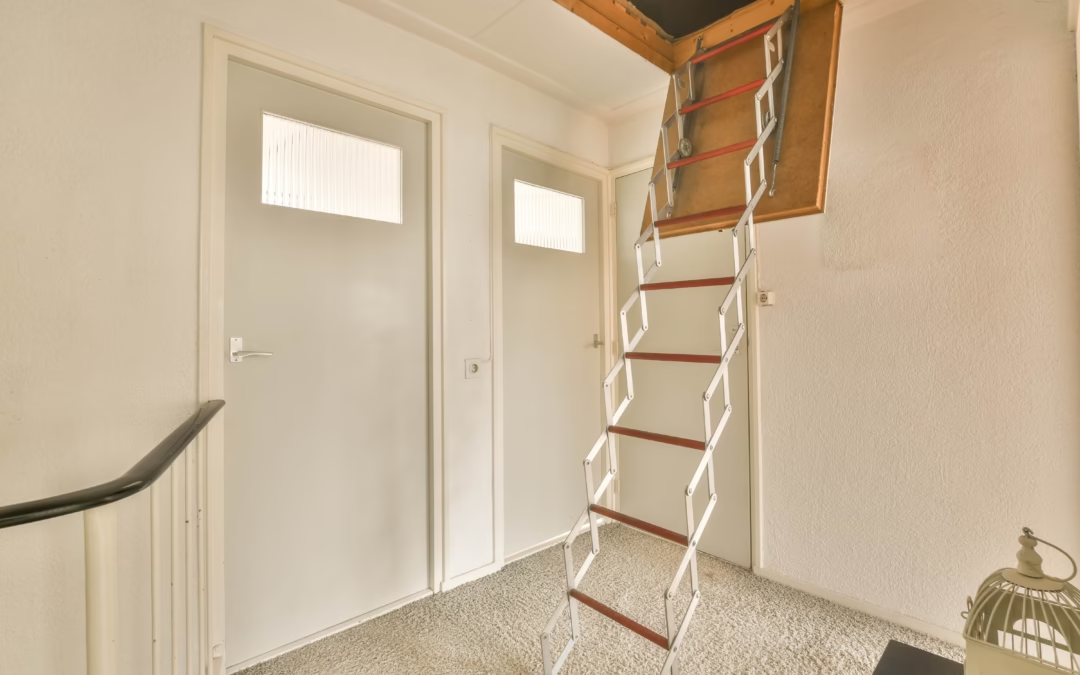
Choosing a heavy duty aluminum attic ladder installation is one of the most impactful, high-ROI upgrades you can make for your home’s utility and your own physical safety. In this guide, we will break down why aluminum is the gold standard, the technical nuances of a professional installation, and how this upgrade protects your home’s structural integrity.
Table of Contents
-
The Case for Aluminum: Strength Meets Science
-
Why “Heavy Duty” Matters (Load Capacity Explained)
-
The Risks of DIY vs. Professional Installation
-
Step-by-Step: Heavy Duty Aluminum Attic Ladder Installation
-
EEAT: Why Trust Always A Sweep for Your Home Upgrades?
-
Energy Efficiency and the Attic Seal
-
Maintenance Tips for Longevity
-
Frequently Asked Questions
The Case for Aluminum: Strength Meets Science
While traditional wood ladders have been the standard for decades, they are susceptible to environmental degradation. Wood is an organic material that reacts to the extreme temperature fluctuations found in attics. Over time, wood can warp, crack, or develop “checked” grains that compromise its load-bearing ability.
Aluminum, on the other hand, is a non-corrosive metal that offers a superior strength-to-weight ratio. A heavy duty aluminum attic ladder installation provides a sleek, modern solution that won’t splinter or rot. Furthermore, aluminum is naturally resistant to moisture, which is vital if your attic experiences humidity or if you live in a coastal climate.
Why “Heavy Duty” Matters (Load Capacity Explained)
Standard attic ladders are often rated for 250 lbs. While this sounds sufficient, consider the math: an average adult carrying a 50-lb box of holiday decorations quickly approaches that limit.
A “Heavy Duty” rating typically starts at 375 lbs (170 kg). This extra headroom isn’t just about the weight; it’s about the rigidity of the frame. When you invest in a heavy duty aluminum attic ladder installation, you are investing in a system designed for “zero-flex.” This stability prevents the “bounce” that causes falls and structural stress on your ceiling joists.
Pro Tip: Always check the ANSI (American National Standards Institute) rating on any ladder product before purchase to ensure it meets industrial safety criteria.
The Risks of DIY vs. Professional Installation
It is tempting to view a ladder swap as a simple weekend project. However, the heavy duty aluminum attic ladder installation process involves more than just a few screws.
-
Structural Integrity: Most attic openings are framed between ceiling joists. If your new heavy-duty unit requires a larger opening, you may need to cut into your home’s “skeleton.” Doing this incorrectly can cause ceiling sag or even roof instability.
-
Squareness and Leveling: If the frame is even $1^\circ$ out of square, the ladder will not sit flush. This creates uneven pressure on the hinges, leading to premature failure.
-
The “Gap” Problem: A poorly installed door creates a massive “chimney effect,” sucking expensive conditioned air out of your living space.
At Always A Sweep, we specialize in the intersection of safety and structural health. Just as we ensure your chimney is clear of hazards, we ensure your attic access is a bridge, not a liability.
Step-by-Step: Heavy Duty Aluminum Attic Ladder Installation
To give you an idea of the precision required, here is the professional workflow for a successful installation:
Phase 1: The Rough Opening
We begin by measuring the existing opening. Most heavy-duty models require a standard $22.5″ \times 54″$ or $30″ \times 54″$ footprint. If the opening needs enlargement, we reinforce the headers to maintain the load-bearing capacity of your ceiling.
Phase 2: Positioning the Frame
The aluminum frame is hoisted into the attic. We use temporary “cleats” (wooden slats) to hold the unit in place while we shim the sides. Shimming ensures the frame is perfectly level, preventing the door from sticking.
Phase 3: Fastening and Securing
We use 16d nails or $3″$, high-shear lag screws. Never use drywall screws for a heavy duty aluminum attic ladder installation; they lack the tensile strength to hold the weight of the ladder and a person.
Phase 4: Calculating the Cut
Aluminum ladders are often “universal height” and must be trimmed to fit your specific floor-to-ceiling distance. We use a precise formula to ensure the feet make 180 degrees contact with the floor.
Why Trust Always A Sweep?
Experience, Expertise, Authoritativeness, and Trustworthiness guidelines are the benchmark for quality content.
-
Experience: Our technicians have spent decades in the “gut” of homes—from chimneys to crawlspaces.
-
Expertise: We understand the physics of home airflow and structural loading.
-
Authoritativeness: We are a recognized name in home safety across our service areas.
-
Trust: We provide transparent pricing and detailed post-installation inspections.
Choosing us for your heavy duty aluminum attic ladder installation means you aren’t just getting a product; you’re getting a professional safety audit of your attic access point.
Energy Efficiency and the Attic Seal
One often overlooked aspect of a new ladder is the R-value of the door. A heavy-duty aluminum unit often comes with an integrated weather-strip.
According to the Department of Energy, an uninsulated attic hatch is like leaving a window open year-round. During your installation, we recommend adding an “attic tent” or an insulated cover to ensure your energy bills stay low while your safety stays high.
Maintenance Tips for Longevity
Once your heavy duty aluminum attic ladder installation is complete, a little maintenance goes a long way:
-
Lubricate the Pivots: Use a silicone-based spray on the hinges every 6 months.
-
Check the Feet: Ensure the rubber or plastic feet aren’t worn down, which can cause slipping on hardwood or tile.
-
Tighten the Nuts: Vibration from use can occasionally loosen the mounting bolts on the ladder sections.
Frequently Asked Questions
Q: Can I install a heavy-duty ladder in a small hallway?
A: It depends on the “swing clearance.” Aluminum ladders often have a smaller swing radius than wood, making them ideal for tight spaces.
Q: How long does a professional installation take?
A: Usually between 3 to 5 hours, depending on whether the rough opening needs to be modified.
Transform Your Home Safety Today
Don’t wait for a “close call” on a shaky wooden ladder to make the switch. A heavy duty aluminum attic ladder installation is a permanent solution for a safer, more accessible home.
Would you like me to provide a free estimate for your attic upgrade or schedule a safety inspection for your home? Contact Always A Sweep today!
by Always A Sweep Team | Mar 5, 2026 | chimney repair, dryer vent repair, installation
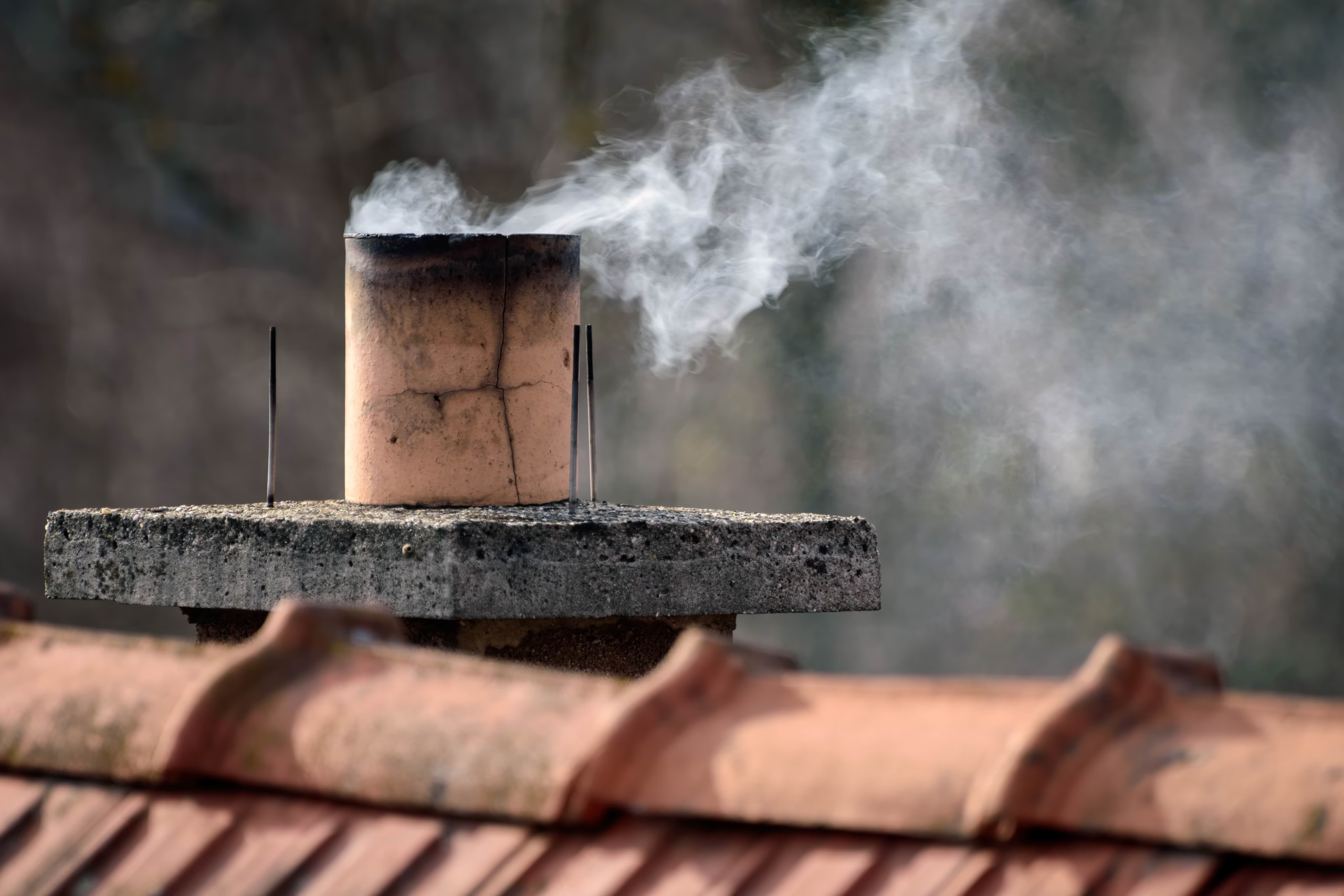
Why Your Florida Home Has a Stinky Chimney This Summer
If you’ve lived in Florida for even one summer, you know that the air doesn’t just get hot, it gets heavy. For many homeowners, this seasonal shift brings an unwelcome guest into the living room: the unmistakable aroma of an old campfire, wet asphalt, or even rotting organic matter.
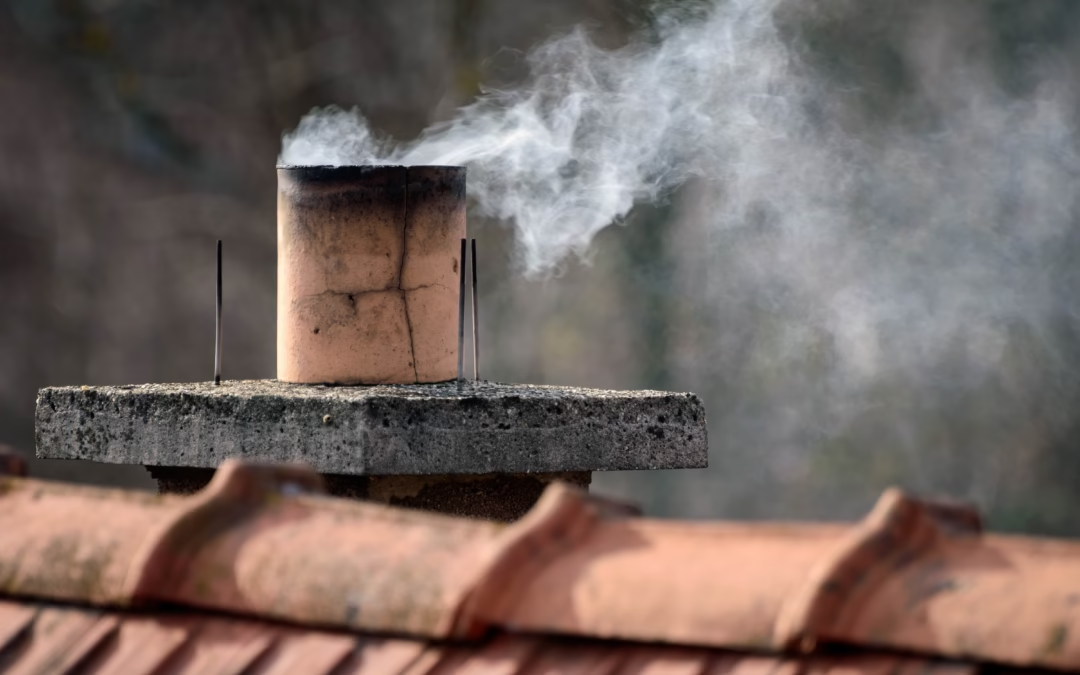
A stinky chimney is a common but frustrating phenomenon. While you aren’t lighting fires in July, your chimney is still “breathing”. Because of the unique climate in the Sunshine State, your fireplace can effectively become a giant straw, sucking humid air and foul odors into your home.
In this guide, we will break down the complex physics of chimney downdrafts, the chemistry of creosote, and why professional intervention is the only way to safeguard your home’s air quality and structural integrity.
To understand the stinky chimney effect, we must look at “The Stack Effect“. In the winter, hot air in the chimney rises because it is more buoyant than the cold outside air. This creates a vacuum that pulls smoke up and out.
In a Florida summer, this process reverses. Your home is air-conditioned (cool, dense air), while the outside air is scorching (hot, light air). This creates a pressure imbalance.
The Downdraft Phenomenon
When your A/C runs, or when you use exhaust fans in the kitchen or bathroom, your home becomes a “negative pressure zone”. It desperately needs to pull air from somewhere to equalize. The easiest path? The chimney. As hot air is pushed down the flue by the outside atmosphere and pulled in by your A/C, it picks up every odor molecule inside the chimney and deposits them in your living room.
The Florida Factor: Humidity and the Stinky Chimney
Florida is notorious for its 80%+ humidity levels. Moisture is the “fuel” for a stinky chimney.
Masonry chimneys are constructed of porous materials like brick, mortar, and stone. These materials act like a sponge, absorbing water vapor from the air. When this moisture meets the carbon deposits (soot and creosote) inside your flue, it creates a chemical reaction. This “stew” of damp carbon is what produces that pungent, acrid smell.
Furthermore, Florida’s frequent summer thunderstorms can introduce actual liquid water into the flue if your chimney cap is damaged, drastically accelerating the odor production.
Creosote Chemistry: What You Are Actually Smelling
The primary source of a stinky chimney is creosote. This is a byproduct of wood combustion that condenses on the cool walls of your flue.
The Three Stages of Creosote:
- Stage 1 (Soot): A dusty, black powder that is easily removed.
- Stage 2 (Crunchy): Flaked carbon that resembles burnt popcorn.
- Stage 3 (Glazed): A thick, shiny, tar-like substance that is highly flammable and extremely odorous.
During the summer, Stage 3 creosote begins to “off-gas.” The heat causes the oils in the tar to vaporize. This isn’t just a smell issue; it’s a safety issue. Creosote is the leading cause of chimney fires in the United States, as noted by the NFPA.
The Hidden Dangers of Animal Debris
Sometimes, a stinky chimney isn’t caused by fire byproducts at all. In Florida, many critters, including Chimney Swifts, raccoons, and squirrels, view your chimney as a perfect summer rental.
- Nesting Material: Dried leaves, twigs, and straw are highly absorbent and will smell like rotting vegetation when damp.
- Biological Waste: Animal droppings inside a warm, humid flue create a significant health hazard (such as Histoplasmosis) and a foul, ammonia-like odor.
- Decomposition: If an animal becomes trapped and dies in the flue, the smell can become unbearable within 48 hours.
While “Do It Yourself” projects are popular, chimney maintenance is not a DIY task. Attempting to clean a stinky chimney on your own can lead to disastrous results.
1. Ineffective Cleaning
Consumer brushes available at hardware stores are often too soft to remove Stage 2 or Stage 3 creosote. If you only remove the surface dust, the source of the smell remains.
2. Health Risks
Without professional-grade HEPA vacuums, a DIY attempt will likely blow fine soot particles into your home. These particles can stain furniture and, more importantly, enter your lungs. Creosote contains carcinogens that should never be handled without proper PPE.
3. Structural Blind Spots
A professional sweep doesn’t just clean; they inspect. A DIYer will likely miss a cracked flue liner or a rusted damper. Ignoring these issues can lead to carbon monoxide leaks or house fires when you finally light a fire in the winter.
Professional Solutions: Beyond the Basic Sweep
At Always a Sweep, we utilize advanced technology to address a stinky chimney at its source. Our process adheres to the highest EEAT principles to ensure your home is safe.
Video Camera Inspections
We use specialized, high-definition cameras that travel the length of your flue. This allows us to see “invisible” cracks or blockages that a standard flashlight inspection would miss.
Chemical Descaling
For heavy creosote odors, we apply industrial-strength chemical agents. these break down the molecular bond of glazed creosote, allowing it to be safely swept away. This is a task that requires professional certification to perform safely.
Mechanical Cleaning
Using heavy-duty, rotary power-sweeping tools, we can restore your flue to its original diameter, significantly reducing the surface area where odors can cling.
Long-Term Prevention: The Top-Sealing Damper
If your home suffers from chronic negative pressure, a standard throat damper (the metal plate just above the firebox) is rarely enough to stop a stinky chimney.
We recommend the installation of a Top-Sealing Damper.
- How it Works: This device is installed at the very top of the chimney flue. It features a rubber gasket that creates an airtight seal.
- The Benefit: It keeps the cool air in and the humid Florida air out. By sealing the chimney at the top, you prevent the “straw effect” entirely.
Conclusion: Restoring Your Home’s Freshness
A stinky chimney is a signal that your home’s ventilation system is out of balance. Between Florida’s oppressive humidity and the chemical nature of creosote, these odors will not simply “go away” on their own.
By choosing a professional service like Always a Sweep, you are investing in the longevity of your home and the health of your family. Our expert team provides the deep cleaning and structural repairs necessary to eliminate odors and ensure your fireplace is ready for the first cold snap of the year.
Don’t let a stinky chimney ruin your summer. Trust the experts who understand Florida’s unique environmental challenges.
by Always A Sweep Team | Jan 12, 2026 | chimney repair, inspections & sweeping
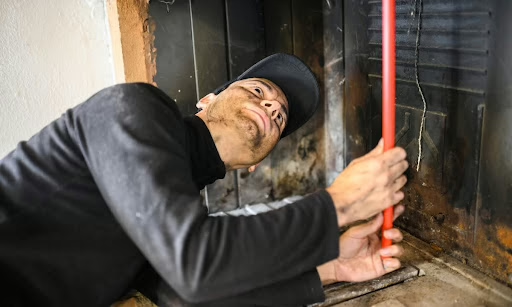
To ensure your fireplace remains a safe centerpiece for your home, finding a professional Chimney Sweep Orlando FL residents trust is essential. While many believe the warm weather in Central Florida makes chimney care a secondary concern, the reality is that the less a chimney is used, the more likely it is to harbor hidden dangers like moisture, mold, and pest infestations.
A certified Chimney Sweep Orlando FL doesn’t just “brush away soot.” They act as safety inspectors who identify structural weaknesses that could lead to devastating house fires or carbon monoxide leaks. Every time you enjoy a rare chilly evening by the fire, you should do so with the confidence that your system has been vetted by an expert.
Table of Contents
- The Critical Role of a Chimney Sweep Orlando FL
- Why Experience and Trust Matter
- The Impact of Florida’s Climate on Your Chimney
- Types of Chimneys Found in Central Florida
- The Step-by-Step Professional Cleaning Process
- Understanding NFPA Inspection Levels
- Wildlife Challenges in Orlando Chimneys
- Maintenance Checklist for Homeowners
- Why Always A Sweep is the #1 Choice
Why Experience and Trust Matter
At Always A Sweep, we embody these values by combining decades of field experience with ongoing technical education.
- Experience: Our technicians have spent thousands of hours on Orlando rooftops, from historic homes in Winter Park to modern builds in Lake Nona.
- Expertise: We stay current with the latest venting technologies and masonry repair techniques.
- Authoritativeness: We align our practices with the National Fire Protection Association (NFPA) standards.
- Trustworthiness: We provide clear, photographic evidence of our findings, ensuring you never pay for repairs you don’t need.
The Impact of Florida’s Climate on Your Chimney
An Orlando FL chimney sweep faces different challenges than one in the Northeast. Here, the primary enemy is moisture.
1. High Humidity and Creosote
Creosote is a flammable byproduct of wood-burning. In Florida’s high humidity, creosote can absorb moisture, turning it into a “gooey” substance that is even harder to remove and highly corrosive to your chimney liner.
2. Tropical Storms and Wind
Hurricanes and tropical storms can rattle chimney caps and loosen the flashing—the seal between your chimney and roof. A professional Chimney Sweep Orlando FL will check these seals to prevent leaks that lead to attic rot and mold.
Types of Chimneys Found in Central Florida
Not all chimneys are created equal. When you book a Chimney Sweep Orlando FL, the technician must understand the specific needs of your unit.
- Masonry Chimneys: Built with brick and mortar. These are prone to “spalling” (bricks crumbling) due to Florida’s rain.
- Factory-Built (Pre-Fab) Chimneys: These use metal flues. They are common in newer Orlando developments and require specific brushes to avoid scratching the metal.
- Gas Fireplace Vents: Even if you don’t burn wood, gas vents can become blocked by bird nests or debris, leading to carbon monoxide risks.
The Step-by-Step Professional Cleaning Process
When you hire a Chimney Sweep Orlando FL, you should expect a systematic approach to cleanliness and safety:
- Preparation: We use drop cloths and high-powered HEPA vacuums to ensure no dust enters your home.
- Mechanical Sweeping: Using specialized rods and brushes, we clear the entire length of the flue.
- Smoke Chamber Cleaning: The area just above the damper often collects the most soot and requires detailed hand-cleaning.
- Final Inspection: We check the damper operation, the firebox bricks, and the exterior cap.
Understanding NFPA Inspection Levels
The NFPA 211 standard is the “bible” for every Chimney Sweep Orlando FL. There are three levels:
- Level 1: Annual checkup for a system that hasn’t changed.
- Level 2: Mandatory during a home sale, after a chimney fire, or following a major storm. Includes a video camera scan.
- Level 3: Required when a hidden hazard is suspected; involves opening access panels or walls.
Wildlife Challenges in Orlando Chimneys
Orlando’s local fauna loves chimneys! From Chimney Swifts (which are federally protected and cannot be removed while nesting) to raccoons and squirrels, animals can completely block your flue. A professional Chimney Sweep Orlando FL will install a heavy-duty chimney cap with mesh small enough to keep out the smallest pests.
Maintenance Checklist for Homeowners
To keep your chimney in top shape between professional visits from a Chimney Sweep Orlando FL, follow this checklist:
- Visual Check: Once a month, look for cracked bricks or white staining (efflorescence) on the exterior.
- Damper Test: Ensure the damper opens and closes smoothly.
- Burn Seasoned Wood: Only use wood with less than 20% moisture content to reduce creosote.
- External Links: For more on wood safety, check the CSIA Burn Smart Guide.
Why Always A Sweep is the #1 Choice
At Always A Sweep, we pride ourselves on being the most powerful advocate for homeowner safety in Florida. We treat every home as if it were our own, providing quality service that builds long-term trust.
Whether you need a routine Chimney Sweep Orlando FL or complex masonry Repair Services, our team is ready to help. We are local, certified, and committed to excellence.
Take the Next Step for Your Safety
Don’t wait until the next cold front hits. Secure your home’s safety by booking a certified Chimney Sweep Orlando FL today.