by Always A Sweep Team | Mar 23, 2026 | Always Home Repair Services, chimney repair, dryer vent repair, inspections & sweeping
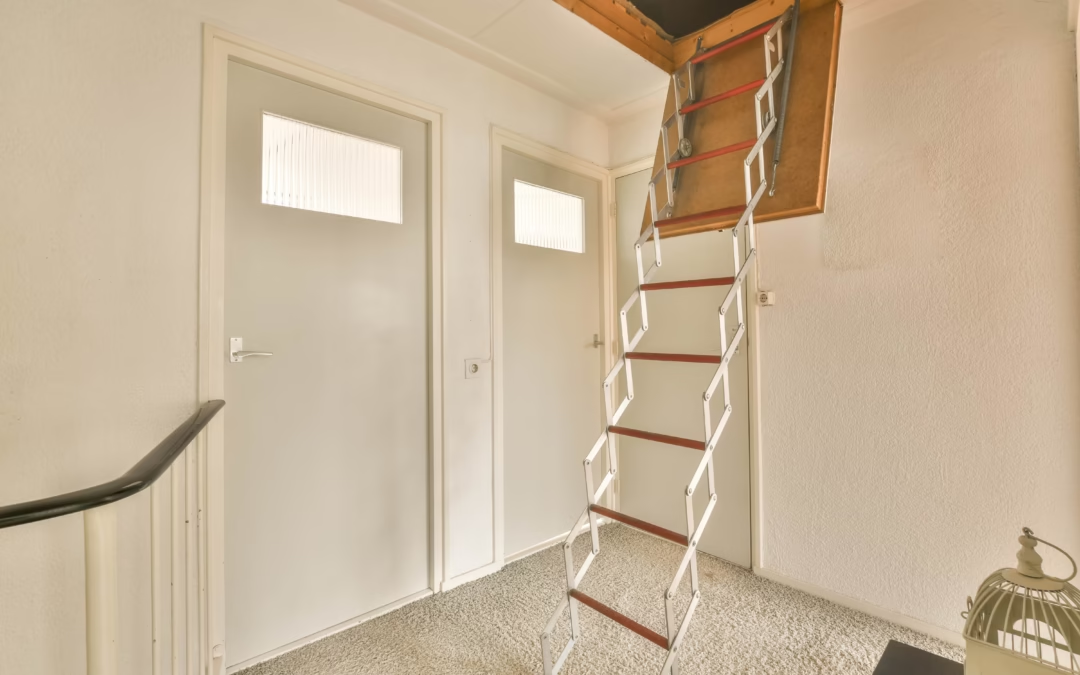
When was the last time you felt truly confident climbing into your attic? For many homeowners, the attic is a “no-go zone” dominated by a rickety, wooden ladder that creaks under the slightest weight. If you are using your attic for seasonal storage or accessing HVAC equipment, safety should never be a secondary thought.
Choosing a heavy duty aluminum attic ladder installation is one of the most impactful, high-ROI upgrades you can make for your home’s utility and your own physical safety. In this guide, we will break down why aluminum is the gold standard, the technical nuances of a professional installation, and how this upgrade protects your home’s structural integrity.
Table of Contents
-
The Case for Aluminum: Strength Meets Science
-
Why “Heavy Duty” Matters (Load Capacity Explained)
-
The Risks of DIY vs. Professional Installation
-
Step-by-Step: Heavy Duty Aluminum Attic Ladder Installation
-
EEAT: Why Trust Always A Sweep for Your Home Upgrades?
-
Energy Efficiency and the Attic Seal
-
Maintenance Tips for Longevity
-
Frequently Asked Questions
The Case for Aluminum: Strength Meets Science
While traditional wood ladders have been the standard for decades, they are susceptible to environmental degradation. Wood is an organic material that reacts to the extreme temperature fluctuations found in attics. Over time, wood can warp, crack, or develop “checked” grains that compromise its load-bearing ability.
Aluminum, on the other hand, is a non-corrosive metal that offers a superior strength-to-weight ratio. A heavy duty aluminum attic ladder installation provides a sleek, modern solution that won’t splinter or rot. Furthermore, aluminum is naturally resistant to moisture, which is vital if your attic experiences humidity or if you live in a coastal climate.
Why “Heavy Duty” Matters (Load Capacity Explained)
Standard attic ladders are often rated for 250 lbs. While this sounds sufficient, consider the math: an average adult carrying a 50-lb box of holiday decorations quickly approaches that limit.
A “Heavy Duty” rating typically starts at 375 lbs (170 kg). This extra headroom isn’t just about the weight; it’s about the rigidity of the frame. When you invest in a heavy duty aluminum attic ladder installation, you are investing in a system designed for “zero-flex.” This stability prevents the “bounce” that causes falls and structural stress on your ceiling joists.
Pro Tip: Always check the ANSI (American National Standards Institute) rating on any ladder product before purchase to ensure it meets industrial safety criteria.
The Risks of DIY vs. Professional Installation
It is tempting to view a ladder swap as a simple weekend project. However, the heavy duty aluminum attic ladder installation process involves more than just a few screws.
-
Structural Integrity: Most attic openings are framed between ceiling joists. If your new heavy-duty unit requires a larger opening, you may need to cut into your home’s “skeleton.” Doing this incorrectly can cause ceiling sag or even roof instability.
-
Squareness and Leveling: If the frame is even $1^\circ$ out of square, the ladder will not sit flush. This creates uneven pressure on the hinges, leading to premature failure.
-
The “Gap” Problem: A poorly installed door creates a massive “chimney effect,” sucking expensive conditioned air out of your living space.
At Always A Sweep, we specialize in the intersection of safety and structural health. Just as we ensure your chimney is clear of hazards, we ensure your attic access is a bridge, not a liability.
Step-by-Step: Heavy Duty Aluminum Attic Ladder Installation
To give you an idea of the precision required, here is the professional workflow for a successful installation:
Phase 1: The Rough Opening
We begin by measuring the existing opening. Most heavy-duty models require a standard $22.5″ \times 54″$ or $30″ \times 54″$ footprint. If the opening needs enlargement, we reinforce the headers to maintain the load-bearing capacity of your ceiling.
Phase 2: Positioning the Frame
The aluminum frame is hoisted into the attic. We use temporary “cleats” (wooden slats) to hold the unit in place while we shim the sides. Shimming ensures the frame is perfectly level, preventing the door from sticking.
Phase 3: Fastening and Securing
We use 16d nails or $3″$, high-shear lag screws. Never use drywall screws for a heavy duty aluminum attic ladder installation; they lack the tensile strength to hold the weight of the ladder and a person.
Phase 4: Calculating the Cut
Aluminum ladders are often “universal height” and must be trimmed to fit your specific floor-to-ceiling distance. We use a precise formula to ensure the feet make 180 degrees contact with the floor.
Why Trust Always A Sweep?
Experience, Expertise, Authoritativeness, and Trustworthiness guidelines are the benchmark for quality content.
-
Experience: Our technicians have spent decades in the “gut” of homes—from chimneys to crawlspaces.
-
Expertise: We understand the physics of home airflow and structural loading.
-
Authoritativeness: We are a recognized name in home safety across our service areas.
-
Trust: We provide transparent pricing and detailed post-installation inspections.
Choosing us for your heavy duty aluminum attic ladder installation means you aren’t just getting a product; you’re getting a professional safety audit of your attic access point.
Energy Efficiency and the Attic Seal
One often overlooked aspect of a new ladder is the R-value of the door. A heavy-duty aluminum unit often comes with an integrated weather-strip.
According to the Department of Energy, an uninsulated attic hatch is like leaving a window open year-round. During your installation, we recommend adding an “attic tent” or an insulated cover to ensure your energy bills stay low while your safety stays high.
Maintenance Tips for Longevity
Once your heavy duty aluminum attic ladder installation is complete, a little maintenance goes a long way:
-
Lubricate the Pivots: Use a silicone-based spray on the hinges every 6 months.
-
Check the Feet: Ensure the rubber or plastic feet aren’t worn down, which can cause slipping on hardwood or tile.
-
Tighten the Nuts: Vibration from use can occasionally loosen the mounting bolts on the ladder sections.
Frequently Asked Questions
Q: Can I install a heavy-duty ladder in a small hallway?
A: It depends on the “swing clearance.” Aluminum ladders often have a smaller swing radius than wood, making them ideal for tight spaces.
Q: How long does a professional installation take?
A: Usually between 3 to 5 hours, depending on whether the rough opening needs to be modified.
Transform Your Home Safety Today
Don’t wait for a “close call” on a shaky wooden ladder to make the switch. A heavy duty aluminum attic ladder installation is a permanent solution for a safer, more accessible home.
Would you like me to provide a free estimate for your attic upgrade or schedule a safety inspection for your home? Contact Always A Sweep today!

by Always A Sweep Team | Mar 9, 2026 | Always Home Repair Services, inspections & sweeping

When the Florida temperature finally drops, the first instinct of many homeowners is to gather around the hearth. However, the hidden dangers of creosote could be lurking just inches above your head. Creosote is a highly flammable, tar-like substance that acts as the primary fuel for nearly every residential chimney fire in the United States.
At Always a Sweep, we’ve seen firsthand how a lack of awareness regarding these hidden dangers can turn a cozy evening into a structural catastrophe. For Florida residents, the risk is unique. Our chimneys often sit idle in high humidity, creating a breeding ground for corrosive buildup and structural decay. To keep your home fire-safe, understanding the lifecycle of this byproduct is the first positive and powerful step you can take toward home safety.
What Exactly is Creosote? The Chemistry of Combustion
To truly grasp the hidden dangers of creosote, one must understand how it is formed. When you burn wood, the smoke consists of unburned wood particles, gases, and water vapor. As this mixture rises through the relatively cooler chimney flue, condensation occurs.
This condensation leaves behind a residue known as creosote. It is a complex mixture of phenols, cresols, and polycyclic aromatic hydrocarbons. In simpler terms: it is concentrated, solidified fuel.
Factors that Increase Creosote Production:
- Restricted Airflow: Smoldering fires produce more smoke and less heat, leading to faster condensation.
- Cool Flue Temperatures: If the chimney exterior is exposed to cold air, the smoke cools too quickly.
- Wet Wood: Burning “green” wood uses its energy to evaporate water rather than provide heat, creating a thick, sticky smoke.
Not all creosote is created equal. The hidden dangers of creosote escalate significantly as the substance ages and thickens.
Stage 1: Velvet Soot
This initial stage looks like a fine, black dust. While it is highly flammable, it is the easiest to remove. However, it can quickly transition to the next stage if not addressed during an annual inspection.
Stage 2: Crunchy Flakes
As more layers condense, the creosote begins to look like hard, black flakes or “honeycomb” structures. These flakes are rich in tar and require professional-grade scrapers to remove. At this stage, the risk of a chimney fire increases by over 50%.
Stage 3: Glazed Creosote
This is the most hazardous form. It appears as a shiny, wax-like coating that looks like black ice. It is extremely dense and acts as a concentrated fuel source. If Stage 3 creosote ignites, it burns with the intensity of a jet engine, often melting chimney liners and igniting the wooden frame of the house. Removing glazed creosote is nearly impossible for a homeowner and requires specialized chemical treatments from professionals.
Why Florida’s Humidity Accelerates Creosote Risks
Florida homeowners often believe they are at less risk because they use their fireplaces less frequently. In reality, the hidden dangers of creosote are amplified by our tropical climate.
- Corrosive Moisture: Creosote is acidic. When Florida’s high humidity enters the chimney, it mixes with the creosote to form a caustic paste that eats away at masonry and mortar joints.
- Biological Obstructions: During the long off-season, birds and squirrels often nest in Florida chimneys. These nests block airflow, causing smoke to linger and creosote to build up rapidly during the first fire of the season.
- The “Thermal Shock” Effect: When a fireplace is used only once or twice a year, the sudden high heat against a moisture-laden, creosote-covered flue can cause “spalling” or cracking of the bricks.
The Health Impact: Beyond the Fire Risk
While fire is the most immediate threat, the hidden dangers of creosote also impact the air you breathe. Creosote buildup restricts the “draft” of the chimney. If the flue is narrowed by buildup, combustion gases, including the deadly Carbon Monoxide (CO), can be pushed back into your living room.
According to the American Lung Association, wood smoke contains fine particles that can lodge deep in the lungs. Creosote is a known carcinogen; prolonged exposure through skin contact or inhalation of particles during improper cleaning can lead to severe health complications.
The Myth of DIY: Why Professional Cleaning is Mandatory
In an era of DIY tutorials, many homeowners attempt to clean their own chimneys using store-bought brushes. We cannot stress this enough: DIY chimney cleaning is dangerous and often ineffective.
The Dangers of DIY:
- Incomplete Cleaning: A standard brush cannot remove Stage 2 or Stage 3 “glaze” .Homeowners often leave the most flammable material behind, giving themselves a false sense of security.
- Structural Ignorance: A professional sweep isn’t just cleaning; they are inspecting. A DIYer will likely miss a cracked flue tile or a rusted damper that could lead to a house fire.
- The Mess Factor: Professional sweeps use high-powered HEPA vacuums. DIY attempts usually result in fine, carcinogenic soot settling into your carpets and furniture.
- Warranty and Insurance: Most homeowner insurance policies require proof of professional maintenance to cover fire damage.
Always a Sweep provides the expertise needed to navigate these complexities, ensuring your home remains fire-safe without the risks of DIY failure.
Why Trust Always a Sweep for Your Fire Safety
When searching for “chimney sweep near me“, you need a company that embodies EEAT:
- Experience: We have navigated the unique challenges of Florida masonry for decades.
- Expertise: Our technicians are certified and trained in the physics of airflow and combustion.
- Authoritativeness: We are the go-to resource for fire safety in the region, working closely with local fire marshals to promote chimney health.
- Trustworthiness: Our reviews speak for themselves. We provide detailed reports and photographic evidence of your chimney’s condition.
The Inspection Process: What Happens During a Professional Sweep
When you book an appointment to address the hidden dangers of creosote, here is what you can expect:
- Level 1 Inspection: A visual check of the hearth and accessible parts of the chimney.
- Video Scans: We use specialized cameras to look for cracks and buildup in areas invisible to the naked eye.
- Mechanical Cleaning: Using professional rotary tools to strip away soot and Stage 2 creosote.
- Chemical Remediation: For Stage 3 glaze, we apply professional-grade solvents that break down the chemical bond of the creosote.
Top Tips for Reducing Creosote Accumulation
While professional cleaning is the only way to ensure safety, you can reduce the rate of buildup by:
- Using only seasoned hardwood (oak is excellent for Florida).
- Never burning trash, cardboard, or Christmas trees.
- Installing a high-quality chimney cap to keep moisture out.
- Ensuring your fire has plenty of oxygen by keeping the damper fully open during use.
Conclusion: Protecting Your Florida Home
Understanding the hidden dangers of creosote is the difference between a safe home and a tragic fire. In Florida, where humidity and infrequent use complicate chimney health, relying on a professional is not just a luxury, it is a necessity.
Don’t let your hearth become a hazard. Keep your home fire-safe by choosing experts who prioritize your safety over a quick fix.
by Always A Sweep Team | Feb 16, 2026 | Gas leakage, inspections & sweeping, installation
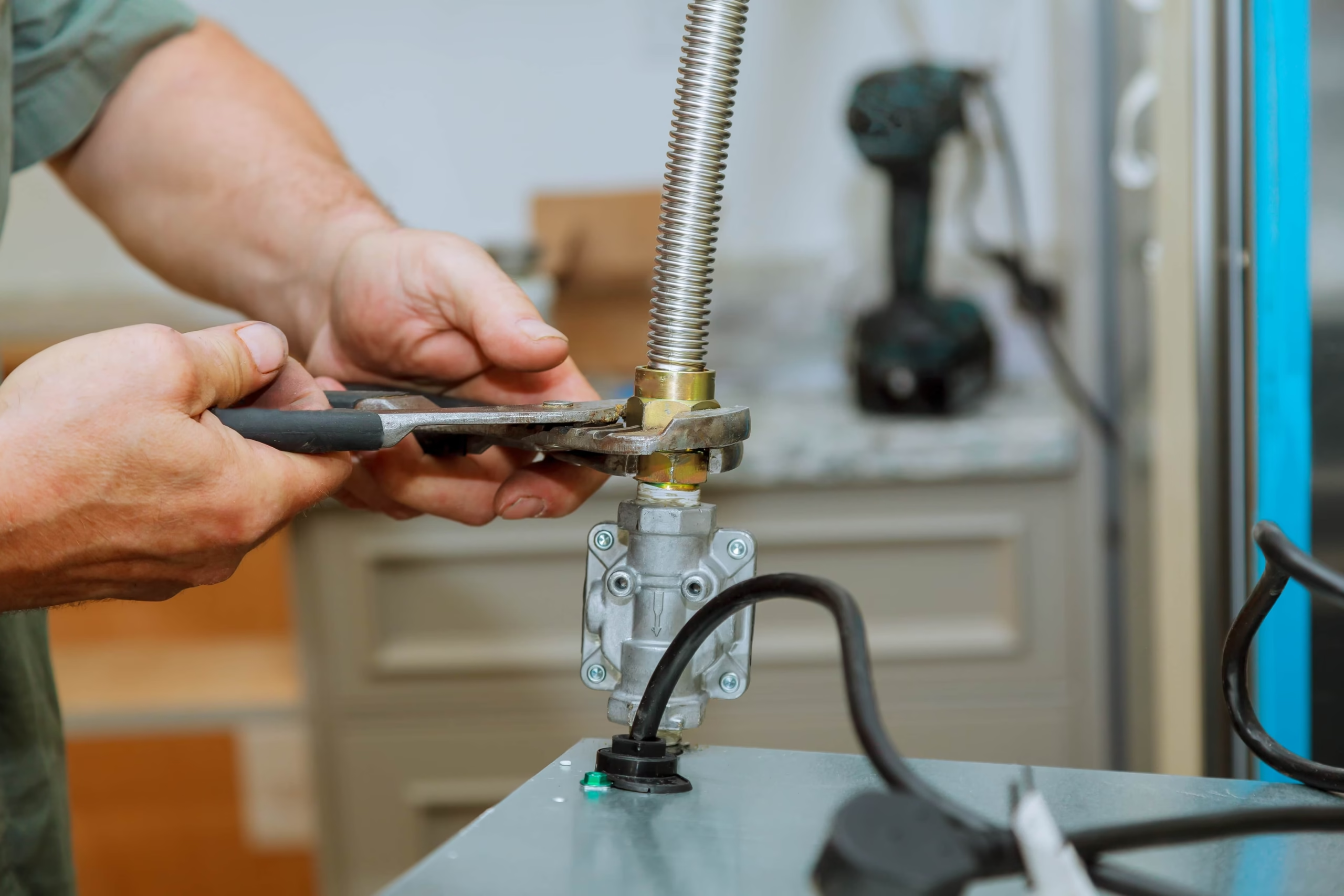
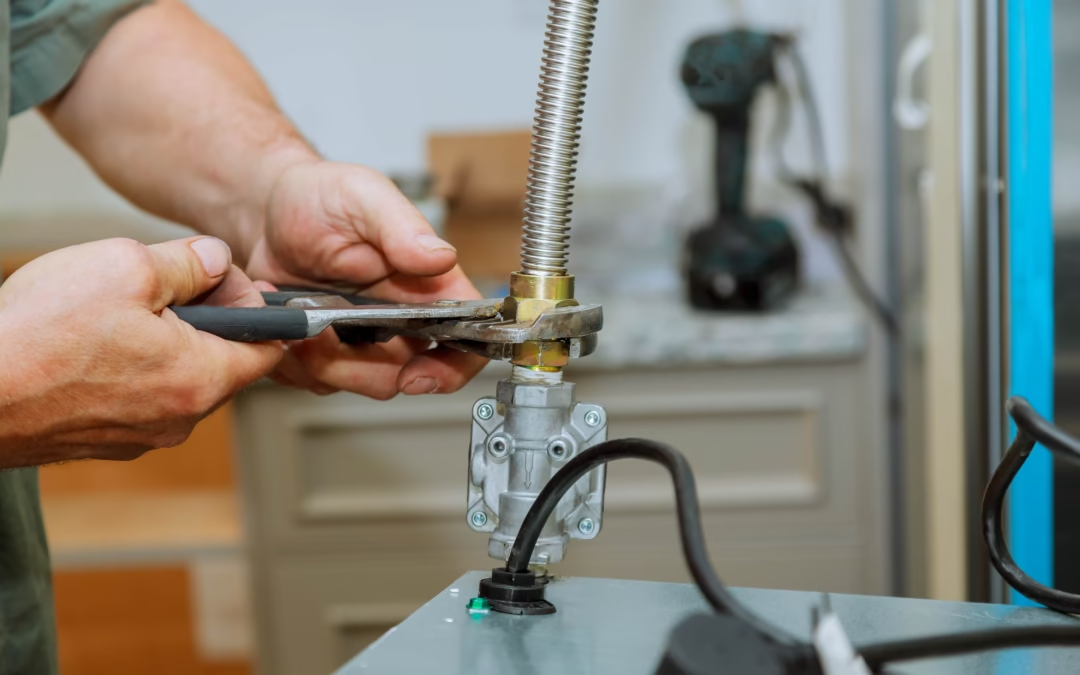
Installing a gas range line connection in Ocala is more than just a kitchen upgrade; it’s a transformation of your culinary lifestyle. Whether you are a gourmet chef or a busy parent, there is a reason professional kitchens across Florida rely on gas. It offers precision, instant heat, and a level of control that electric coils simply cannot match.
However, transitioning from electric to gas isn’t as simple as “plug and play.” It involves complex infrastructure, local Marion County building codes, and, most importantly, the high stakes of gas safety. This comprehensive guide explores everything you need to know about the installation process, the costs involved, and why a professional touch is non-negotiable for this high-powered upgrade.
The Allure of the Gas Range: Why Ocala Homeowners are Making the Switch
In the heart of Florida, homeowners are increasingly looking for ways to modernize their historic homes or customize new builds. A gas range line connection in Ocala is becoming a top priority for those who want better heat control, faster cooking times, and lower long‑term energy costs.
When you invest in a professional installation, you are gaining:
- Precision Temperature Control: Gas burners heat instantly. This means your water boils faster, and you can simmer low and slow without guessing—ideal for delicate sauces.
- Reliability During Storm Season: In the event of a Florida power outage, you can still cook for your family. Most gas ranges allow for manual lighting when the electricity is out.
- Energy Efficiency: Natural gas and propane are often more cost-effective than electricity for high-heat cooking in the Southeast.
Technical Breakdown of a Gas Range Line Connection in Ocala
A gas range line connection in Ocala involves tapping into your home’s existing gas main or propane tank and running a dedicated line to the kitchen. This isn’t just a hose; it’s a pressurized system that must be airtight and properly sized.
Sizing the Pipe for Performance
Gas pressure drops over distance. If your line is too small or the run is too long, your oven might not reach the correct temperature, or your burners may flicker. Professionals use the International Fuel Gas Code (IFGC) formulas to determine the correct pipe diameter for your specific home layout.
Materials Used: Black Iron vs. CSST
In Ocala, black iron is the standard for interior lines due to its durability. Some modern installations use CSST (Corrugated Stainless Steel Tubing). However, if CSST is used, it must be properly grounded to prevent damage from Florida’s frequent lightning strikes.
Expert Note: While flexible gas connectors are used for the final attachment to the appliance, long runs must always use rigid piping or approved CSST to meet safety standards.
Most Ocala residents use either municipal natural gas or onsite propane. Each requires specific orifice sizes on your range. A professional technician ensures that your gas range line connection in Ocala is calibrated for the specific fuel type entering your home.
If you are located in a rural part of Marion County, you likely use a propane tank. Propane burns hotter than natural gas, meaning the “conversion kit” included with your stove must be installed correctly by a licensed gas professional.
The Dangers of DIY: Why “Handyman” Hacks Are a Risk
It is tempting to look up a tutorial and think you can just tighten a few pipes. Stop right there. A DIY gas range line connection in Ocala is not just discouraged, it is dangerous.
- Carbon Monoxide Poisoning: An improper connection can lead to incomplete combustion, releasing CO. CO is an odorless, colorless, and deadly gas.
- Fire and Explosion Hazards: Gas leaks are volatile. A single spark from a light switch can ignite a room.
- Insurance Voidance: If you install your own gas line and a fire occurs, your homeowner’s insurance provider may deny your claim.
- How to Detect a Gas Leak: Utility companies add mercaptan to give gas a “rotten egg” smell. If you smell this, evacuate immediately.
Ocala has specific geological factors that influence building codes. For example, the proximity to the limestone shelf can affect how exterior lines are buried.
A gas range line connection in Ocala must adhere to the Florida Building Code. Ocala and Marion County require permits for gas line work to ensure the installation meets local safety regulations. A professional installer like Always A Sweep typically handles these permits on your behalf, ensuring your home remains compliant with local law.
Step-by-Step: The Professional Installation Process
When you hire a pro for your gas range line connection in Ocala, you are paying for a rigorous safety protocol.
- Site Assessment: Identifying the closest gas manifold.
- Permit Acquisition: Registering the project with Marion County Building Safety.
- Tapping the Main: Shutting off gas and installing a “T” joint.
- Running the Line: Routing through walls or attics.
- Pressure and Leak Testing: Using manometers and electronic gas detectors to ensure 0% leakage.
- The Final Hookup: Attaching the flexible connector and shut-off valve.
What should you expect to pay for a gas range line connection in Ocala? Prices vary based on distance and accessibility.
| Service Level |
Estimated Cost |
Impact Factors |
| Simple Connection |
$300 – $600 |
Short pipe run, easy access. |
| Moderate Installation |
$600 – $1,200 |
Average distance, standard routing. |
| Complex Installation |
$1,200+ |
Long runs, through slabs, or multiple turns. |
Note: These are estimates; a licensed installer can provide exact pricing after an inspection.
On average, a professional installation provides a massive return on investment. Potential buyers in the Ocala real estate market prioritize homes with gas cooking capabilities.
Beyond the kitchen, a gas range line connection in Ocala is often the first step in a larger gas-powered lifestyle. Once you have a gas line, you can easily extend it to:
- Gas Fireplaces for chilly Florida winters.
- Outdoor Kitchens and BBQ Grills.
- Tankless Water Heaters.
Choosing a Trusted Professional in Ocala
When selecting a licensed gas line installer, look for the following:
- Valid License and Insurance: Always ask to see a contractor license.
- Local Experience: A company familiar with Ocala understands local code nuances.
- Positive Reputation: Check Google reviews and testimonials from neighbors.
- Written Estimates: A reliable contractor provides clear pricing.
Frequently Asked Questions
How long does a gas range line connection in Ocala take?
Typically, 3 to 6 hours, depending on the complexity of the pipe run.
Can I use my old electric outlet?
Gas ranges require a standard 110v outlet for the clock and igniter. You will likely no longer need the heavy-duty 220v outlet.
Is maintenance required?
Yes. You should clean burner ports and check for a crisp blue flame. A yellow flame indicates incomplete combustion.
Why Always A Sweep is the Smart Choice for Ocala Homeowners
At Always A Sweep, we specialize in gas range line connection in Ocala, maintenance, and appliance connections. We understand the synergy between your kitchen’s exhaust system and your gas appliances. Our team ensures your ventilation system is properly rated for the BTUs of your new range.
Don’t gamble with your family’s safety. Let our certified professionals handle the heavy lifting, ensuring your new kitchen is as safe as it is beautiful.
Ready to upgrade your kitchen? Contact Always A Sweep today to schedule an inspection and get a quote for your professional gas line installation.
by Always A Sweep Team | Feb 9, 2026 | Gas leakage, inspections & sweeping, installation
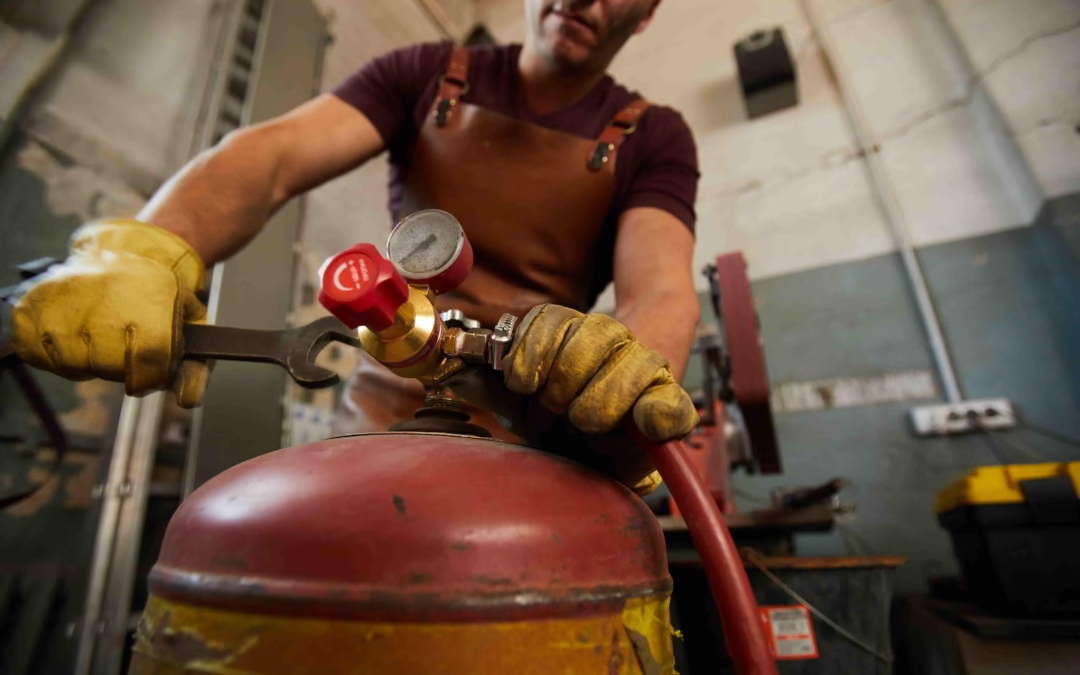
Propane is a versatile and efficient energy source that powers a significant portion of the Florida lifestyle. From running luxury outdoor kitchens and pool heaters to providing critical backup power via home generators during hurricane season, its utility is unmatched. However, because propane is a high-pressure, highly flammable fuel, its storage and placement are governed by strict regulations.
For Florida homeowners, understanding safe propane tank placement is not just about passing an inspection, it is about protecting your family, ensuring your homeowners’ insurance remains valid, and complying with state law. This comprehensive guide explores the Florida Building Codes, NFPA 58 standards, and the critical reasons why professional installation is the only safe way to manage propane on your property.
Why Safe Propane Tank Placement is a Non-Negotiable Priority
Improperly placed propane tanks are more than just an eyesore; they represent a significant safety risk. In a state like Florida, where high temperatures and extreme weather are common, safe propane tank placement serves as the first line of defense against potential disasters.
The codes established by the state and fire officials are designed to mitigate several specific hazards:
- Fire and Explosion Prevention: Propane is highly flammable. If a leak occurs near an ignition source, such as an air conditioner compressor, a grill, or even a window, the risk of a fire or explosion increases dramatically.
- Vapor Behavior: Unlike some gases that dissipate upward, propane vapors are heavier than air. They tend to sink and pool in low-lying areas like crawlspaces or against foundation walls. Correct placement ensures leaked gas can disperse safely.
- Emergency Access: In the event of a fire, first responders must have clear, unobstructed access to the tank and its shut-off valves.
- Legal and Insurance Liability: Failure to follow the Florida Building Code can void your insurance policy. If an incident occurs and the tank was found to be in a non-compliant location, you could be held personally liable for damages.
Understanding Florida’s Propane Regulatory Landscape
In Florida, propane tank installation is heavily regulated through several layers of authority. This ensures that every safe propane tank placement follows rigorous engineering and safety standards.
NFPA 58 (Liquefied Petroleum Gas Code)
The primary standard followed in Florida is NFPA 58. This is a national safety standard adopted into the Florida Fire Prevention Code. It dictates the technical requirements for tank construction, piping, and, most importantly, separation distances.
The Florida Building Code – Fuel Gas
The 2023 Florida Building Code (8th Edition) integrates international standards while addressing the state’s unique environment, such as high water tables and limestone soil. Additionally, the Florida Department of Agriculture and Consumer Services (FDACS) oversees the licensing and enforcement of liquid petroleum (LP) gas regulations under Florida Statute Chapter 527.
Expert Insight: While state codes provide the baseline, local municipalities like Miami, Orlando, or Tampa may have additional zoning ordinances. Always consult with a licensed professional who understands local amendments.
The “Setback” Rules: Minimum Separation Distances
The most critical aspect of safe propane tank placement is the “setback”, the minimum distance a tank must be from structures, property lines, and ignition sources. These distances vary based on the size of the tank.
| Tank Capacity (Water Gallons) |
Distance to Buildings/Property Lines |
Distance to Ignition Sources (AC, Vents, etc.) |
| Small Tanks (<125g) |
5 – 10 feet |
10 feet |
| Residential Tanks (125–500g) |
10 feet |
10 feet |
| Large Tanks (501–2,000g) |
25 feet |
25 feet |
| Underground Tanks (up to 2,000g) |
10 feet |
10 feet |
Specific Clearance Rules for Openings
Tanks must be positioned far away from any “opening” where gas could enter. This includes:
- Windows and Doors: Typically 5 to 10 feet of clearance from any opening below the level of the tank’s relief valve.
- Mechanical Air Intakes: This includes dryer vents and air conditioner intakes.
- Crawl Spaces: Because propane pools, it must never be placed near vents leading to a crawl space.
Aboveground vs. Underground: Choosing Your Setup
Florida homeowners often choose between above ground and underground tank installations. Each has specific placement requirements.
Aboveground Tanks
These are common in Florida due to the high water table.
- Pros: Easier to inspect for rust and corrosion; generally cheaper to install.
- Requirement: They must be placed on firm, level concrete pads to prevent sinking into Florida’s sandy soil.
Underground Tanks
Preferred by homeowners who want to maintain backyard aesthetics.
- Pros: Only a small dome is visible; protected from extreme heat and high-velocity hurricane winds.
- Requirement: Must have cathodic protection to prevent soil minerals from corroding the metal. Even buried, they must maintain the 10-foot setback.
Florida Hurricane Preparedness and Environmental Factors
Florida’s weather adds a layer of complexity to safe propane tank placement. High winds and flooding are genuine threats to fuel stability.
Anchoring in Flood Zones
In coastal regions, tanks must be anchored. This is a vital Building Code requirement intended to prevent the tank from becoming buoyant and floating away during a storm surge. Anchoring involves bolting the tank to a concrete pad or using heavy-duty earth anchors.
Vegetation and Debris
Homeowners should keep a 10-foot “clear zone” around the tank. Ensure overhanging limbs do not fall and sever gas lines during a hurricane. Maintaining this area is a core part of long-term safe propane tank placement.
The Dangerous Myths of DIY Propane Projects
It may be tempting to save money by moving a tank yourself. However, in Florida, you cannot legally install a stationary propane tank without a license.
- Explosion Risk: A single loose fitting can lead to gas pooling, creating an invisible and deadly hazard.
- Pressure Testing: Professionals perform “leak down” tests required by law.
- Code Violations: Non-compliant DIY work can lead to heavy fines and the requirement to redo the entire project at your own expense.
To ensure your installation is safe and legal, follow this professional workflow:
- Site Survey: A technician evaluates your property and measures setbacks.
- Permitting: The installer handles the paperwork with the local building department.
- Installation and Anchoring: The pro ensures the tank is level and anchored against wind/floods.
- Final Inspection: A local authority must approve the system before it is activated.
Homeowner Maintenance Checklist
Once you have achieved safe propane tank placement, upkeep is vital.
- Annual Inspections: Have a pro check for corrosion and regulator issues.
- Keep it Clear: Maintain the 10-foot debris-free zone.
- Post-Storm Checks: If your property floods, do not turn the gas back on until a professional inspects the valves.
Frequently Asked Questions
Q: Can I store a 20lb grill tank in my garage?
No. All propane tanks must be stored outdoors in well-ventilated areas to prevent gas pooling in enclosed spaces.
Q: What if my yard is too small for the 10-foot setback?
A licensed professional can explore solutions like using smaller tanks or relocating gas equipment to meet safe propane tank placement standards.
Q: Do underground tanks need extra maintenance?
Yes. They require periodic testing of their cathodic protection system to ensure the soil isn’t corroding the tank.
Conclusion: Prioritizing Safety Over Shortcuts
Achieving safe propane tank placement in Florida is a combination of adhering to the law and exercising common sense. While propane is a powerful tool for modern home comfort, it demands respect. By following NFPA 58 standards and hiring licensed LP gas master technicians, you protect your property investment and your family.
For more information on home safety, venting systems, and professional compliance in the Sunshine State, visit AlwaysASweep.com, your trusted resource for residential safety.
by Always A Sweep Team | Feb 2, 2026 | Always Home Repair Services, Gas leakage, inspections & sweeping
Smell Gas in Home Central Florida? The Ultimate Guide to Life-Saving Safety
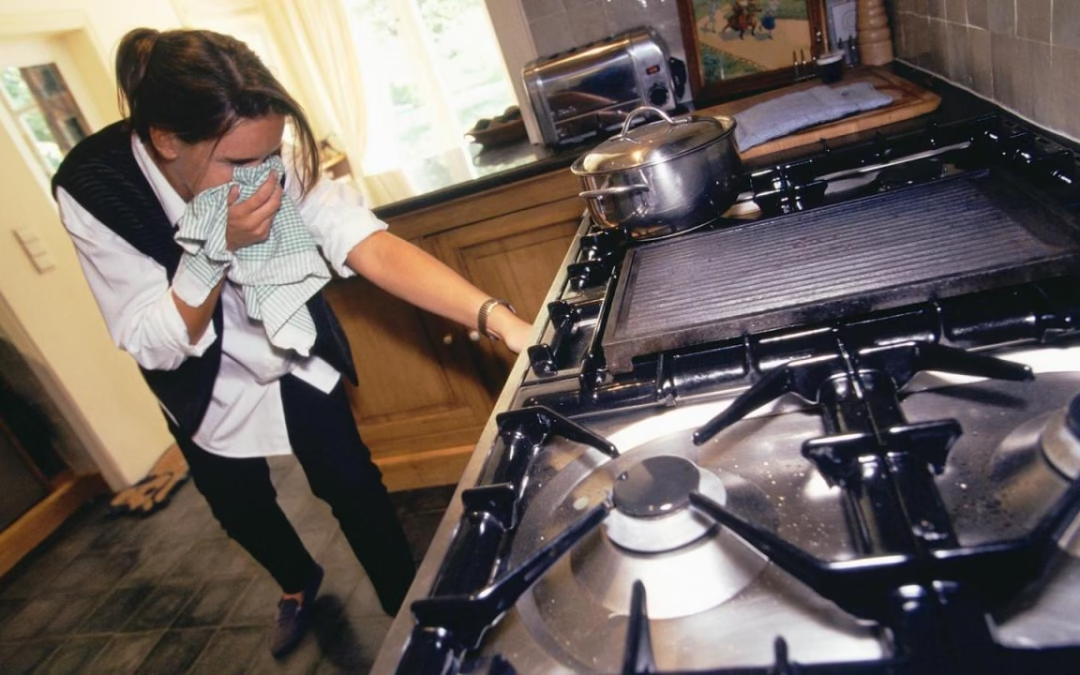
Finding yourself in a situation where you smell gas in your home in Central Florida is one of the most unsettling experiences a homeowner can face. In the Sunshine State, where the heat and humidity are constant, a gas leak isn’t just an inconvenience; it is a life-threatening emergency that demands immediate, decisive action. Whether you are in Orlando, Winter Park, or The Villages, understanding the risks and the proper protocols can be the difference between a minor repair and a catastrophic explosion.
At Always A Sweep, we are dedicated to your family’s safety and peace of mind. This comprehensive guide provides everything you need to know about detecting natural gas or propane, the immediate steps to take for your safety, and why professional intervention is the only safe way to handle a suspected leak.
The Science of the Scent: Why Natural Gas Smells Like “Rotten Eggs”
In its natural state, both natural gas (delivered via underground pipes) and liquid propane (stored in tanks) are colorless and odorless. To ensure that homeowners can detect a leak before it reaches a dangerous concentration, gas utilities intentionally add a chemical called mercaptan. This chemical creates the unmistakable, pungent scent of “rotten eggs” or sulfur.
Why the Smell is Your Best Friend
Recognizing this scent quickly is your first line of defense. If you detect this odor, it is a deliberate alert that gas is escaping from the system and potentially accumulating in your home. In the high-humidity environment of Central Florida, smells can sometimes linger or become trapped in pockets of stagnant air, making it vital to investigate even the slightest whiff of sulfur.
Pro Tip: If you have lost your sense of smell due to illness, ensure your home is equipped with UL-listed combustible gas detectors on every level of the house.
Immediate Danger: 7 Essential Steps for Safety
If you smell gas in your home in Central Florida, the heat isn’t the only thing to worry about; gas leaks can lead to asphyxiation or devastating explosions triggered by the smallest spark. When this energy is released uncontrollably in a confined space, the results are lethal. Your priority is immediate evacuation. Follow these seven critical steps:
- Don’t Ignore the Smell: Even a faint scent should be treated with urgency, especially in enclosed spaces where gas can build up rapidly.
- The “Do Not” List for Electronics: DO NOT turn on or off any lights, appliances, or electronics. A tiny electrical spark from a switch or even your cell phone could ignite the gas.
- Avoid Open Flames: Do not light matches, use a stove, smoke, or light candles.
- Ventilate (If Possible): If it is safe to do so on your way out, leave the door open or open windows to allow for some ventilation, but do not linger inside to do so.
- Evacuate Everyone: Immediately grab your family and pets and exit the home. Do not wait to see if the smell dissipates.
- Move to a Safe Distance: Once you are at least 100 feet away from the property, use your cell phone to call for help.
- Call the Experts: Contact 911 or your local gas utility provider immediately.
Common Culprits: Why You Might Smell Gas in Your Home
Understanding where leaks commonly occur can help you identify risks during your annual safety inspections. In Central Florida, several appliances and environmental factors are often to blame:
1. Gas Fireplaces and Log Sets
At Always A Sweep, we frequently find that gas issues originate near the hearth. If you have a gas log set or insert, the pilot light or the thermocouple may malfunction. If the smell occurs primarily when you are near the fireplace, you likely have a seating issue with the gas valve or a hairline crack in the supply line.
2. Outdoor Pool Heaters
In our region, salt-air corrosion is a major factor, particularly for homes closer to the coast or those with salt-chlorination systems. Outdoor pool heaters are often a source of leaks because the humid, salty air accelerates the degradation of gas fittings and metal components.
3. Pest Activity and Environmental Shifts
Small animals or rodents, common in Florida’s lush landscapes, may chew on gas line insulation or connections. Furthermore, Central Florida’s heavy rain and seasonal humidity can cause shifts in ground soil, potentially damaging buried lines or corroding seals.
The Role of Dryer Vents in Gas Safety
Many homeowners are surprised to learn that their dryer is a common culprit for gas-related scares. If you have a gas-powered clothes dryer, it is connected to a “flex line.”
If your dryer vent is clogged with lint, the machine can overheat. This excess heat, combined with the mechanical vibrations of the drum, can cause the gas line to rub against the wall or the dryer chassis. Over time, this friction can wear a hole in the pipe. This makes professional Dryer Vent Cleaning a critical component of gas safety.
| Feature |
Risk Factor |
Safety Solution |
| Gas Line |
Friction & Vibration |
Flexible connectors & regular checks |
| Vent Pipe |
Lint Build-up & Heat |
Annual professional cleaning |
| Exhaust |
Carbon Monoxide |
Proper exterior termination |
Why You Should NEVER Attempt a DIY Gas Repair
In the age of online tutorials, it is tempting to think a “small” hiss can be fixed with a wrench and some pipe dope. We strongly discourage DIY gas repairs. According to the NFPA (National Fire Protection Association), gas-related incidents cause hundreds of millions in property damage annually. The risks are simply too high:
- Explosion Hazard: Natural gas has a narrow “flammable range” (5% to 15%). If the gas-to-air ratio falls within this window, a single static spark from your clothing could level a house.
- Carbon Monoxide (CO) Poisoning: An improperly sealed gas line or poorly vented appliance can lead to incomplete combustion, producing Carbon Monoxide—the “silent killer”. Professionals use calibrated detectors that homeowners do not possess to identify this odorless, deadly gas.
- Insurance and Liability: Most Florida homeowners’ insurance policies will deny claims for fire damage if the gas work was not performed by a licensed, bonded professional.
- Code Violations: Florida building codes are stringent regarding gas line pressure testing. DIY fixes almost never meet these safety benchmarks.
The Professional Advantage: How Experts Trace Leaks
When you call a professional from Always A Sweep, they bring specialized tools and expertise that far exceed the capabilities of the human nose.
Electronic “Sniffers”
These combustible gas detectors can identify gas concentrations as low as 50 parts per million (ppm). This allows technicians to find leaks hidden behind walls, under flooring, or within the attic spaces common in Florida homes.
Manometer Pressure Testing
By isolating the gas system and applying air pressure, a technician can determine if the pressure drops over time. This is the gold standard for verifying the integrity of the entire system, indicating a leak even if it cannot be smelled yet.
Ultrasonic Leak Detection
For larger properties or commercial spaces, experts use sound waves to “hear” the high-frequency hiss of escaping gas that is inaudible to the human ear.
Why Trust Always A Sweep?
We don’t just “sweep” chimneys; we protect Florida homes.
- Experience: We have decades of experience serving Central Florida, from the historic homes of Winter Park to the modern builds in Lake Nona. We understand how our unique climate accelerates the corrosion of gas fittings.
- Expertise: Our technicians are specifically trained in venting requirements for gas-fueled appliances, adhering to the CDC guidelines on Carbon Monoxide prevention.
- Authoritativeness: We strictly adhere to OSHA and NFPA 54 (National Fuel Gas Code) standards to ensure your home remains a fortress against accidents.
- Trustworthiness: We provide transparent reporting. If your system is safe, we tell you. If it needs repair, we show you the evidence using digital imaging and pressure readings.
Frequently Asked Questions (FAQ)
Q: Can I use a fan to clear out the gas smell?
A: No. You should not use any electrical devices, including fans, as the motor could create a spark that ignites the gas. Simply leave the doors and windows open as you evacuate.
Q: What if the smell is faint and comes and goes?
A: Even intermittent odors should be treated seriously. A small, sporadic leak can still lead to gas accumulation in hidden areas like wall voids or under floorboards, especially during Florida’s humid afternoons when air circulation is low.
Q: Is natural gas the same as Carbon Monoxide?
A: No. Natural gas is the fuel that comes into your home and has a “rotten egg” smell added to it. Carbon Monoxide (CO) is a byproduct of incomplete combustion; it is completely odorless and colorless, making it even more dangerous without professional detection tools.
Q: Does humidity affect gas pipes?
A: Yes. High humidity in Central Florida can lead to external corrosion on iron pipes and brass fittings. Regular inspections help catch this “pitting” before it becomes a through-wall leak.
A: We recommend an annual safety inspection for all gas-burning appliances, including your fireplace and dryer vent system, to ensure they meet modern safety codes.
Conclusion: Prioritize Your Safety Today
Smelling gas in your Central Florida home is alarming, but acting with urgency and trusting the experts can prevent a tragedy. Natural gas is an incredible utility that powers our water heaters, stoves, and fireplaces, but it demands respect and professional handling.
Whether you have a suspicious scent near your dryer or want the peace of mind that comes with an annual whole-home safety inspection, Always A Sweep is here to help. We combine community-focused service with technical expertise to keep your home safe all year long.
Don’t gamble with your family’s safety. Contact Always A Sweep today to schedule your chimney, fireplace, or dryer vent evaluation and ensure your home’s gas-adjacent systems are operating at peak safety.
by Always A Sweep Team | Jan 19, 2026 | inspections & sweeping, installation
Table of Contents
- The Heart of the Home for Fireplace Installation Services
- The Showdown for Wood-Burning and Gas Fireplaces
- Why Professional Expertise is Non-Negotiable
- The Technical Roadmap to Our Installation Process
- Florida Building Codes and Safety Regulations
- Environmental Sustainability in Modern Heating
- Cost Analysis for Investing in Your Orlando Home
- Solving the Humidity Challenge in Florida Installations
- Maintenance for Keeping Your Investment Safe
- Conclusion and Next Steps
When it comes to enhancing the ambiance and value of your Florida home, professional installation services for wood-burning and gas fireplaces are the most powerful investment you can make. While Central Florida is famous for its heat, the cool winter evenings and the desire for a cozy indoor atmosphere make a fireplace a highly sought-after feature for modern homeowners.
At Always A Sweep, we understand that a fireplace is more than just a heating element; it is a complex structural centerpiece. Our installation services are designed to blend seamless aesthetics with rigorous safety standards. Whether you are building a new custom home in Lake Nona or renovating a historic bungalow in Thornton Park, the right fireplace transforms a room into a sanctuary.
Choosing between wood-burning and gas fireplaces is the most critical decision a homeowner will face. Each system has a unique set of requirements for installation services.
The Authentic Appeal of Wood-Burning Units
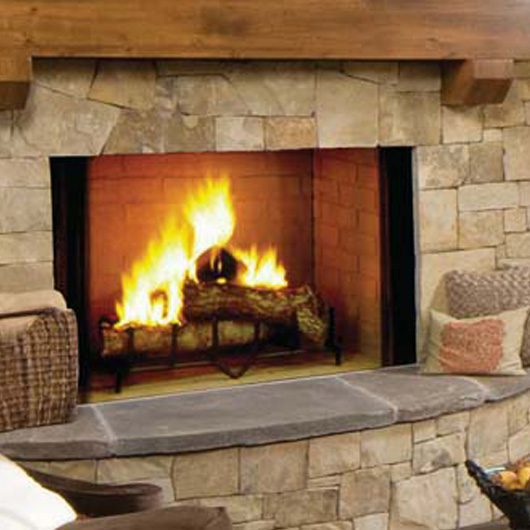
A wood-burning fireplace is the brilliant choice for purists. There is a primal satisfaction in the crackle of seasoned oak and the dancing orange flames that a gas unit can rarely replicate.
- Energy Independence: During hurricane season, power outages are common. A wood fireplace provides heat and light when the grid goes down.
- Aesthetic Flexibility: From traditional brick hearths to modern hanging steel units, wood fireplaces offer endless design potential.
The Modern Luxury of Gas Units
For the busy Orlando professional, gas fireplaces offer unparalleled convenience.
- Precision Control: Many modern units allow you to control flame height and heat output via a smartphone app.
- Cleanliness: No ash, no soot, and no need for wood storage, which can attract pests like termites—a major concern in Florida.
- Direct-Vent Technology: These can be installed in almost any room, including bedrooms and bathrooms, because they don’t require a traditional vertical chimney.
Why Professional Expertise is Non-Negotiable
Fireplace installation services involve high temperatures, combustible materials, and potentially lethal gases.
- Experience: Our team at Always A Sweep brings years of hands-on experience in the Orlando soil and climate conditions.
- Expertise: We are fully trained in both masonry construction and gas-line plumbing, a dual expertise that few competitors possess.
- Authoritativeness: We strictly follow the guidelines of the National Fire Protection Association (NFPA), the leading authority on fire safety codes.
- Trustworthiness: We believe in transparency. We provide detailed “DoFollow” links to third-party safety organizations like the Chimney Safety Institute of America (CSIA) so our clients can verify our methods.
The Technical Roadmap to Our Installation Process
When you hire us for installation services, you aren’t just getting a product; you are getting a precision-engineered system.
Step 1: The Site Assessment
We begin by evaluating the “footprint” of your home. For wood-burning and gas fireplaces, we must calculate the “throw” of the heat and ensure that the flooring can support the weight of a heavy hearth.
Step 2: Venting Design
This is the most technical part of our installation services. For wood-burning units, we install a flue that meets the “2-10 rule”—the chimney must be 2 feet higher than any part of the building within 10 feet. For gas units, we often use coaxial venting that brings fresh air in while pushing exhaust out.
Step 3: Gas Line Integration
If you choose a gas unit, our licensed professionals safely tap into your home’s propane or natural gas supply. We follow all protocols established by the American Gas Association (AGA) to ensure leak-free operation.
Florida Building Codes and Safety Regulations
In Orlando, installation services must comply with the Florida Building Code. These codes are updated frequently to account for high-wind events and seismic shifts.
Specifically, for wood-burning and gas fireplaces, the code dictates:
- Hearth Extensions: Must be made of non-combustible material and extend a specific distance to prevent floor fires.
- Clearance to Combustibles: The “mantel” and surrounding wood trim must be far enough from the opening to prevent ignition via radiant heat.
- Spark Arrestors: Every chimney in Florida should have a spark arrestor to prevent embers from landing on dry palm fronds or roof shingles.
Environmental Sustainability in Modern Heating
Many of our clients ask about the environmental impact of wood-burning and gas fireplaces. We are proud to offer EPA-certified products that minimize emissions.
- Secondary Combustion: Modern wood-burning units use “secondary tubes” to burn the smoke before it leaves the firebox, making them significantly cleaner than the fireplaces of the 1980s.
- Efficiency Ratings: Many of our gas installation services feature units with an AFUE (Annual Fuel Utilization Efficiency) rating of over 70%, meaning most of the fuel is converted directly into heat for your room.
For those curious about the science of clean burning, the Environmental Protection Agency (EPA) provides excellent resources on choosing the right appliance.
Cost Analysis for Investing in Your Orlando Home
While “cheap” installation services may seem tempting, they often lead to expensive repairs or safety hazards. Here is a breakdown of what to expect when investing in wood-burning and gas fireplaces:
| Fireplace Type |
Installation Range |
Maintenance Level |
| Traditional Wood |
$3,500 – $10,000+ |
High (Annual Sweep) |
| Direct-Vent Gas |
$2,500 – $7,000 |
Low (Annual Checkup) |
| Electric Insert |
$1,000 – $3,000 |
Minimal |
Investing in quality installation services from Always A Sweep increases your home’s equity. According to the National Association of Realtors (NAR), a fireplace is one of the top features that help a home sell faster in a competitive market.
Solving the Humidity Challenge in Florida Installations
Orlando’s 90% humidity poses a unique threat to wood-burning and gas fireplaces.
- Rust: Metal components in gas fireplaces can corrode if not properly treated.
- Efflorescence: Moisture can seep into masonry, leaving white, salty deposits on your beautiful new fireplace.
Our installation services include the application of professional-grade vapor barriers and moisture-resistant sealants to ensure your fireplace looks as good in ten years as it does on day one.
Maintenance for Keeping Your Investment Safe
Even after the best installation services, your journey doesn’t end.
- For Wood Fireplaces: You must use seasoned hardwood. Burning “green” wood creates creosote, a leading cause of chimney fires.
- For Gas Fireplaces: The glass assembly should be cleaned annually to prevent “white film” buildup from combustion byproducts.
We recommend all our clients visit the Hearth, Patio & Barbecue Association (HPBA) for tips on safe operation and seasonal decor ideas that won’t compromise your fireplace’s safety.
Conclusion and Next Steps
Choosing between wood-burning and gas fireplaces is a personal journey that blends style, safety, and functionality. By opting for professional installation services with Always A Sweep, you are ensuring that your home remains a safe, warm, and beautiful place for years to come.
Don’t leave your family’s safety to chance. Whether you are ready to install a brand-new unit or need a safety inspection on an existing one, our expert team is here to guide you.