by Always A Sweep Team | May 11, 2026 | Always Home Repair Services, Gas leakage, inspections & sweeping
Propane Tank Safety 101 and The Ultimate Guide to Preparing Your Gas Lines for Summer
Propane tank safety involves ensuring all connections are leak-free, valves are unobstructed, and regulators are operating at the correct PSI. Before summer grilling begins, you must inspect hoses for “dry rot” and perform a professional pressure test. Because propane is heavier than air and highly flammable, even a minor micro-leak caused by winter “thermal contraction” can lead to catastrophic pooling and ignition.
Propane tank safety is the cornerstone of a stress-free summer. As the season of backyard gatherings approaches, homeowners often overlook the complex network of lines and valves that make a BBQ possible. However, the transition from winter dormancy to summer heat places significant stress on gas infrastructure.
While the “Do It Yourself” (DIY) culture is great for aesthetics, gas line maintenance is a high-stakes task that requires professional certification. A single loose fitting or a degraded O-ring can lead to property loss or worse. This guide provides an exhaustive look at propane tank safety, the science of gas line integrity, and why trusting experts is your smartest investment this season.
Key Takeaways
-
Airflow & Density: Propane is heavier than air; leaks “pool” on the ground rather than dissipating.
-
Thermal Stress: Winter freezing and summer expansion cause micro-fissures in rubber gas lines.
-
The 10-Foot Rule: Always store spare tanks 10 feet away from any home entrance or window.
-
Professional Logic: Digital “sniffers” and PSI pressure tests are the only 100% reliable leak detection methods.
Table of Contents
-
The Role of Safety in Home Protection
-
The Science: Why Outdoor Gas Lines Fail
-
The Dangers of DIY Gas Repairs
-
Professional Inspection Protocols
-
Propane Storage Dos and Don’ts
-
Frequently Asked Questions
Quick Answer: Propane safety protects against the 9,000+ grill-related fires reported annually. Proper maintenance ensures your appliances operate at the correct BTU output, preventing both fire hazards and expensive mechanical wear.
When we discuss propane tank safety, we are addressing a highly volatile fuel source. Propane is stored as a liquid under pressure; when it is released to the grill, it expands into a gas. According to the National Fire Protection Association (NFPA), gas grills are involved in an average of 9,000 home fires per year.
Maintaining safety isn’t just about preventing a fire. It is about ensuring the longevity of your outdoor appliances. A professional inspection ensures that every connection point, from the tank orifice to the burner manifold, is sealed and functioning at the correct BTU (British Thermal Unit) output.
Quick Tip: Before your first cookout, check the “manufacture date” on your tank’s collar. Most tanks require recertification 10–12 years after the date of manufacture.
To truly master propane tank safety, one must understand why these systems fail. Outdoor gas lines are subject to “Thermal Expansion and Contraction.”
Thermal Stress and Micro-Fissures
During the winter, metal fittings and rubber hoses contract. As summer arrives, they expand. This constant “breathing” of the materials can cause micro-fissures in hoses. Over time, these cracks widen, leading to the “slow leaks” that the average homeowner cannot smell.
Expert Insight: “In my years of servicing Florida homes, I’ve seen that humidity combined with winter temperature swings creates a ‘perfect storm’ for brass corrosion. Never assume a fitting is tight just because it hasn’t been moved.”
The “Pooling” Effect
Furthermore, propane is heavier than air. In the event of a leak, the gas doesn’t simply float away. It “pools” on the ground or in low-lying areas like grill cabinets. This creates an invisible “pool” of fuel just waiting for a spark.
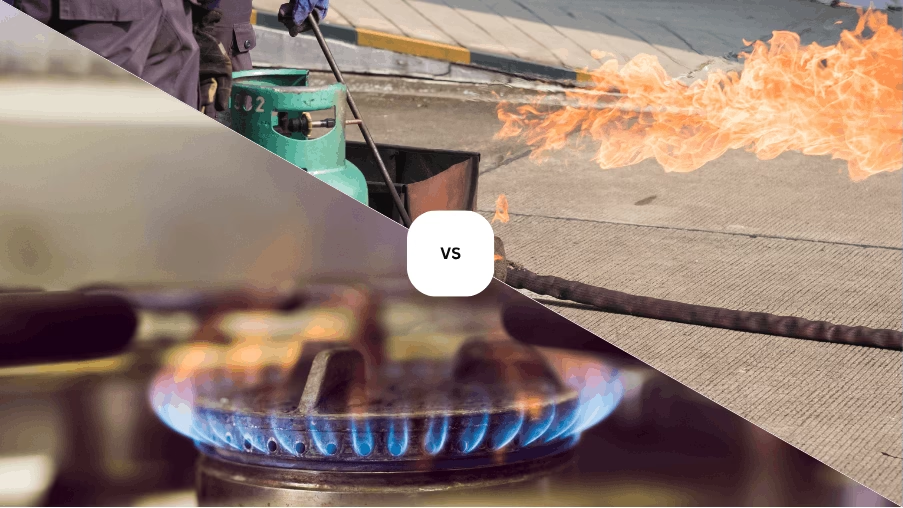
Do you know the difference between safe gas usage and a major fire hazard? Knowledge is your first line of defense. From routine gas line inspections to professional fire prevention strategies, staying proactive keeps your family and property safe. Pin this guide to ensure your home’s utility systems are running securely!
Quick Answer: DIY gas repair is dangerous due to improper torque specifications and the use of incorrect sealants. Most homeowners use white Teflon tape, which is chemically incompatible with propane, leading to slow-acting leaks.
Propane tank safety should never be a DIY project. Here is why:
-
Torque Specifications: Professionals use calibrated tools to ensure fittings are tight enough to prevent leaks but not so tight that they crack the brass housing.
-
The Wrong Sealants: Many DIYers use standard plumbing “Teflon tape”. However, gas lines require specific “Yellow Gas Tape” or specialized pipe dope resistant to propane’s chemical properties.
-
Liability and Insurance: If a DIY repair leads to a fire, insurance adjusters may deny the claim based on work performed by an unlicensed individual.
Common Mistake: Using a lighter or match to “test” for a gas leak. Even if you think the leak is small, an open flame near a pooling gas source is an immediate explosion hazard. Use an electronic sniffer or soap solution only.
When a professional from Always A Sweep arrives, they look for specific points of failure that the untrained eye misses.
The Regulator and Diaphragm
The regulator is the “heart” of the system. Over time, the internal rubber diaphragm can perish. This leads to “over-pressure” (dangerously high flames) or “under-pressure” (flame outs).
Pest Intrusions
Regulators have a tiny vent hole that must remain clear. Spiders often build nests inside these holes, causing the regulator to fail. During our 2026 audits, we have found that “mud dauber” wasps are a leading cause of blocked vents in the Southeast.
| Component |
Inspection Goal |
Danger Sign |
| Regulator |
Constant PSI Flow |
Orange flames / humming noise |
| Hoses |
Elasticity Check |
Cracking or “dry rot” texture |
| Foot Ring |
Structural Integrity |
Deep pitting or flaking rust |
| Valves |
Leak-free seal |
Smell of “rotten eggs” |
To maintain propane tank safety during a heatwave, follow these strict storage rules:
-
The 120°F Limit: Propane tanks are designed to withstand heat, but if a tank reaches over 120°F, the safety relief valve may open.
-
Never Leave Tanks in Cars: A car parked in the sun can reach 150°F in minutes. This is a common cause of vehicular fires.
-
The 10-Foot Rule: Keep spare tanks at least 10 feet away from any door or window.
According to the NFPA, July is the peak month for grill fires. 16% of all home grill fires start with a leak or break in the gas line.
Frequently Asked Questions
Q: How often should I have my gas lines professionally inspected?
Answer: At a minimum, once a year before the start of the summer grilling season. If you use your grill year-round, a bi-annual check is recommended to account for the double-cycle of thermal expansion.
Q: Why does my grill flame look orange instead of blue?
Answer: An orange flame indicates “incomplete combustion.” This means your gas-to-air ratio is off, which can lead to dangerous carbon monoxide buildup. This requires a professional adjustment of the air shutters.
Q: Can I use a propane tank that has a little bit of rust?
Answer: Surface rust is common, but deep pitting or rust on the valves or foot ring is a major propane tank safety violation. When in doubt, replace the cylinder.
Q: Is the “soapy water test” enough for safety?
Answer: While helpful for large leaks, it cannot detect internal valve failures or underground leaks. Professionals use ultrasonic leak detectors that “hear” frequencies the human ear cannot register.
Secure Your Summer with Always A Sweep
Mastering propane tank safety is a journey of vigilance and professional partnership. Your outdoor oasis should be a place of joy, not a source of anxiety. By choosing professional maintenance over risky DIY attempts, you are ensuring that your summer memories are filled with the sound of laughter and the sizzle of the grill, not the sirens of emergency vehicles.
Next Steps to Secure Your Home:
-
Visually inspect your hoses for “dry rot” or cracking.
-
Ensure your tanks are stored outdoors in a well-ventilated area.
-
Book Your Professional Gas Line Safety Audit with Always A Sweep today.

by Always A Sweep Team | May 4, 2026 | Always Home Repair Services, inspections & sweeping, installation
Why Your Clothes Are Taking Two Cycles to Dry (Hint: It’s Not Your Dryer)
If your clothes are taking two cycles to dry, the culprit is almost always restricted airflow, not a mechanical failure of the dryer. When lint clogs your exhaust vent, moisture-laden air cannot escape, creating a “sauna effect” inside the drum that prevents evaporation. Cleaning your lint trap is not enough; a professional duct cleaning is usually required to restore efficiency and safety.
Does it feel like your laundry day has turned into a laundry weekend? You aren’t alone. One of the most common complaints homeowners have is why your clothes are taking two cycles to dry. It is a frustrating, expensive, and alarming problem that most people try to solve by prematurely buying a new appliance.
But here is the essential truth: Your dryer is likely screaming for help, not for retirement. At Always a Sweep, we specialize in the “lungs” of your home. In this 2026 update, we break down the science of airflow, the hidden dangers of lint, and why a performance restoration is the only way to save your home and your wallet.
Key Takeaways
-
Airflow is King: Heat without exhaust is just a sauna; your dryer needs to “breathe” to function.
-
Energy Drain: Running double cycles can cost the average household an extra $260 per year in utilities.
-
Fire Safety: Clogged vents are the #1 cause of over 15,000 annual home fires.
-
Professional Edge: DIY kits often cause duct damage or lint compaction; professional tools ensure a full clear.
Table of Contents
-
The Science of Airflow: Why Heat Isn’t Everything
-
The 5 Main Reasons for Double Dry Cycles
-
The Fire Risk & Mechanical Exhaustion
-
DIY vs. Professional Cleaning: A Comparison
-
Maintenance Tips for Longevity
-
Frequently Asked Questions
Quick Answer: For clothes to dry, moisture must be lifted from the fabric and physically transported out of the house. Without a clear path for exhaust, the air inside the dryer reaches 100% humidity, making further drying impossible regardless of the temperature.
To understand why your clothes are taking two cycles to dry, we need to look at the physics of moisture removal. Most people assume a dryer is essentially a large oven. While heat is necessary to pull moisture out of the fabric, that moisture-laden air has to go somewhere.
Expert Insight: In the industry, we measure this via CFM (Cubic Feet per Minute). A standard residential dryer needs roughly 100-150 CFM of unrestricted airflow to operate efficiently. When lint builds up, that number can drop below 50 CFM, doubling your drying time instantly.
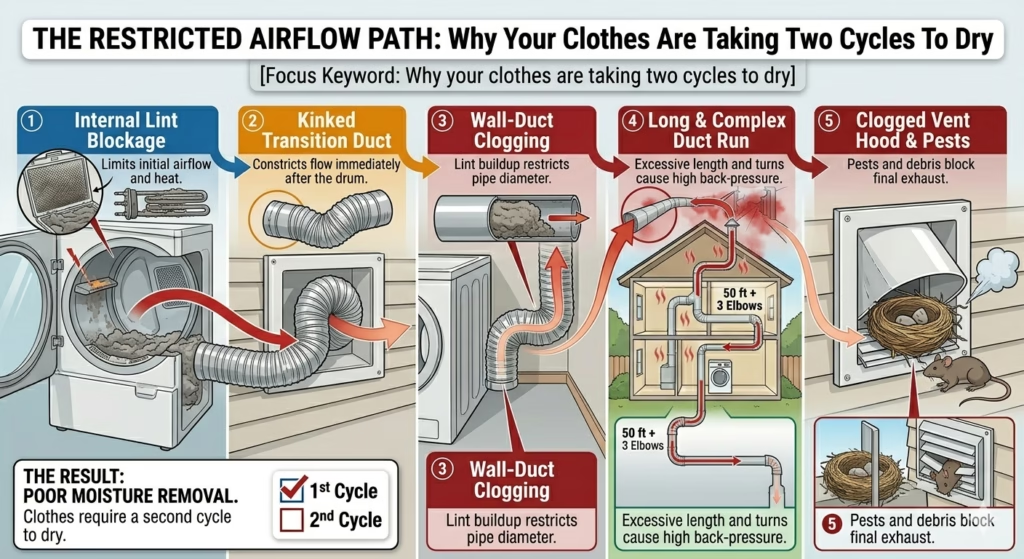
Tired of running your dryer twice? Learn the science behind restricted airflow and why your clothes are taking two cycles to dry. From hidden lint clogs to pest infestations, this guide covers the 5 main culprits slowing down your laundry. Protect your home and save on energy bills with professional vent maintenance!
1. Massive Lint Accumulation in the Ductwork
Even if you clean your lint trap every time, about 25% of lint escapes into the internal ductwork. Over time, this builds a thick, carpet-like layer.
Quick Tip: If the top of your dryer feels hot to the touch during a cycle, it’s a sign the heat is trapped inside the cabinet instead of exiting the vent.
2. The “Hidden” External Clog
The exterior hood of your house is prime real estate for pests. Spiders, birds, and even wasps build nests in the louvers. When wet lint hits these obstructions, it creates a “paste” that seals the vent shut.
3. Crushed or Kinked Transition Hoses
Take a look behind your machine. If the dryer was pushed back too hard against the wall, the flexible foil hose is likely flattened. A crushed hose is a leading cause for why your clothes are taking two cycles to dry.
Data Point: A single 90-degree kink in a transition hose can reduce airflow by up to 30%, adding 15-20 minutes to every load.
4. Long Vent Runs and Too Many Elbows
If your laundry room is in the middle of the house, your vent might travel 30 feet to reach an outside wall. Every “elbow” (turn) in the pipe adds resistance. According to international residential codes, dryer vents should not exceed 35 feet in total length.
5. Mechanical Thermostat Failure (Rare)
While we emphasize airflow, a cycling thermostat can fail. However, a pro will always check the airflow first because 9 times out of 10, the vent is the culprit.
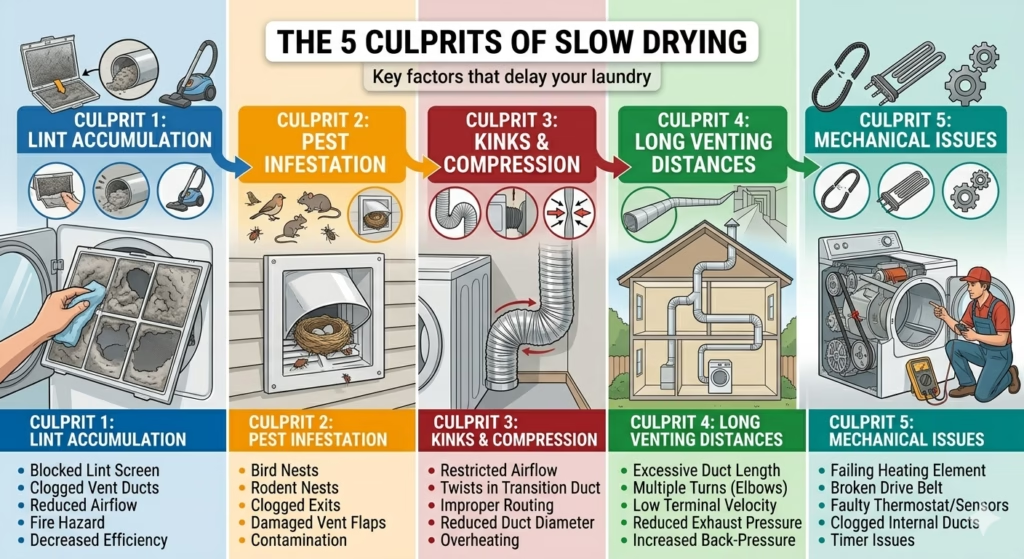
Is your dryer taking multiple cycles to get the job done? Don’t ignore the warning signs! This guide breaks down the 5 most common culprits behind slow drying times—from hidden lint clogs to improper venting distances. Keeping your vents clear doesn’t just save time; it prevents fire hazards and lowers energy bills. Save this checklist for your next home maintenance day!
As niche experts in home venting, Always a Sweep brings years of experience to your doorstep. We aren’t just cleaning pipes; we are performing fire prevention.
Many homeowners ignore the “burning smell” coming from their laundry room, assuming it’s just “hot dust.” This is often the smell of lint near the heating element reaching its ignition point.
According to the National Fire Protection Association (NFPA), nearly 16,000 home fires annually are caused by dryers. The #1 cause is the failure to clean the vents. Lint is one of the most flammable substances in your home. When your dryer runs for two cycles, it stays at peak operating temperature for twice as long, significantly increasing the chance of an ignition event.
We understand the appeal of a $20 “drill-powered” cleaning kit. However, as professionals, we’ve seen these lead to disaster.
| Feature |
DIY Drill Kit |
Always a Sweep Professional |
| Tool Quality |
Brittle plastic rods |
Industrial-grade flexible steel/nylon |
| Debris Removal |
Pushes lint into corners |
HEPA-filtered high-powered suction |
| Inspection |
Blind guessing |
HD Video Camera Inspection |
| Risk |
Rod snaps, duct punctures |
Zero-risk guarantee |
| Verification |
“Looks okay” |
Airflow velocity (Anemometer) test |
While you should leave the deep cleaning to the experts, these habits will keep your system running smoothly between professional visits:
-
Clean the lint screen after every single load. No exceptions.
-
Deep clean the screen: Every 6 months, wash the lint screen with soap and water to remove waxy buildup from dryer sheets.
-
Vacuum the cabinet: Once a year, use a crevice tool to vacuum the area inside the dryer where the lint screen sits.
“As of 2024, many new ‘Smart Dryers’ have sensors that trigger a ‘Check Vent’ light. Do not ignore this. If your machine is smart enough to tell you it’s choking, listen to it before the heating element snaps.”
Frequently Asked Questions
Q: My dryer is brand new and the clothes still take two cycles to dry. Why?
Answer: This is the ultimate proof that it isn’t the dryer! A new, powerful dryer trying to push air through an old, clogged pipe will actually fail faster than an old one. The vent must be cleared to match the power of the new machine.
Q: How often should I have my vents professionally cleaned?
Answer: For most families, once every 12 months is the standard. If you have a large family, pets that shed, or a long vent run (over 15 feet), you should consider a cleaning every 6-9 months.
Q: Can I just blow out the vent with a leaf blower?
Answer: We advise against this. A leaf blower lacks the concentrated agitation needed to remove “pasted” lint. Furthermore, it can blow the lint deeper into the wall cavities if there is a small break in the duct.
Final Thoughts and Stop Wasting Time
Why your clothes are taking two cycles to dry is a question with a simple, albeit vital, answer: Your home needs to breathe. Don’t settle for damp clothes and high energy bills. Trust the experts who bring professional restoration to every job.
Ready to get your laundry done in one cycle again?
-
Check your external vent for visible clogs.
-
Inspect the transition hose behind your dryer.
-
Schedule a Professional Performance Restoration with Always a Sweep to ensure your home is safe and efficient.

by Always A Sweep Team | Apr 27, 2026 | Always Home Repair Services, inspections & sweeping
Searching for a fireplace remodel design consultation near me is the first step in turning a dated, soot-stained hearth into the stunning centerpiece of your living room. In North Central Florida, the fireplace isn’t just about heat; it’s a lifestyle statement. Whether you have a traditional masonry chimney or a modern prefab unit, a remodel can completely shift the energy of your home.
How does a professional consultation help? Most homeowners know they want a change, but they aren’t sure if their dream design is structurally possible. By booking a fireplace remodel design consultation near me, you gain access to experts who understand the balance between aesthetic beauty and fire safety.
At Always A Sweep, we don’t just look at the exterior. We evaluate your entire system, from the Chimney Cap to the Smoke Chamber. A dreamy remodel is only successful if it functions perfectly and safely for years to come.
Table of Contents
-
How Does a Fireplace Remodel Design Consultation Near Me Transform Your Home?
-
What Happens During a Professional Fireplace Design Consultation?
-
Why is Technical Expertise Critical for a Fireplace Remodel?
-
How Do You Choose Between Wood, Gas, or Electric Fireplaces?
-
Where Can You Find Inspiration for Your New Hearth Design?
-
How Does Professional Masonry Repair Integrate with Your Remodel?
-
What Are the Safety Requirements for a Fireplace Overhaul?
-
Conclusion and Expert Resources
What Happens During a Professional Fireplace Design Consultation?
What should you expect when an expert arrives for a fireplace remodel design consultation near me? The process is collaborative and data-driven. We don’t just pick out tile; we engineer a solution.
-
How do we assess the current structure? We perform a deep inspection to see if you need a Chimney Relining or Damper Repair before the cosmetic work begins.
-
How do we determine your style? We discuss materials like natural stone, modern shiplap, or traditional brick.
-
What about measurements? We take precise dimensions to ensure your new Gas Fireplaces or Woodburning Stoves meet all local Florida building codes.
Why is Technical Expertise Critical for a Fireplace Remodel?
Why can’t you just hire a general handyman for this? A fireplace remodel design consultation near me requires a deep understanding of “The Physics of Fire.” If a mantle is installed too close to the firebox, or if a new stone facade blocks essential airflow, you create a massive fire hazard.
As experts in Gas System Maintenance & Service, we ensure that if you are switching from wood to gas, your New Gas Line & Appliance Connection is handled with surgical precision. How does this protect you? It ensures that your home remains safe from gas leaks and carbon monoxide while looking like it belongs in a luxury magazine.
How Do You Choose Between Wood, Gas, or Electric Fireplaces?
How do you know which fuel source is right for your lifestyle? During your fireplace remodel design consultation near me, we help you weigh the pros and cons:
-
Woodburning Fireplaces: Why choose wood? For the authentic crackle, smell, and high heat output. It requires regular Inspections & Sweeping.
-
Gas Fireplaces: How do they offer success? They provide instant heat with the flip of a switch and require less maintenance than wood.
-
Electric or Water Vapor Fireplaces: Where do these fit? Perfect for bedrooms or homes without existing chimneys, offering ambiance without the need for venting.
Where Can You Find Inspiration for Your New Hearth Design?
Where do the best design ideas come from? Your fireplace remodel design consultation near me is the perfect time to bring your Pinterest boards to life. Are you looking for a “Coastal Chic” look with white-washed brick? Or perhaps a “Modern Industrial” vibe with a custom steel surround?
At Always A Sweep, we help you visualize how different textures will react to the light in your specific room. How does the choice of a Chimney Cap or Chase Cover affect the exterior aesthetic of your home? We look at the project holistically, ensuring the inside and outside match your vision.
How Does Professional Masonry Repair Integrate with Your Remodel?
How often does a remodel reveal hidden issues? It is very common to find cracked firebricks or a deteriorating Smoke Chamber once an old mantle is removed. This is why a fireplace remodel design consultation near me is so valuable.
Instead of hitting a roadblock, our team can perform Masonry Repair or a full Chimney Rebuild as part of the project. How does this save you money? By fixing the structural “bones” of the fireplace during the remodel, you avoid having to tear apart your beautiful new stonework later to fix a leak or a crack.
What Are the Safety Requirements for a Fireplace Overhaul?
How do we ensure your new design is legal and safe? Every fireplace remodel design consultation near me focuses on “Clearance to Combustibles.”
-
How far should the mantle be? We follow strict NFPA guidelines to prevent heat transfer to wooden elements.
-
Why check the venting? If we install a more efficient insert, we must ensure the Chimney Relining is sized correctly to prevent “back-puffing.”
-
What about gas safety? We always include a Gas Leak Inspection as part of any gas-related remodel to ensure your peace of mind.
Conclusion and Expert Resources
Conclusion: Ready to Build Your Dream Hearth?
Booking a fireplace remodel design consultation near me is the best way to ensure your home improvement project is a total success. Why settle for a dated fireplace when you can have a high-efficiency, stunningly beautiful focal point?
At Always A Sweep, we bring years of expertise in North Central Florida to every consultation. From Damper Repair to Fireplace Design, we handle every detail so you can simply sit back and enjoy the glow.
Are you ready to transform your home? Contact Always A Sweep today to book your fireplace remodel design consultation near me. How can we help you bring your vision to life?
by Always A Sweep Team | Apr 20, 2026 | Always Home Repair Services, Gas leakage, inspections & sweeping
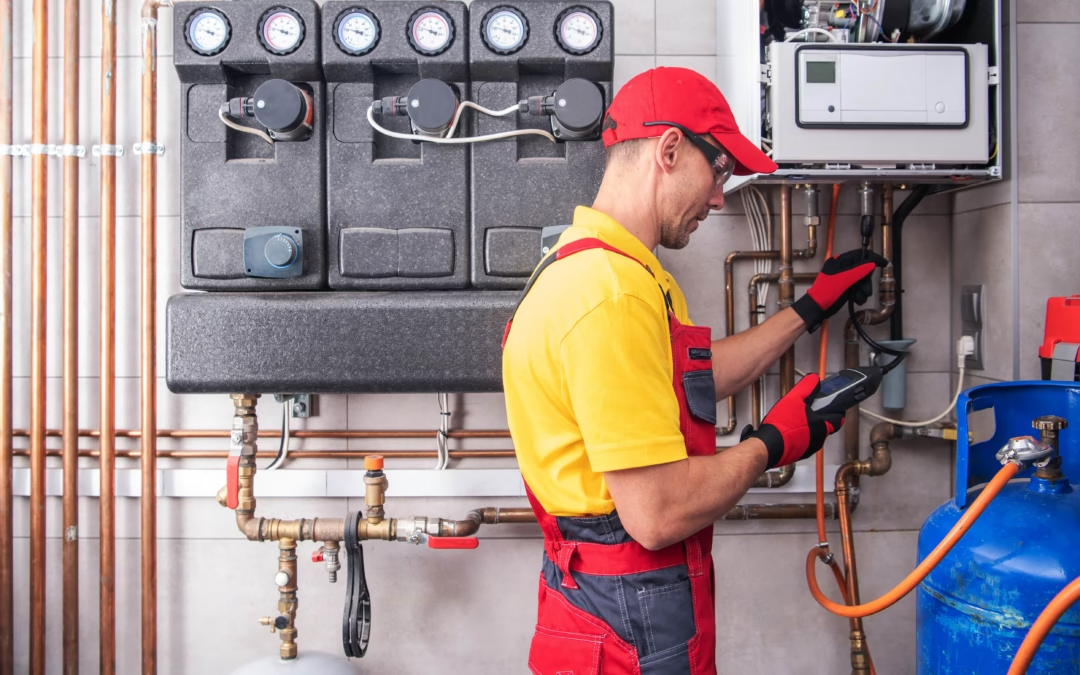
Annual gas system maintenance checklist completion is the single most important task a homeowner in North Central Florida can perform to ensure year-round safety. While gas is an incredibly efficient fuel source for heating and cooking, it requires proactive management to prevent hazards like carbon monoxide poisoning or leaks.
At Always A Sweep, we understand that your fireplace and gas appliances are the heart of your home’s comfort. Neglecting these systems doesn’t just lead to inefficiency; it can lead to costly emergency repairs during the peak of winter.
A well-maintained system operates at peak performance, lowering your monthly utility bills. By following a structured maintenance routine, you extend the lifespan of your appliances and gain peace of mind knowing your family is protected.
Table of Contents
-
The Importance of Gas Safety
-
Annual Gas System Maintenance Checklist: The Essentials
-
Visualizing Your Gas System
-
The Critical Role of Professional Inspections
-
Common Signs of Gas System Wear
-
Internal & External Resources
-
Conclusion
Annual Gas System Maintenance Checklist: The Essentials
Start by examining all visible gas lines leading to your water heater, furnace, and fireplace. Look for signs of corrosion, rust, or physical damage to the pipes.
You must ensure that your CO detectors are functioning perfectly. Replace batteries annually and check the “replace by” date on the back of the device, as sensors degrade over time.
Dust and debris can clog burner ports, leading to incomplete combustion. This is especially true for gas fireplaces and outdoor propane setups.
4. Checking the Pilot Light
If your appliance has a standing pilot light, the flame should be a crisp blue. A yellow or flickering flame suggests a lack of oxygen or a dirty burner that requires immediate attention.
Ensure that exhaust vents are clear of bird nests, debris, or soot buildup. Proper venting is crucial for moving combustion gases safely out of your home.
Expert Tip: If you notice a “rotten egg” smell, leave the house immediately and call for emergency leak detection. Do not turn any lights on or off.
Visualizing Your Gas System
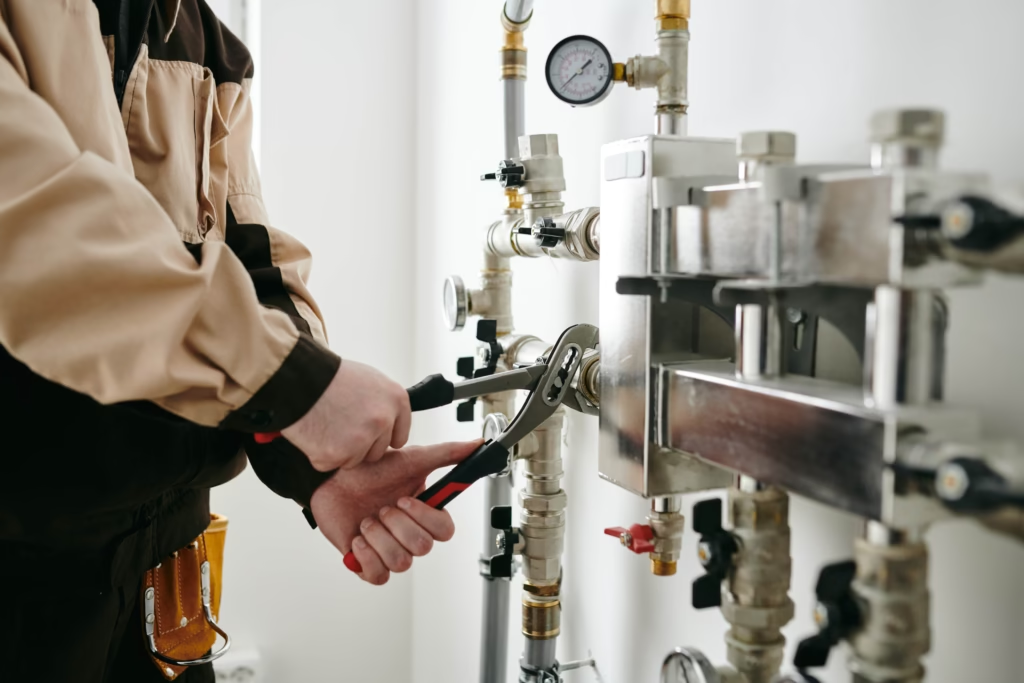
The Critical Role of Professional Inspections
Why DIY Isn’t Enough
While the annual gas system maintenance checklist includes tasks you can do yourself, professional expertise is non-negotiable for high-pressure components. Our team at Always A Sweep uses specialized equipment to detect leaks that are too small for the human nose to sense.
Advanced Leak Detection
We utilize electronic combustible gas detectors to sniff out trace amounts of propane or natural gas. This ensures that even “micro-leaks” at joints or valves are identified and repaired before they become dangerous.
Whether you are using a municipal natural gas line or a private propane tank installation, the maintenance requirements differ slightly. Our specialists are trained in the specific pressures and regulator settings required for both fuel types.
-
Soot Buildup: If you see black carbon deposits on your gas logs or near the furnace burners, your gas-to-air ratio is off.
-
Physical Corrosion: White or green powdery substances on copper or brass fittings indicate chemical corrosion that could lead to a breach.
-
Odd Noises: Hissing sounds near a connection point or “booming” sounds when an appliance ignites are major red flags.
-
Increased Bills: A sudden spike in gas usage without a change in weather usually indicates an underground leak or a highly inefficient burner.
By staying ahead of these issues with your annual gas system maintenance checklist, you avoid the stress of a mid-winter breakdown.
Conclusion
Completing an annual gas system maintenance checklist is more than just a chore; it is a commitment to your home’s longevity and your family’s safety. From checking pilot lights to ensuring your propane tank is properly anchored, every step counts.
Don’t wait until the first cold snap hits North Central Florida to realize your system has a fault. Always A Sweep is here to provide professional gas system inspections, new gas line connections, and comprehensive repairs.
Ready to secure your home? Contact Always A Sweep today to schedule your professional gas system maintenance and ensure your home stays warm, safe, and efficient all year long.

by Always A Sweep Team | Apr 6, 2026 | Always Home Repair Services, dryer vent repair, inspections & sweeping, installation
Dryer wall box installation for tight spaces is the proven secret to transforming a cramped, inefficient laundry room into a streamlined and safe workspace. In many North Central Florida homes, laundry closets are notoriously small, forcing homeowners to push their dryers right up against the wall. This often results in a crushed transition duct, which restricts airflow, increases energy bills, and—most dangerously—creates a significant fire hazard.
At Always A Sweep, we understand that every inch counts. By installing a recessed dryer wall box, we allow your dryer to sit flush against the wall without damaging the venting system. This simple upgrade not only saves space but also optimizes your machine’s performance.
Table of Contents
-
What is a Recessed Dryer Wall Box?
-
Why Tight Spaces Demand Better Venting
-
The Benefits of Professional Installation
-
Signs You Need a Dryer Wall Box
-
The Always A Sweep Installation Process
-
Service Areas: Expert Care in North Central Florida
-
Conclusion
What is a Recessed Dryer Wall Box?
A dryer wall box is a metal or high-impact plastic housing that is inset into the wall stud bay, directly behind the dryer. Think of it like a recessed outlet for your dryer vent. Instead of the heavy-duty flex hose protruding 4 to 6 inches from the wall, the connection happens inside the wall cavity.
When performing a dryer wall box installation for tight spaces, the goal is to provide a dedicated “home” for the transition duct. This prevents the hose from being kinked or smashed when the dryer is pushed back into its permanent position. It is a sleek, architectural solution to a common mechanical problem.
Why Tight Spaces Demand Better Venting
In tight laundry quarters, the standard “out-of-the-wall” pipe is an enemy to efficiency. When space is limited, the tendency is to shove the appliance as far back as possible.
The Danger of the “Crushed Duct”
When a dryer vent hose is crushed, the lint has nowhere to go. It begins to accumulate in the bends of the pipe and inside the dryer cabinet itself. According to the National Fire Protection Association (NFPA), nearly 16,000 home fires are caused by clothes dryers every year, with “failure to clean” being the leading cause.
Reduced Airflow and Energy Waste
A restricted vent makes your dryer work twice as hard. If you find yourself running the same load of towels for two cycles, it likely isn’t a mechanical failure of the heating element—it is a lack of airflow. A dryer wall box installation for tight spaces ensures the air moves freely, reducing wear and tear on your appliance and lowering your monthly utility costs.
The Benefits of Professional Installation
Choosing a professional for your dryer wall box installation for tight spaces ensures that the structural integrity of your wall and the safety of your gas or electric lines remain intact.
-
Fire Safety: We ensure the box is made of non-combustible materials that act as a fire block.
-
Aesthetic Appeal: No more messy hoses peeking out from behind the machine. Your laundry room looks finished and professional.
-
Easier Maintenance: Because the hose is protected, it is much easier to detach and reattach during your annual Dryer Vent Cleaning & Inspections.
-
Protection for the Wall: A recessed box protects the drywall from the heat and vibration of the dryer vent.
Signs You Need a Dryer Wall Box
How do you know if your home is a candidate for a dryer wall box installation for tight spaces? Look for these common red flags in your laundry area:
-
The “Gap” Problem: Your dryer sticks out so far that you can’t close the laundry closet doors.
-
Visible Kinks: You can see the silver flex hose flattened against the wall.
-
Long Drying Times: Your clothes take more than 45 minutes to dry a standard load.
-
Excessive Heat: The top of your dryer feels hot to the touch during operation, or the laundry room feels like a sauna.
-
Dryer Movement: If your dryer “walks” or vibrates excessively, it may be struggling against a restricted vent.
If you notice these issues, it may also be time for a Replacement / Repair / Reconnection of Dryer Vent to ensure the entire line is clear and up to code.
The Always A Sweep Installation Process
At Always A Sweep, we don’t believe in “one size fits all” solutions. Every home in North Central Florida is different, and we tailor our approach to your specific wall construction.
Step 1: Inspection
We locate the wall studs and identify any potential obstructions, such as electrical wires or water lines for the washing machine.
Step 2: Precision Cutting
We carefully remove a section of the drywall to fit the recessed box perfectly between the studs.
Step 3: Vent Connection
We secure the Dryer Wall Exhaust Termination and ensure the internal piping is sealed airtight to prevent lint leaks behind your walls.
Step 4: Final Fitting
We install the dryer wall box installation for tight spaces and connect a high-quality Dryer Flex Hose Replacement / Upgrade. We then test the airflow to ensure your dryer is breathing better than ever.
Service Areas: Expert Care in North Central Florida
Always A Sweep is proud to serve the diverse communities of North Central Florida. From historic homes with shallow walls to modern builds with tight laundry closets, we have seen it all. Our expertise extends beyond dryer vents to full-scale chimney and gas system safety.
-
Ocala & Gainesville: We provide rapid response for dryer vent emergencies and routine safety upgrades.
-
The Villages & Nearby: We help homeowners maximize their utility spaces and ensure all gas connections are up to modern safety standards.
-
Comprehensive Safety: While we are there for your dryer, we can also perform Gas System Inspections or a Fireplace Sweep to keep your entire home protected.
For residents interested in broader household safety and energy standards, the U.S. Department of Energy provides excellent resources on appliance efficiency and ventilation.
Beyond the Box: Total Laundry Safety
A dryer wall box installation for tight spaces is a foundational step, but maintenance is what keeps your home safe long-term.
-
Clean the Lint Screen: Every single load, without exception.
-
Annual Professional Cleaning: Even with a wall box, lint can accumulate in the vertical sections of your vent or at the Roof Termination Replacement point.
-
Check the Outside Vent: Ensure the exterior flap opens freely and isn’t blocked by bird nests or debris.
Conclusion: Reclaim Your Space Today
Don’t let a small laundry room compromise your home’s safety or your machine’s efficiency. A dryer wall box installation for tight spaces is a low-cost, high-impact investment that pays for itself in lower energy bills and peace of mind.
At Always A Sweep, we are committed to the safety of our North Central Florida neighbors. From chimney relining to dryer vent upgrades, our team brings precision and expertise to every job. Stop fighting with your dryer hose and start enjoying a more organized, safer home.
Contact Always A Sweep today to schedule your dryer wall box installation and optimize your laundry room!
by Always A Sweep Team | Mar 23, 2026 | Always Home Repair Services, Gas leakage, inspections & sweeping, installation
Is Your Gas Fireplace Leaking? 5 Emergency Signs & What to Do Next
If you suspect a gas leak in your home, time is your most valuable asset. While gas fireplaces offer warmth and ambiance, a malfunction can lead to carbon monoxide poisoning or fire hazards. Knowing when to call for emergency gas leak detection services near me can protect your family and your property from a preventable disaster.
At Always A Sweep, we prioritize your home’s safety. From chimney inspections to gas line integrity, our mission is to ensure your heating systems are a source of comfort, not a source of danger.
Table of Contents
-
The “Rotten Egg” Myth: How Gas Leaks Actually Smell
-
5 Emergency Signs of a Gas Fireplace Leak
-
Immediate Steps: What to Do Before Help Arrives
-
Why Professional Detection Beats DIY Methods
-
The Role of Carbon Monoxide Detectors
-
EEAT: Why Local Expertise Matters in a Crisis
-
Conclusion: Prevention is the Best Medicine
The “Rotten Egg” Myth: How Gas Leaks Actually Smell
Natural gas is inherently odorless and colorless. To make it detectable to the human nose, utility companies add a chemical called mercaptan. This creates the distinct “rotten egg” or sulfurous odor most people associate with a leak.
However, “odor fade” can occur if the gas travels through soil or if the leak is very small. This is why searching for emergency gas leak detection services near me is vital if you have any physical symptoms, even if you don’t smell a thing.
5 Emergency Signs of a Gas Fireplace Leak
If you notice any of the following, do not wait. These are the red flags that require immediate professional intervention:
-
The Hissing Sound: A distinct whistling or hissing noise near the gas valve or fireplace connection indicates gas escaping under pressure.
-
Dying Houseplants: Natural gas displaces oxygen. If your indoor plants are suddenly wilting or turning yellow despite proper care, there may be a slow leak in the vicinity.
-
Physical Symptoms: Residents may experience unexplained headaches, dizziness, nausea, or fatigue.
-
White Mist or Bubbles: If the leak is near an exterior line, you might see a “cloud” of mist. If you suspect a leak in a pipe, the soap bubble test (applying soapy water to the pipe) will show growing bubbles at the leak site.
-
Soot or Scorching: Excessive soot buildup or scorching on the outside of the fireplace can indicate improper combustion and potential gas venting issues.
Immediate Steps: What to Do Before Help Arrives
If you are currently searching for emergency gas leak detection services near me because you smell gas, follow these steps immediately:
-
Evacuate: Get all people and pets out of the house.
-
Don’t Touch Electronics: Do not flip light switches, use the phone inside, or open the garage door. A single spark can ignite the gas.
-
Open Windows: If it is safe to do so on your way out, crack the windows to allow ventilation.
-
Shut Off the Main Valve: If you know where your gas meter is and have a wrench, turn the valve to the “off” position (perpendicular to the pipe).
-
Call from Outside: Dial 911 or your local gas utility once you are at a safe distance.
Why Professional Detection Beats DIY Methods
While “bubble tests” are okay for minor checks, true emergency gas leak detection services near me use calibrated equipment. Professionals at Always A Sweep and certified gas technicians use:
-
Electronic Combustible Gas Detectors: These can find leaks as small as 50 parts per million (ppm).
-
Ultrasonic Leak Detectors: These “listen” for the sound frequency of escaping gas that the human ear cannot detect.
The Role of Carbon Monoxide Detectors
A gas leak isn’t the only danger; improper burning leads to Carbon Monoxide (CO). According to the Consumer Product Safety Commission (CPSC), CO is the “silent killer.” Ensure your home has CO detectors on every level and near sleeping areas. If your CO alarm sounds, it is an automatic emergency.
Why Local Expertise Matters
When it involves gas, “Experience” isn’t just a buzzword—it’s a requirement. Finding emergency gas leak detection services near me ensures that the technician understands local building codes and the specific climate-related wear and tear common in your area.
At Always A Sweep, our years of experience in fireplace safety mean we don’t just find the leak; we understand the structural “why” behind it. We provide trustworthy advice because your family’s safety is our primary metric of success.
Conclusion: Prevention is the Best Medicine
The best way to avoid a crisis is through annual maintenance. A routine inspection of your gas fireplace, lines, and venting systems can catch micro-leaks before they become life-threatening.
Is your fireplace overdue for a check-up? Don’t wait for an emergency. Schedule a professional safety inspection with Always A Sweep today to ensure your home remains a safe haven.