by Always A Sweep Team | Apr 6, 2026 | Always Home Repair Services, dryer vent repair, inspections & sweeping, installation
Dryer wall box installation for tight spaces is the proven secret to transforming a cramped, inefficient laundry room into a streamlined and safe workspace. In many North Central Florida homes, laundry closets are notoriously small, forcing homeowners to push their dryers right up against the wall. This often results in a crushed transition duct, which restricts airflow, increases energy bills, and—most dangerously—creates a significant fire hazard.
At Always A Sweep, we understand that every inch counts. By installing a recessed dryer wall box, we allow your dryer to sit flush against the wall without damaging the venting system. This simple upgrade not only saves space but also optimizes your machine’s performance.
Table of Contents
-
What is a Recessed Dryer Wall Box?
-
Why Tight Spaces Demand Better Venting
-
The Benefits of Professional Installation
-
Signs You Need a Dryer Wall Box
-
The Always A Sweep Installation Process
-
Service Areas: Expert Care in North Central Florida
-
Conclusion
What is a Recessed Dryer Wall Box?
A dryer wall box is a metal or high-impact plastic housing that is inset into the wall stud bay, directly behind the dryer. Think of it like a recessed outlet for your dryer vent. Instead of the heavy-duty flex hose protruding 4 to 6 inches from the wall, the connection happens inside the wall cavity.
When performing a dryer wall box installation for tight spaces, the goal is to provide a dedicated “home” for the transition duct. This prevents the hose from being kinked or smashed when the dryer is pushed back into its permanent position. It is a sleek, architectural solution to a common mechanical problem.
Why Tight Spaces Demand Better Venting
In tight laundry quarters, the standard “out-of-the-wall” pipe is an enemy to efficiency. When space is limited, the tendency is to shove the appliance as far back as possible.
The Danger of the “Crushed Duct”
When a dryer vent hose is crushed, the lint has nowhere to go. It begins to accumulate in the bends of the pipe and inside the dryer cabinet itself. According to the National Fire Protection Association (NFPA), nearly 16,000 home fires are caused by clothes dryers every year, with “failure to clean” being the leading cause.
Reduced Airflow and Energy Waste
A restricted vent makes your dryer work twice as hard. If you find yourself running the same load of towels for two cycles, it likely isn’t a mechanical failure of the heating element—it is a lack of airflow. A dryer wall box installation for tight spaces ensures the air moves freely, reducing wear and tear on your appliance and lowering your monthly utility costs.
The Benefits of Professional Installation
Choosing a professional for your dryer wall box installation for tight spaces ensures that the structural integrity of your wall and the safety of your gas or electric lines remain intact.
-
Fire Safety: We ensure the box is made of non-combustible materials that act as a fire block.
-
Aesthetic Appeal: No more messy hoses peeking out from behind the machine. Your laundry room looks finished and professional.
-
Easier Maintenance: Because the hose is protected, it is much easier to detach and reattach during your annual Dryer Vent Cleaning & Inspections.
-
Protection for the Wall: A recessed box protects the drywall from the heat and vibration of the dryer vent.
Signs You Need a Dryer Wall Box
How do you know if your home is a candidate for a dryer wall box installation for tight spaces? Look for these common red flags in your laundry area:
-
The “Gap” Problem: Your dryer sticks out so far that you can’t close the laundry closet doors.
-
Visible Kinks: You can see the silver flex hose flattened against the wall.
-
Long Drying Times: Your clothes take more than 45 minutes to dry a standard load.
-
Excessive Heat: The top of your dryer feels hot to the touch during operation, or the laundry room feels like a sauna.
-
Dryer Movement: If your dryer “walks” or vibrates excessively, it may be struggling against a restricted vent.
If you notice these issues, it may also be time for a Replacement / Repair / Reconnection of Dryer Vent to ensure the entire line is clear and up to code.
The Always A Sweep Installation Process
At Always A Sweep, we don’t believe in “one size fits all” solutions. Every home in North Central Florida is different, and we tailor our approach to your specific wall construction.
Step 1: Inspection
We locate the wall studs and identify any potential obstructions, such as electrical wires or water lines for the washing machine.
Step 2: Precision Cutting
We carefully remove a section of the drywall to fit the recessed box perfectly between the studs.
Step 3: Vent Connection
We secure the Dryer Wall Exhaust Termination and ensure the internal piping is sealed airtight to prevent lint leaks behind your walls.
Step 4: Final Fitting
We install the dryer wall box installation for tight spaces and connect a high-quality Dryer Flex Hose Replacement / Upgrade. We then test the airflow to ensure your dryer is breathing better than ever.
Service Areas: Expert Care in North Central Florida
Always A Sweep is proud to serve the diverse communities of North Central Florida. From historic homes with shallow walls to modern builds with tight laundry closets, we have seen it all. Our expertise extends beyond dryer vents to full-scale chimney and gas system safety.
-
Ocala & Gainesville: We provide rapid response for dryer vent emergencies and routine safety upgrades.
-
The Villages & Nearby: We help homeowners maximize their utility spaces and ensure all gas connections are up to modern safety standards.
-
Comprehensive Safety: While we are there for your dryer, we can also perform Gas System Inspections or a Fireplace Sweep to keep your entire home protected.
For residents interested in broader household safety and energy standards, the U.S. Department of Energy provides excellent resources on appliance efficiency and ventilation.
Beyond the Box: Total Laundry Safety
A dryer wall box installation for tight spaces is a foundational step, but maintenance is what keeps your home safe long-term.
-
Clean the Lint Screen: Every single load, without exception.
-
Annual Professional Cleaning: Even with a wall box, lint can accumulate in the vertical sections of your vent or at the Roof Termination Replacement point.
-
Check the Outside Vent: Ensure the exterior flap opens freely and isn’t blocked by bird nests or debris.
Conclusion: Reclaim Your Space Today
Don’t let a small laundry room compromise your home’s safety or your machine’s efficiency. A dryer wall box installation for tight spaces is a low-cost, high-impact investment that pays for itself in lower energy bills and peace of mind.
At Always A Sweep, we are committed to the safety of our North Central Florida neighbors. From chimney relining to dryer vent upgrades, our team brings precision and expertise to every job. Stop fighting with your dryer hose and start enjoying a more organized, safer home.
Contact Always A Sweep today to schedule your dryer wall box installation and optimize your laundry room!

by Always A Sweep Team | Mar 31, 2026 | Always Home Repair Services, chimney repair
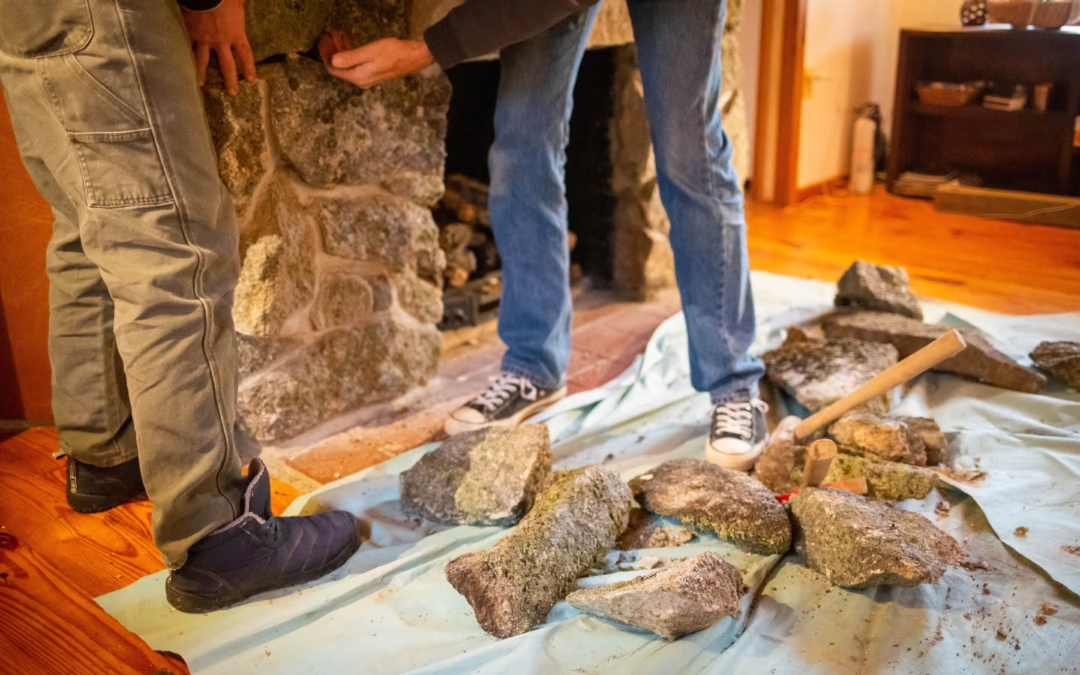
Signs your chimney flue tile is cracked are often subtle, but ignoring them can lead to catastrophic house fires or carbon monoxide poisoning. Your chimney liner is the silent guardian of your home, acting as a heat-resistant barrier between the intense flames of your fireplace and the combustible wood framing of your house. When this barrier fails, the safety of your entire household is at risk.
At Always A Sweep, we specialize in identifying these hidden dangers throughout North Central Florida. Whether you have a woodburning fireplace or a modern gas insert, understanding the condition of your clay tile liner is a non-negotiable part of home maintenance.
Table of Contents
-
What is a Chimney Flue Tile?
-
Top 5 Signs Your Chimney Flue Tile is Cracked
-
The Dangers of a Damaged Liner
-
Why Professional Inspection is Mandatory
-
Solutions: Chimney Relining and Repair
-
Service Areas: Keeping North Central Florida Safe
-
Conclusion
What is a Chimney Flue Tile?
Before diving into the signs your chimney flue tile is cracked, it is important to understand what you are looking at. Most traditional masonry chimneys are lined with terra cotta clay tiles. These tiles are stacked and sealed with mortar to create a smooth, continuous path for smoke and toxic gases to exit your home.
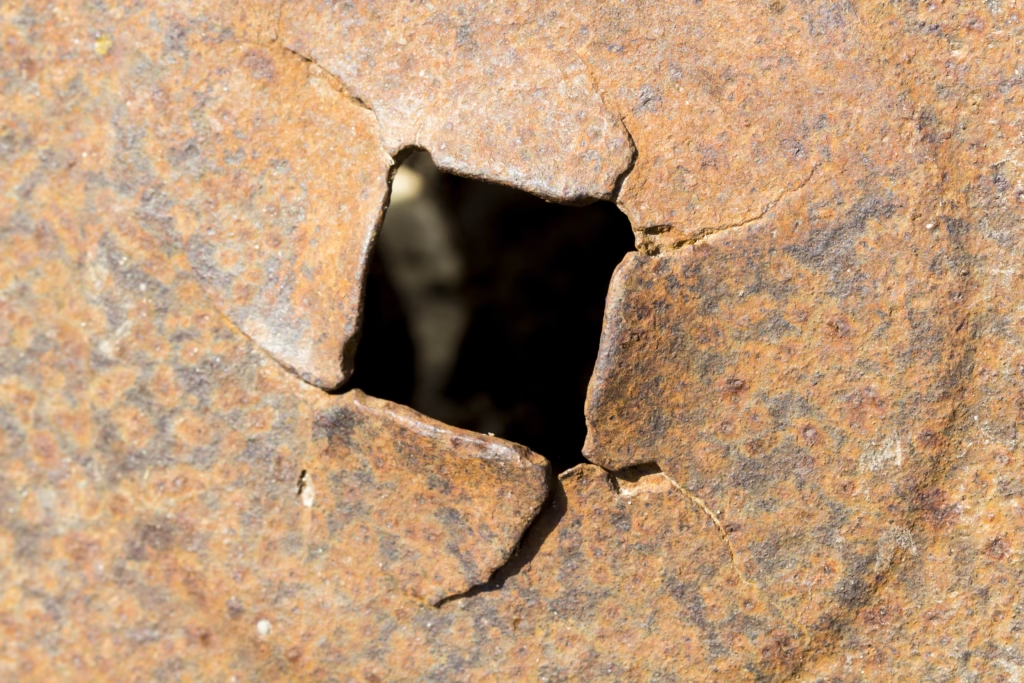
Clay is used because it is inexpensive and resistant to the corrosive byproducts of combustion. However, clay is also brittle. Over decades of use, the constant expansion and contraction caused by heat (thermal shock) can cause these tiles to split, flake, or shift.
Top 5 Signs Your Chimney Flue Tile is Cracked
Because you cannot simply look up your chimney and see the entire flue, you have to look for secondary clues. Here are the most common signs your chimney flue tile is cracked that every homeowner should watch for:
1. Flakes of Clay in the Firebox (Spalling)
If you notice thin, red or terra cotta-colored shards of material sitting on your smoke shelf or in the floor of your fireplace, your liner is “spalling.” This happens when moisture enters the clay and freezes, or when heat stress causes the surface of the tile to peel away.
While you shouldn’t climb your roof without safety gear, a technician during a Chimney Repair can often see vertical cracks in the top-most flue tile. If the top tile is cracked, it is highly likely the tiles further down are also damaged.
3. Efflorescence (White Staining)
White, powdery staining on the exterior masonry of your chimney is called efflorescence. This indicates that moisture is moving through the chimney structure. If the flue tile is cracked, water can seep through the gaps, carrying salts to the exterior of the brick.
A cracked flue creates turbulence in the airflow. When smoke hits a crack or a shifted tile, it slows down and cools, leading to rapid creosote accumulation. If your chimney seems unusually dirty shortly after a Fireplace Sweep, a cracked liner may be the culprit.
5. Odors and Draft Issues
Cracks allow smoke to linger or even seep into the walls of your home. If you smell a campfire scent in upstairs rooms or behind walls, the flue is no longer airtight.
The Dangers of a Damaged Liner
Recognizing the signs your chimney flue tile is cracked is the first step in preventing a disaster. A damaged liner fails in three primary ways:
-
Heat Transfer: A crack allows heat to reach the “combustible” parts of your home (like wooden studs and rafters). It only takes a few hours of high heat to ignite seasoned wood behind a chimney wall.
-
Carbon Monoxide Leaks: The flue’s job is to direct carbon monoxide out of the house. Cracks allow this odorless, colorless, and deadly gas to enter your living spaces. You can learn more about the symptoms of CO poisoning at the Centers for Disease Control and Prevention (CDC).
-
Corrosion of Masonry: When flue gases (which are acidic) escape through cracks, they eat away at the mortar holding your chimney together from the inside out, leading to structural failure.
Why Professional Inspection is Mandatory
You cannot diagnose a cracked flue with a flashlight alone. Professional signs your chimney flue tile is cracked are best identified through a Level 2 video inspection.
At Always A Sweep, we use specialized chimney cameras that travel the full length of the flue. This allows us to see “hairline” cracks that are invisible to the naked eye but large enough to leak dangerous gases.
The National Fire Protection Association (NFPA) recommends an annual inspection for all chimney systems to ensure they remain fit for use. If you haven’t had your chimney checked in over a year, you are essentially gambling with your home’s safety.
Solutions: Chimney Relining and Repair
If we confirm the signs your chimney flue tile is cracked, the most common and effective solution is Chimney Relining.
Stainless Steel Liners
We often recommend replacing the damaged clay tiles with a high-grade stainless steel liner. These liners are flexible, incredibly durable, and come with lifetime warranties. They are safer than clay because they don’t crack under thermal shock.
Masonry Repair
In some cases, if the damage is localized to the top of the chimney, a Masonry Repair or a new chimney cap can prevent further water intrusion that leads to cracking.
Service Areas: Keeping North Central Florida Safe
Always A Sweep is proud to provide expert chimney and gas services throughout North Central Florida. We don’t just stop at chimneys; we are your full-service provider for home safety.
-
Inspections & Sweeping: Our core service to ensure your fireplace is ready for the winter.
-
Gas System Services: We handle Propane & Natural Gas System Installations and emergency leak detection.
-
Dryer Vent Cleaning: A leading cause of household fires that we help you avoid through routine maintenance.
-
Water Intrusion: If your chimney is leaking, we provide specialized assessments to stop the rot before it starts.
Whether you are in Ocala, Gainesville, or the surrounding rural areas, our team is equipped to handle everything from Woodburning Stoves to complex Gas Fireplaces.
Maintaining Your Chimney After Repair
Once you have addressed the signs your chimney flue tile is cracked, maintenance is key to ensuring the problem never returns.
-
Burn Seasoned Wood Only: Wet wood creates more creosote and more heat stress on the tiles.
-
Install a Chimney Cap: This keeps rain out, which is the #1 enemy of clay tiles.
-
Schedule Annual Sweeps: Removing creosote prevents chimney fires, which are the leading cause of cracked tiles.
Conclusion
The signs your chimney flue tile is cracked are a warning you cannot afford to ignore. From falling clay flakes to unusual odors, these symptoms point toward a breach in your home’s primary fire defense.
At Always A Sweep, we combine years of expertise with advanced technology to provide the most thorough chimney relining and repair services in North Central Florida. Don’t wait for a chimney fire to tell you there’s a problem.
by Always A Sweep Team | Mar 23, 2026 | Always Home Repair Services, Gas leakage, inspections & sweeping, installation
Is Your Gas Fireplace Leaking? 5 Emergency Signs & What to Do Next
If you suspect a gas leak in your home, time is your most valuable asset. While gas fireplaces offer warmth and ambiance, a malfunction can lead to carbon monoxide poisoning or fire hazards. Knowing when to call for emergency gas leak detection services near me can protect your family and your property from a preventable disaster.
At Always A Sweep, we prioritize your home’s safety. From chimney inspections to gas line integrity, our mission is to ensure your heating systems are a source of comfort, not a source of danger.
Table of Contents
-
The “Rotten Egg” Myth: How Gas Leaks Actually Smell
-
5 Emergency Signs of a Gas Fireplace Leak
-
Immediate Steps: What to Do Before Help Arrives
-
Why Professional Detection Beats DIY Methods
-
The Role of Carbon Monoxide Detectors
-
EEAT: Why Local Expertise Matters in a Crisis
-
Conclusion: Prevention is the Best Medicine
The “Rotten Egg” Myth: How Gas Leaks Actually Smell
Natural gas is inherently odorless and colorless. To make it detectable to the human nose, utility companies add a chemical called mercaptan. This creates the distinct “rotten egg” or sulfurous odor most people associate with a leak.
However, “odor fade” can occur if the gas travels through soil or if the leak is very small. This is why searching for emergency gas leak detection services near me is vital if you have any physical symptoms, even if you don’t smell a thing.
5 Emergency Signs of a Gas Fireplace Leak
If you notice any of the following, do not wait. These are the red flags that require immediate professional intervention:
-
The Hissing Sound: A distinct whistling or hissing noise near the gas valve or fireplace connection indicates gas escaping under pressure.
-
Dying Houseplants: Natural gas displaces oxygen. If your indoor plants are suddenly wilting or turning yellow despite proper care, there may be a slow leak in the vicinity.
-
Physical Symptoms: Residents may experience unexplained headaches, dizziness, nausea, or fatigue.
-
White Mist or Bubbles: If the leak is near an exterior line, you might see a “cloud” of mist. If you suspect a leak in a pipe, the soap bubble test (applying soapy water to the pipe) will show growing bubbles at the leak site.
-
Soot or Scorching: Excessive soot buildup or scorching on the outside of the fireplace can indicate improper combustion and potential gas venting issues.
Immediate Steps: What to Do Before Help Arrives
If you are currently searching for emergency gas leak detection services near me because you smell gas, follow these steps immediately:
-
Evacuate: Get all people and pets out of the house.
-
Don’t Touch Electronics: Do not flip light switches, use the phone inside, or open the garage door. A single spark can ignite the gas.
-
Open Windows: If it is safe to do so on your way out, crack the windows to allow ventilation.
-
Shut Off the Main Valve: If you know where your gas meter is and have a wrench, turn the valve to the “off” position (perpendicular to the pipe).
-
Call from Outside: Dial 911 or your local gas utility once you are at a safe distance.
Why Professional Detection Beats DIY Methods
While “bubble tests” are okay for minor checks, true emergency gas leak detection services near me use calibrated equipment. Professionals at Always A Sweep and certified gas technicians use:
-
Electronic Combustible Gas Detectors: These can find leaks as small as 50 parts per million (ppm).
-
Ultrasonic Leak Detectors: These “listen” for the sound frequency of escaping gas that the human ear cannot detect.
The Role of Carbon Monoxide Detectors
A gas leak isn’t the only danger; improper burning leads to Carbon Monoxide (CO). According to the Consumer Product Safety Commission (CPSC), CO is the “silent killer.” Ensure your home has CO detectors on every level and near sleeping areas. If your CO alarm sounds, it is an automatic emergency.
Why Local Expertise Matters
When it involves gas, “Experience” isn’t just a buzzword—it’s a requirement. Finding emergency gas leak detection services near me ensures that the technician understands local building codes and the specific climate-related wear and tear common in your area.
At Always A Sweep, our years of experience in fireplace safety mean we don’t just find the leak; we understand the structural “why” behind it. We provide trustworthy advice because your family’s safety is our primary metric of success.
Conclusion: Prevention is the Best Medicine
The best way to avoid a crisis is through annual maintenance. A routine inspection of your gas fireplace, lines, and venting systems can catch micro-leaks before they become life-threatening.
Is your fireplace overdue for a check-up? Don’t wait for an emergency. Schedule a professional safety inspection with Always A Sweep today to ensure your home remains a safe haven.
by Always A Sweep Team | Mar 23, 2026 | Always Home Repair Services, chimney repair, dryer vent repair, inspections & sweeping
When was the last time you felt truly confident climbing into your attic? For many homeowners, the attic is a “no-go zone” dominated by a rickety, wooden ladder that creaks under the slightest weight. If you are using your attic for seasonal storage or accessing HVAC equipment, safety should never be a secondary thought.
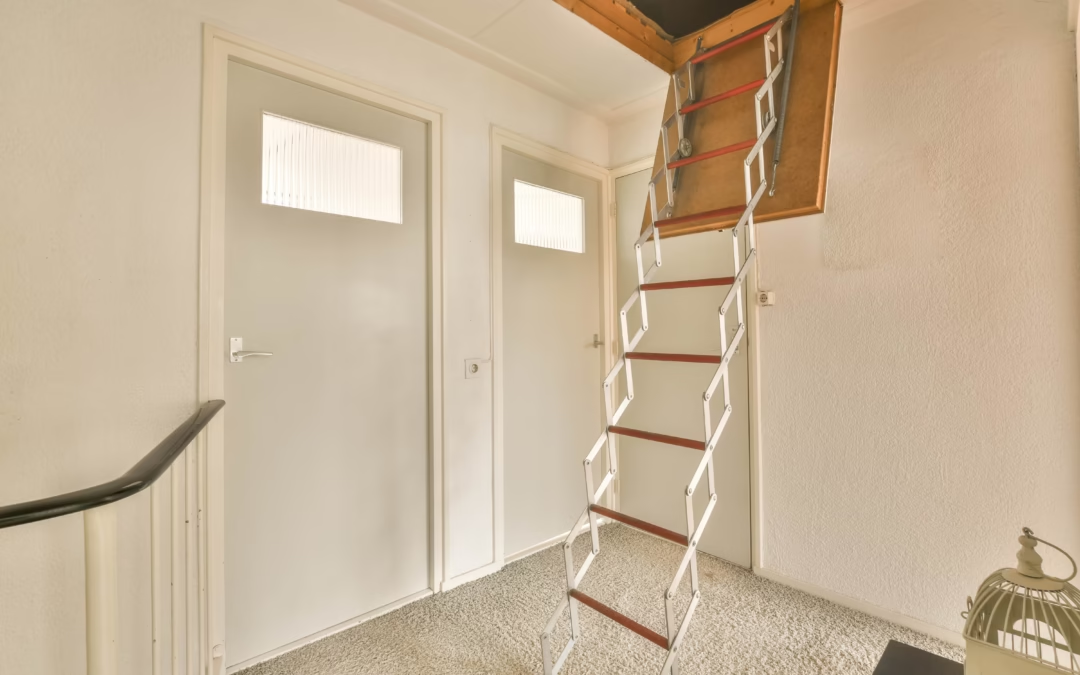
Choosing a heavy duty aluminum attic ladder installation is one of the most impactful, high-ROI upgrades you can make for your home’s utility and your own physical safety. In this guide, we will break down why aluminum is the gold standard, the technical nuances of a professional installation, and how this upgrade protects your home’s structural integrity.
Table of Contents
-
The Case for Aluminum: Strength Meets Science
-
Why “Heavy Duty” Matters (Load Capacity Explained)
-
The Risks of DIY vs. Professional Installation
-
Step-by-Step: Heavy Duty Aluminum Attic Ladder Installation
-
EEAT: Why Trust Always A Sweep for Your Home Upgrades?
-
Energy Efficiency and the Attic Seal
-
Maintenance Tips for Longevity
-
Frequently Asked Questions
The Case for Aluminum: Strength Meets Science
While traditional wood ladders have been the standard for decades, they are susceptible to environmental degradation. Wood is an organic material that reacts to the extreme temperature fluctuations found in attics. Over time, wood can warp, crack, or develop “checked” grains that compromise its load-bearing ability.
Aluminum, on the other hand, is a non-corrosive metal that offers a superior strength-to-weight ratio. A heavy duty aluminum attic ladder installation provides a sleek, modern solution that won’t splinter or rot. Furthermore, aluminum is naturally resistant to moisture, which is vital if your attic experiences humidity or if you live in a coastal climate.
Why “Heavy Duty” Matters (Load Capacity Explained)
Standard attic ladders are often rated for 250 lbs. While this sounds sufficient, consider the math: an average adult carrying a 50-lb box of holiday decorations quickly approaches that limit.
A “Heavy Duty” rating typically starts at 375 lbs (170 kg). This extra headroom isn’t just about the weight; it’s about the rigidity of the frame. When you invest in a heavy duty aluminum attic ladder installation, you are investing in a system designed for “zero-flex.” This stability prevents the “bounce” that causes falls and structural stress on your ceiling joists.
Pro Tip: Always check the ANSI (American National Standards Institute) rating on any ladder product before purchase to ensure it meets industrial safety criteria.
The Risks of DIY vs. Professional Installation
It is tempting to view a ladder swap as a simple weekend project. However, the heavy duty aluminum attic ladder installation process involves more than just a few screws.
-
Structural Integrity: Most attic openings are framed between ceiling joists. If your new heavy-duty unit requires a larger opening, you may need to cut into your home’s “skeleton.” Doing this incorrectly can cause ceiling sag or even roof instability.
-
Squareness and Leveling: If the frame is even $1^\circ$ out of square, the ladder will not sit flush. This creates uneven pressure on the hinges, leading to premature failure.
-
The “Gap” Problem: A poorly installed door creates a massive “chimney effect,” sucking expensive conditioned air out of your living space.
At Always A Sweep, we specialize in the intersection of safety and structural health. Just as we ensure your chimney is clear of hazards, we ensure your attic access is a bridge, not a liability.
Step-by-Step: Heavy Duty Aluminum Attic Ladder Installation
To give you an idea of the precision required, here is the professional workflow for a successful installation:
Phase 1: The Rough Opening
We begin by measuring the existing opening. Most heavy-duty models require a standard $22.5″ \times 54″$ or $30″ \times 54″$ footprint. If the opening needs enlargement, we reinforce the headers to maintain the load-bearing capacity of your ceiling.
Phase 2: Positioning the Frame
The aluminum frame is hoisted into the attic. We use temporary “cleats” (wooden slats) to hold the unit in place while we shim the sides. Shimming ensures the frame is perfectly level, preventing the door from sticking.
Phase 3: Fastening and Securing
We use 16d nails or $3″$, high-shear lag screws. Never use drywall screws for a heavy duty aluminum attic ladder installation; they lack the tensile strength to hold the weight of the ladder and a person.
Phase 4: Calculating the Cut
Aluminum ladders are often “universal height” and must be trimmed to fit your specific floor-to-ceiling distance. We use a precise formula to ensure the feet make 180 degrees contact with the floor.
Why Trust Always A Sweep?
Experience, Expertise, Authoritativeness, and Trustworthiness guidelines are the benchmark for quality content.
-
Experience: Our technicians have spent decades in the “gut” of homes—from chimneys to crawlspaces.
-
Expertise: We understand the physics of home airflow and structural loading.
-
Authoritativeness: We are a recognized name in home safety across our service areas.
-
Trust: We provide transparent pricing and detailed post-installation inspections.
Choosing us for your heavy duty aluminum attic ladder installation means you aren’t just getting a product; you’re getting a professional safety audit of your attic access point.
Energy Efficiency and the Attic Seal
One often overlooked aspect of a new ladder is the R-value of the door. A heavy-duty aluminum unit often comes with an integrated weather-strip.
According to the Department of Energy, an uninsulated attic hatch is like leaving a window open year-round. During your installation, we recommend adding an “attic tent” or an insulated cover to ensure your energy bills stay low while your safety stays high.
Maintenance Tips for Longevity
Once your heavy duty aluminum attic ladder installation is complete, a little maintenance goes a long way:
-
Lubricate the Pivots: Use a silicone-based spray on the hinges every 6 months.
-
Check the Feet: Ensure the rubber or plastic feet aren’t worn down, which can cause slipping on hardwood or tile.
-
Tighten the Nuts: Vibration from use can occasionally loosen the mounting bolts on the ladder sections.
Frequently Asked Questions
Q: Can I install a heavy-duty ladder in a small hallway?
A: It depends on the “swing clearance.” Aluminum ladders often have a smaller swing radius than wood, making them ideal for tight spaces.
Q: How long does a professional installation take?
A: Usually between 3 to 5 hours, depending on whether the rough opening needs to be modified.
Transform Your Home Safety Today
Don’t wait for a “close call” on a shaky wooden ladder to make the switch. A heavy duty aluminum attic ladder installation is a permanent solution for a safer, more accessible home.
Would you like me to provide a free estimate for your attic upgrade or schedule a safety inspection for your home? Contact Always A Sweep today!
by Always A Sweep Team | Mar 16, 2026 | Always Home Repair Services, dryer vent repair
The Hidden Danger of DIY Maintenance
Every homeowner wants to save a few dollars. When you see a dryer vent kit at a local hardware store, it looks like a simple, powerful solution to a nagging chore. You think, “I can do this myself.” However, there is a massive difference between moving lint around and actually removing it.
At Always A Sweep, we’ve seen the aftermath of “successful” DIY cleanings that ended in disaster. A dryer vent kit often provides a false sense of security while leaving behind highly flammable debris in areas you can’t see. In this guide, we will explore the essential reasons why professional intervention isn’t just a luxury, it’s a safety necessity.
Why a Standard Dryer Vent Kit Falls Short
A typical dryer vent kit usually consists of a few flexible rods and a nylon brush. While these are okay for a 3-foot straight pipe leading directly outside, modern homes are rarely built that way.
The Durability Gap
Retail kits are often made of inferior plastics. If a rod snaps inside your wall while attached to a drill, you have transitioned from a routine cleaning to a major home repair. Professional technicians use high-grade, industrial-strength equipment that is designed to withstand the torque and heat of deep-cleaning long vent runs.
Lack of Diagnostic Capability
A dryer vent kit is a blind tool. It cannot tell you if your ducting is disconnected, crushed, or if a family of rodents has chewed through the line. Without the expertise and specialized cameras used by Always A Sweep, you are essentially “cleaning in the dark”.
The 5 Critical Spots Your Dryer Vent Kit Can’t Reach
1. The Internal Heating Element Cabinet
The most dangerous spot is one the dryer vent kit can’t even enter. Fine lint particles often bypass the lint trap and settle inside the dryer’s internal cabinet, right next to the heating element.
- The Risk: When the heating element glows, this “dust bunny” environment can ignite instantly.
- The Pro Advantage: Professionals disassemble the dryer casing to vacuum out the internal motor and heating areas.
Most vents travel through floors and walls, requiring several 90-degree turns. A DIY dryer vent kit brush often gets stuck in these corners. Instead of pulling lint out, the brush frequently compacts the lint into a “plug” at the corner, further restricting airflow.
If your vent exits through the roof, a dryer vent kit is virtually useless.
- Gravity: Lint is heavy. When it moves upward, it naturally wants to fall back down.
- The Roof Cap: Most roof caps have a “damper” or screen that catches lint. To clean this, you must be on the roof with specialized tools.
4. Transition Ducting Behind the Wall
Many homes use “foil” or “plastic” transition ducts behind the wall, which are actually fire hazards. A DIY dryer vent kit can easily puncture these thin materials. Always A Sweep inspects these transitions to ensure they meet modern building codes (UL 2158A).
5. Exterior Pest Guards
Birds and squirrels love the warmth of a dryer vent. They build nests that are packed tight with mud and twigs. A nylon brush from a dryer vent kit isn’t strong enough to dislodge a bird’s nest; it usually just pushes the nest deeper into the pipe.
The Science of Airflow: Why DIY Can Make Things Worse
To understand why your dryer vent kit might be failing, we have to look at fluid dynamics. Dryers rely on a specific volume of air, measured in Cubic Feet per Minute (CFM), to carry moisture away.
When you use a cheap dryer vent kit, you often leave “ridges” of lint along the walls of the pipe. This increases friction and turbulence, which drastically reduces the velocity of the air. This causes your dryer to run hotter and longer, significantly shortening the lifespan of your appliance and increasing your energy bill by up to 30%.
Why Always A Sweep is the Authoritative Choice
EEAT guidelines prioritize content that shows real-world experience. At Always A Sweep, we don’t just write about vents; we live them.
- Experience: Our technicians have encountered every vent configuration imaginable, from historic homes to modern high-rises.
- Expertise: We understand the NFPA 211 standards and local building codes.
- Authoritativeness: We are recognized leaders in the chimney and venting industry, often cited for our commitment to fire prevention.
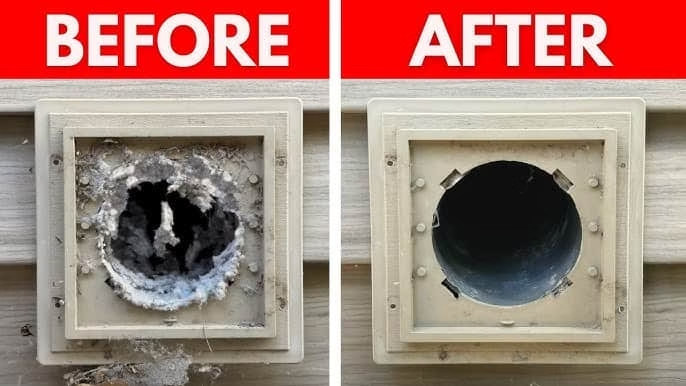
- Trustworthiness: We provide transparent reporting, including “before and after” photos and video inspections.
Professional Note: We strongly discourage DIY cleaning for any vent run longer than 10 feet. The risks of pipe damage and fire far outweigh the $50 saved on a retail kit.
Professional vs. DIY: A Cost-Benefit Analysis
| Metric |
DIY Dryer Vent Kit |
Always A Sweep Professional |
| Initial Cost |
$30 – $50 |
Competitive Service Fee |
| Time Investment |
2-4 Hours (Plus cleanup) |
1 Hour (We do it all) |
| Risk of Damage |
High (Broken rods/punctured ducts) |
Zero (Insured & Guaranteed) |
| Effectiveness |
40% – 60% of lint removed |
99% of lint removed |
| Safety Tools |
Plastic Brush |
Compressed Air, HEPA Vac, Cameras |
Beyond fire safety, a clogged vent is an environmental nightmare. If your dryer has to run twice for one load of towels because your dryer vent kit didn’t clear the line, you are wasting gallons of water (if using a steam cycle) and massive amounts of electricity or gas.
By hiring a professional, you ensure your appliance operates at peak efficiency, reducing your carbon footprint and saving you hundreds of dollars annually in utility costs. This is part of our commitment to sustainable home maintenance.
Conclusion: Prioritizing Your Home’s Safety
A dryer vent kit is a tool for maintenance, but it is not a tool for safety. The hidden spots, the elbows, the roof exits, and the internal machinery, require a level of precision that only a professional can provide.
Don’t wait for a “Check Vent” light or a burning smell to take action. Protect your investment, your home, and most importantly, your family.